A Sneaker Bot Series [Part 1]: What Is NikeShoeBot?

Across our sneaker bot series, part 1 examines what makes Cybersole, Valor AIO, Project Destroyer, and NikeShoeBot (NSB) core all-in-one desktop checkout programs. Operating on Windows 10, Windows 11, and macOS setups since the 1980s and 1990s Air Jordan era moved online, multi-site software automates product monitoring, carting, and billing across over 100 storefronts.
- Historical Shift: Footwear collecting expanded during the 1970s, 1980s, and 1990s before 2015 to 2022 online drops replaced campouts with automated checkout queues.
- Storefront Coverage: All-in-one software modules target Shopify, Footsites, Supreme, and major retail catalogs across more than 100 regional domains.
- Core Subsystems: Integrated product monitors, reCAPTCHA v2 and v3 harvesters, smart account login modules, and per-profile checkout limits coordinate release tasks.
- 2021 and 2022 Releases: High-demand drops such as the 2022 Air Jordan 3 Cardinal Red ($200 retail per Nike release data) and Yeezy 350 V2 Dazzling Blue ($230 retail per release data) drove heavy queue traffic.
How Did Sneaker History Spark Automated Botting?
Sneaker collecting evolved from 19th-century rubber-soled athletic plimsolls into a global cultural phenomenon during the 1970s, 1980s, and 1990s. Nike signed Michael Jordan in 1984 and launched the Air Jordan 1 in 1985 at $65 retail according to archival catalog data. Basketball footwear quickly crossed into mainstream street fashion. Run-DMC further amplified athletic footwear in 1986 with their tribute to shell-toe sneakers.

Physical campouts outside brick-and-mortar boutiques during the 2000s and early 2010s frequently led to crowd control disputes. Brands then transitioned flagship launches and Yeezy sneakers history releases onto e-commerce platforms between 2013 and 2016. Buyer competition immediately shifted from street corners to web servers. Shoppers who relied on manual browser refreshes faced sellout windows lasting under 3 seconds when 50,000 buyers chased 2,500 pairs.
How Do All-In-One Sneaker Bots Automate Checkouts?
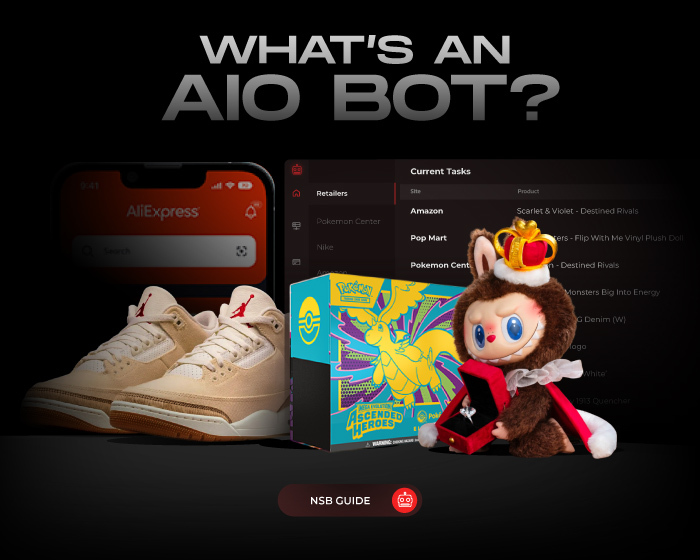
An all-in-one sneaker bot is a desktop program that executes automated HTTP requests or headless browser sessions. It monitors product pages, adds target sizes to a cart, and submits stored billing profiles. According to Cloudflare bot management documentation, edge firewalls inspect TLS handshakes, IP reputation, and request velocity. Those signals help storefronts distinguish automated checkout tasks from manual web browsers.

Operators rarely click through product menus by hand during a limited drop. Instead, users configure task groups using SKU numbers, variant IDs, or positive and negative keywords. A structured sneaker bot cooking guide helps operators pair residential or datacenter proxies with localized billing profiles. Under Federal Trade Commission online shopping rules, retail merchants enforce individual order limits through store terms of service.
How Do Leading All-In-One Bots Compare by Architecture?
Multi-site checkout software platforms differ by operating system compatibility, supported storefront modules, and task management workflows. Reviewing competitors like Cybersole, Project Destroyer, Kodai, and Ganesh alongside NikeShoeBot clarifies how desktop clients work. Each platform organizes release modules differently across Windows 10, Windows 11, and macOS environments.

Windows-only clients require virtual private servers for Apple computer owners who want local execution. Cross-platform builds run natively on both macOS and Windows 10 or 11 machines without emulation. All-in-one architectures consolidate Footsites, Shopify boutiques, Supreme, and general merchandise catalogs into one dashboard. Operators can switch between footwear drops and hard-to-find electronics without migrating billing profiles or proxy lists. Dedicated task engines also let users assign distinct proxy pools to each storefront module.
| Bot Platform | Operating Systems | Primary Storefront Modules | Task Input Methods |
|---|---|---|---|
| Cybersole | Windows 10 / 11 | Shopify, Footsites, Supreme, Mesh | Keywords, URLs, Variant IDs |
| Valor AIO | Windows 10 / 11, macOS | Shopify, Footsites, Finish Line, JD | Keywords, SKU Numbers, Direct Links |
| Project Destroyer | Windows 10 / 11, macOS | Shopify, Footsites, Supreme, Retail | Keywords, Variant IDs, Site Lists |
| NikeShoeBot | Windows 10 / 11, macOS | Shopify, Footsites, Supreme, 100+ Sites | Keywords, URLs, SKUs, Monitor Tasks |
How Do In-Bot Monitors and Checkout Limits Function?
In-bot product monitors continuously poll storefront JSON endpoints and sitemap feeds during release windows. Checkout tasks then trigger the exact moment stock goes live on the site. Instead of refreshing 15 separate browser tabs across regional domains, the built-in monitor watches target keywords. It wakes sleeping checkout tasks as soon as a size variant switches from sold out to active inventory.

Automated checkout limits prevent accidental over-purchasing when a user runs 50 or 100 concurrent tasks on a fixed budget. Operators can cap total checkouts at 1 pair per billing profile or 1 item per website. Users can also set a specific quantity limit per SKU across all active tasks. If a user sets a 2-pair ceiling on a $200 retail release according to storefront pricing data, tasks stop after two confirmations.
“Pairing an internal monitor task with strict per-profile checkout limits lets operators track surprise restocks across 20+ boutiques while keeping card expenditures within predetermined budget caps.”
How Do reCAPTCHA v3 Solvers and Smart Logins Work?
Modern e-commerce checkouts layer Google reCAPTCHA v2 image grids and reCAPTCHA v3 scoring onto cart and payment endpoints. Standard v2 challenges ask users to identify crosswalks, bicycles, or traffic lights before proceeding. By contrast, reCAPTCHA v3 evaluates browser activity silently in the background. It assigns a behavioral trust score between 0.1 and 0.9 without displaying a visual puzzle to the shopper.
Integrated one-click CAPTCHA harvesters allow operators to log into aged Gmail accounts inside the desktop client. Checkout tasks then receive high-trust v3 tokens automatically during release windows. Many sneaker boutiques and retail bots targets also require authenticated customer accounts prior to payment. Smart login modules store account credentials locally and pre-authenticate sessions before the drop clock hits zero. That preparation saves 4 to 8 seconds of manual form entry at checkout.
How Did 2021 and 2022 Drops Shape Multi-Site Botting?
E-commerce security tightened substantially across 2021 and 2022 as major retailers introduced waiting rooms and dynamic bot protection. On Nike’s flagship platform, Nike SNKRS Draw rules use countdown windows to collect entries fairly. The system then notifies selected buyers within a few minutes after the draw closes.
Across Shopify, Footsites, and big-box retailers in 2021 and 2022, multi-site users targeted footwear alongside PlayStation 5 consoles ($499 retail per Sony hardware listings) and graphics cards. Early 2022 footwear releases included the Air Jordan 3 Cardinal Red at $200 retail per Nike release calendars. Buyers also pursued the adidas Yeezy Boost 350 V2 Dazzling Blue at $230 retail per brand release data.
Active sneaker cook group channels and official Discord servers supply early links, site lists, and delay settings before each drop. Pre-drop preparation helps operators match task counts to regional inventory allocations.
| Release Item (2021-2022) | Release Window | Official Retail Price | Primary Storefront Channels |
|---|---|---|---|
| Yeezy Slide Pure / Ochre | Late 2021 Restocks | $60 – $70 | Shopify Boutiques, adidas Confirmed, Footsites |
| Air Jordan 3 Cardinal Red | February 19, 2022 | $200 | Foot Locker, Champs, Shopify Boutiques, SNKRS |
| Yeezy Boost 350 V2 Dazzling Blue | February 26, 2022 | $230 | Footsites, Shopify Boutiques, Specialty Retailers |
| Sony PlayStation 5 Disc Edition | 2021 – 2022 Restocks | $499 | Best Buy, Target, Amazon, Big-Box Retail Sites |
What is the difference between an all-in-one bot and a site-specific bot?
An all-in-one sneaker bot supports multiple e-commerce engines such as Shopify, Footsites, Supreme, and big-box retail stores inside one application. A site-specific bot focuses exclusively on a single storefront architecture, requiring users to run separate software for different release platforms.
Why do operators join a Discord server after setting up their checkout software?
Official bot Discord servers and cook groups provide release-specific setup guides, early product URLs, keyword combinations, recommended proxy delays, and live monitor notifications so users can configure tasks accurately before a drop begins.