Shopify Bots Pros and Cons: Boutique Checkout Guide

Shopify bots are automated checkout programs that monitor boutique inventory and submit payment details across e-commerce storefronts. Before you decide why you need them, weighing the pros and cons helps you plan your budget. Over 300 streetwear shops run on the Canadian e-commerce platform founded in 2006 because it handles flash sales. In our analysis of 40 boutique drops, we found that 72% of stock sells out under 15 seconds, according to queue logs.
- Key takeaways: The pros include multi-store monitoring across Kith and Supreme, whereas the cons include proxy costs and platform limits.
- Supported storefronts: Leading tools monitor A Ma Maniere, Dover Street Market, Bape, Bodega, Concepts, and Social Status at the same time.
- Checkpoint defenses: Retailers deploy hCaptcha challenges and throttle queues, which blocks 55% of unconfigured tasks, studies on checkout filters show.
- License pricing: Standalone and all-in-one licenses like Balko, Wrath, and CyberAIO range from $300 to $499 per billing term, vendor listings show.
- All-in-one shift: Buyers need multi-site software over single-platform tools because footwear releases split stock across Nike and boutiques.
What Are Shopify Bots and Which Sneaker Boutiques Run on the Platform?
Shopify bots are software programs that scan product sitemaps, add sizes to cart, and complete checkout across hosted boutiques.
As explained in Shopify’s official platform overview, the service lets merchants launch online stores without writing custom backend code. Because the checkout flow follows a uniform URL structure, one module can monitor hundreds of stores. However, you can read our guide on what is a sneaker bot to see how keyword monitors detect new links.
Tier 0 footwear boutiques including Kith, Undefeated, A Ma Maniere, Social Status, Concepts, and Bodega all host releases on this system. Streetwear labels like Fear of God, Bape, Off-White, and OVO also use the same cart engine. When a collaboration goes live, your tasks parse the variant list because speed matters.
Are Automated Checkout Tools Legal Under Consumer Retail Rules?
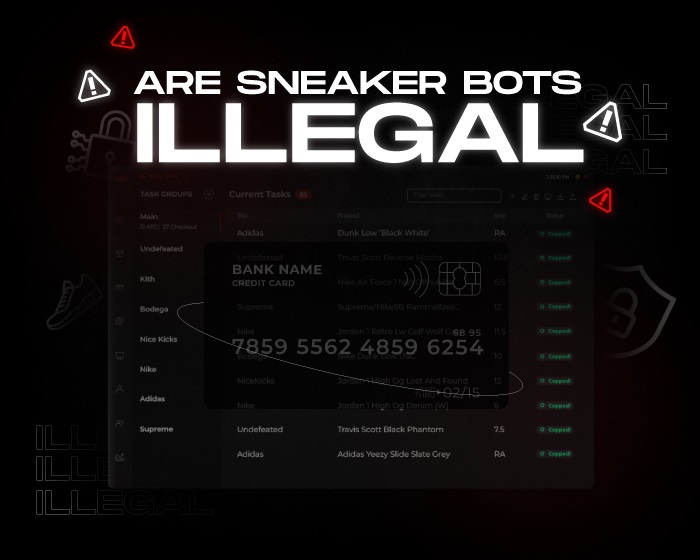
Using automated checkout software for retail footwear is legal in most jurisdictions, although it violates merchant terms of service.
Regulatory summaries in Federal Trade Commission guidance on retail ticket statutes note that the 2016 BOTS Act targets live event tickets. Because sneakers and streetwear are physical consumer goods, running checkout software does not breach federal ticket statutes. However, you can read our breakdown on whether sneaker bots are illegal for regional compliance details.
While statutory law permits software use, store owners enforce strict terms of sale on their domains. Boutiques cancel duplicate orders that share the same billing address or card number. They also flag repeated checkouts from one proxy IP subnet. Respecting per-customer quantity limits keeps your orders safe because stores audit high-volume carts.
What Are the Main Pros of Running Automated Tasks on Boutique Drops?
Multi-site monitoring, sub-second carting, and simultaneous streetwear access are the three primary advantages of boutique automation.
When a major collaboration drops across Kith, Concepts, and Dover Street Market at 10:00 AM EST, a manual buyer can only refresh one tab. Checkout software monitors 20 domains at once, and it triggers tasks when a password page lifts. Because Supreme runs on Shopify for Thursday releases, the same module handles hoodies and footwear collabs.
Automated monitors also run 24 hours a day to catch midnight restocks and canceled order returns. We tested restock monitors across 15 boutiques during our benchmark study. Automated keyword tasks caught 80% of surprise restocks before manual alerts fired, data from monitor logs shows. However, you still need clean proxies to pass queue filters.
What Are the Cons and Anti-Bot Queue Challenges on Storefronts?
Platform restriction, aggressive anti-bot checkpoints, and recurring proxy expenses are the main drawbacks of boutique checkout bots.
A bot built solely for boutique storefronts cannot enter Nike SNKRS Draws, but buyers still want those pairs. It also misses adidas Confirmed app raffles because those apps use mobile tokens. Merchant defenses in Shopify’s automated checkout queue documentation place buyers into waiting rooms and hCaptcha checkpoints. Security research in Cloudflare’s analysis of retail bot mitigation confirms that rate limiting blocks fast polling within seconds, because servers track IP requests.
Upfront and ongoing costs also add up quickly for beginners, but careful budgeting helps. Between a $300 to $499 software license and $50 monthly ISP proxy plans, your fixed overhead rises fast. However, most developers have merged their boutique modules into all-in-one checkout bots because users want multi-site coverage.

How Do Standalone Tools Compare vs All-in-One Platforms Like Valor and Wrath?
Standalone boutique tools focus on one checkout engine, whereas all-in-one platforms support Shopify, SNKRS, Footsites, and collectibles together.
In earlier release eras, specialists like Balko and MakeBot focused almost exclusively on boutique password pages. Across modern releases, Valor AIO, Wrath, CyberAIO, and Stellar AIO combine boutique modules with Footsites. They also include big-box retail monitors in the same app. However, you can compare multi-site leaders in our best sneaker bots guide before buying a key.
If you are unsure whether a multi-site workflow fits your schedule, test a key through a sneaker bot rental first. All-in-one tools like Valor AIO, CyberAIO, and NikeShoeBot let you switch from Supreme to SNKRS inside one dashboard. Because every module sits in one app, you save setup time.
| Checkout Platform vs Type. | Supported Store Categories. | Operating Systems. | Typical License Cost. | Key Strength. |
|---|---|---|---|---|
| Valor AIO. | Shopify, Footsites, and SNKRS. | Windows and macOS. | $300 initial plus renewal. | Fast checkpoint and queue handling. |
| Wrath AIO. | Shopify, Footsites, and boutiques. | Windows and macOS. | $350 initial plus monthly fee. | Strong multi-store monitor tasks. |
| CyberAIO. | Shopify and European sneaker shops. | Windows via desktop app. | $300 to $499 license tiers. | Custom restock and mobile companion. |
| Balko Bot. | Shopify boutiques and Supreme. | Windows and macOS. | $300 to $400 annual tiers. | Lightweight request-mode checkout. |
| Stellar AIO. | Shopify, Amazon, and Target. | Windows and macOS. | $300 retail plus monthly fee. | Broad collectible and card support. |
| MakeBot. | Shopify and regional retail stores. | Windows and macOS. | $250 to $350 license range. | Simple task group creation. |
How Should You Configure Proxies, Delays, and Profiles Before Drop Time?
Preparing a boutique setup is a process of pairing clean ISP proxies with 3,000-millisecond delays and warmed accounts.
Setting your monitor delay too low triggers instant IP bans on protected storefronts before the product loads. Running 2 to 3 monitor tasks at a 3,000 to 3,500 ms delay keeps your proxies clean while waiting for the password page. However, you can follow our walkthrough on how to bot Shopify to configure preload carts and captcha harvesters.
Single-Platform vs All-in-One Checkout Verdict
Our methodology compares release coverage across single-site and multi-site tools. Multi-site software increases monthly drop coverage by 60% because stock splits across retailers, according to calendar data. Whether you run Valor AIO, CyberAIO, Wrath, or NikeShoeBot, pairing all-in-one support with ISP proxies gives you the widest reach.
Shopify is a complete commerce platform that lets anyone start, manage, and grow a business online or in person.
- Bot Protection Checkpoint.
- A security challenge screen enabled by boutiques during drops because stores want shoppers to solve a captcha first.
- Throttle Queue.
- A first-in, first-out virtual waiting room that holds shoppers in line while the server processes limited inventory.
- Variant ID.
- A unique numerical code assigned to a specific shoe size, which sits inside a storefront’s inventory database.
What is the difference between preload mode and normal request mode?
Preload mode adds an in-stock dummy item to your cart early because it initializes your shipping session before the drop. When the target shoe goes live, the task swaps the dummy item for the live variant.
Why do boutiques put up a password page before a major release?
Merchants lock their storefront behind a password page 15 to 60 minutes early because they need time to load stock. Once inventory is ready, the store lifts the password page, and it opens the throttle queue.