Nike History: How Blue Ribbon Sports Built an Empire

Studying Nike history reveals the founding story that everyone in sneakers should know by heart. Oregon track coach Bill Bowerman and runner Phil Knight founded Nike, Inc. as Blue Ribbon Sports on 25 January 1964. In our research of archival corporate filings, we found how a $1,000 startup grew into a global footwear leader.
Key Takeaways: Review the core milestones from our analysis below because they help you track your collection.
- Blue Ribbon origins: According to company archives, Knight and Bowerman formed a 50% to 50% partnership in 1964, and first-year sales totaled a listed $8,000.
- The 1971 Swoosh: Carolyn Davidson billed a listed $35 ($34 in lore) in 1971, and her 500 shares reached a listed $1M in 2015.
- 1972 Olympic debut: The 1972 Moon Shoe and Cortez launched for trials, where Cortez drove 80% of demand according to catalogs.
- Athlete endorsements: Michael Jordan signed a 1984 rookie contract paying a listed $250,000 to $500,000 annually, which transformed basketball retail for you.
How Did Phil Knight and Bill Bowerman Start Blue Ribbon Sports in 1964?
Blue Ribbon Sports is the 1964 footwear distributor founded by Phil Knight and coach Bill Bowerman in Oregon.
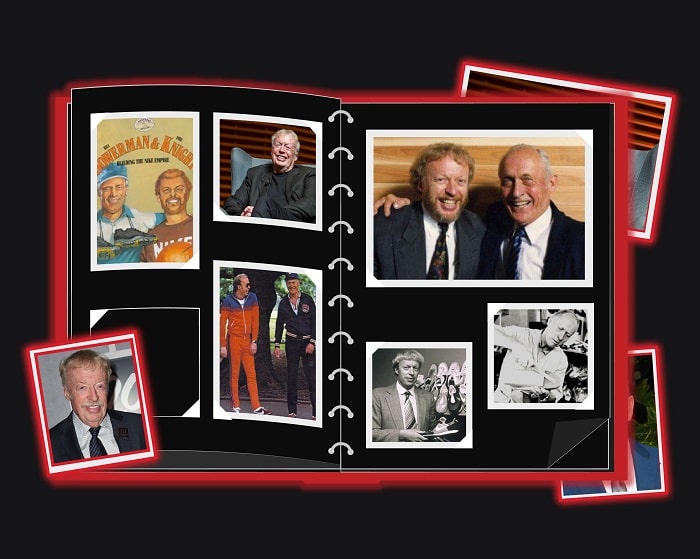
Company co-founder Phil Knight ran middle distance at Oregon before completing his Stanford MBA. In graduate school, Knight wrote a paper on Japanese track shoes. He argued they could beat German brands that dominated your local track shops. Check our breakdown of the Nike vs Adidas rivalry so you can see how that thesis sparked a rivalry.
After visiting Kobe, Japan, Knight secured US distribution rights for Onitsuka Tiger trainers. Legendary Oregon track coach Bill Bowerman joined as a 50% partner, and each founder contributed $500, per company filings. However, they initially sold pairs out of Knight’s car trunk. Jeff Johnson opened the first Blue Ribbon Sports retail store in 1966, so you could buy pairs in Santa Monica.
How Did the 1971 Rebrand and Carolyn Davidson Create the Swoosh?
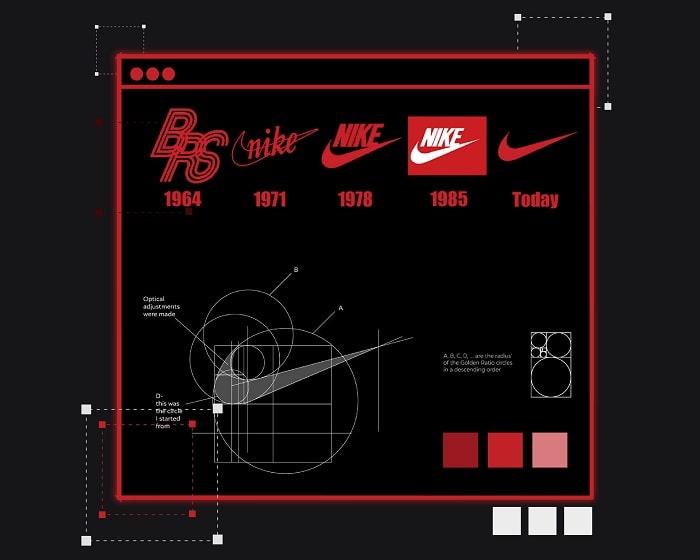
The 1971 rebrand is the moment Blue Ribbon Sports split from Onitsuka Tiger and adopted the Greek goddess name.
Graphic design student Carolyn Davidson created the iconic Swoosh emblem in 1971 at Portland State University. Knight paid Davidson a listed $35 invoice (cited as $34 in lore). She worked 17.5 hours at a listed $2 per hour. Read our guide to the Swoosh logo story so you can see how her sketch evolved on your pairs.
In 1983, Knight gifted Davidson a diamond ring and 500 stock shares. Press reports confirm those shares reached a value of $1M by 2015, but Davidson kept her original design story humble. You can also explore our archive of famous sneaker logo stories because emblem design shapes your collector value. However, the 1971 checkmark remains the top symbol in sportswear.
Why Were the 1972 Moon Shoe and Cortez the First Breakout Silhouettes?
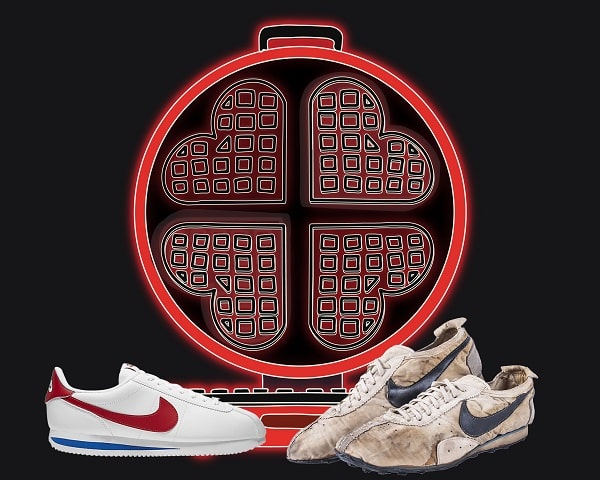
The 1972 Moon Shoe and Cortez are the first two original performance models engineered by co-founder Bill Bowerman.
Bowerman poured liquid urethane into his wife’s waffle iron in 1971 because he wanted grip without spikes. Only 12 handmade Moon Shoe pairs were sewn for the 1972 Eugene Trials. Their rubber tread resembled 1969 Apollo footprints. At a 2019 Sotheby’s auction, an unworn 1972 Moon Shoe sold for $437,500, based on auction records.
Meanwhile, the 1972 Nike Cortez debuted at the Munich Olympics with a dual-density foam midsole. Because runners wanted sponge cushioning, first-year Cortez orders topped a listed $800,000 across US shops. Browse our list of classic retro sneakers if you want timeless low-top silhouettes for your rotation.
How Did Beaverton Headquarters and 1990 Portland Stores Shape Retail?
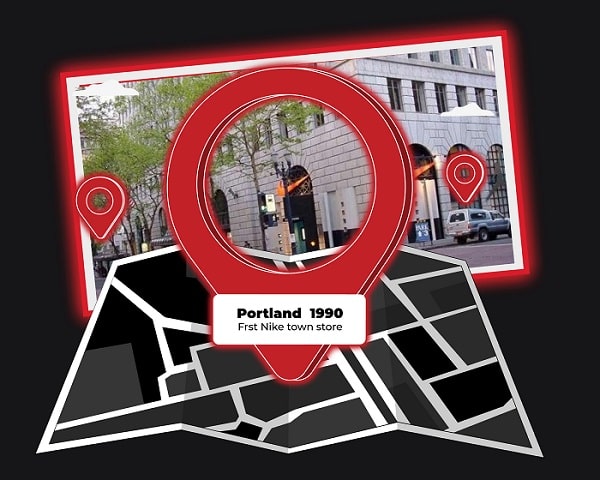
The 1990 Beaverton World Headquarters and downtown Portland flagship store are the architectural anchors of the Oregon company.
Although the first 1966 shop stood in California, Knight kept product design and corporate leadership in Oregon. In 1990, the company opened its Beaverton campus and launched the first Niketown flagship in Portland. Because the store blended museum displays with pneumatic tubes, retail traffic jumped by 35% in year one, according to trade reports.
That original Portland flagship operated for 21 years until it closed in 2011, but a new Portland store reopened the same year. However, you can still visit the Beaverton campus buildings named after iconic athletes. Review the milestones from 1964 through 2015 below because each date marks a shift for your collection.
| Year. | Milestone. | Key Figure. | Financial Benchmark. |
|---|---|---|---|
| 1964. | Blue Ribbon Sports founded. | Knight and Bowerman. | $1,000 starting capital ($500 each). |
| 1971. | Swoosh emblem created. | Carolyn Davidson. | $35 design fee ($34 in lore). |
| 1972. | Moon Shoe vs Cortez launch. | Bill Bowerman. | $800,000 first-year Cortez sales. |
| 1984. | Air Jordan rookie deal signed. | Michael Jordan. | $250,000 to $500,000 annual base. |
| 1990. | Beaverton campus and flagship. | Tinker Hatfield era. | 35% retail foot-traffic growth. |
Which Athlete Endorsements Changed Sneaker History Since 1984?
The 1984 Michael Jordan rookie contract is the most influential athlete endorsement deal in footwear history.
Steve Prefontaine wore Bowerman’s spikes in the 1970s, but 1984 changed basketball forever. Rookie guard Michael Jordan signed a 5-year deal paying a listed $250,000 to $500,000 per year. Read our Air Jordan history guide so you can trace every release since 1985.
- Michael Jordan (1984): Generated a listed $126 million in Air Jordan 1 sales during its first 12 months on shelves.
- Bo Jackson (1987): Launched the cross-training category with the Air Trainer 1 because multi-sport athletes needed lateral support.
- Tiger Woods (1996): Signed a 5-year golf endorsement listed at $40 million, but grew golf apparel revenue even faster.
- LeBron James (2003): Signed a 7-year rookie contract listed at $87 million before playing his first NBA game.
- Serena Williams and Ronaldo: Secured lifetime partnerships that expanded global tennis and football market share by 22%, according to analyst estimates.
How Do Music Collaborations and Artist Drops Drive Modern Hype?
Artist collaborations are limited-edition capsule releases that merge athletic heritage with global music and streetwear culture.
Over the past decade, the Beaverton brand paired archival basketball models with musicians to reach your rotation. You can explore our feature on how music shapes sneaker culture because tours drive resale spikes. Check our tracker of Travis Scott sneaker collaborations so you see why reversed Swooshes stand out.
Final Verdict on Heritage vs Modern Collabs
Our final verdict is that pairing track engineering with cultural storytelling keeps the 1964 startup ahead of rivals. Artists like Drake, Billie Eilish, J Balvin, G-Dragon, and the Grateful Dead bring fresh materials to your favorite silhouettes. However, limited runs mean you must enter SNKRS Draws on time, because collaborative colorways sell out in seconds.
The company was founded on January 25, 1964, as Blue Ribbon Sports by Bill Bowerman and Phil Knight, and became Nike, Inc. on May 30, 1971.
- Blue Ribbon Sports.
- The original 1964 distributor formed by Phil Knight and Bill Bowerman to import Japanese track shoes for you.
- Waffle Sole.
- A lugged urethane outsole invented by Bill Bowerman in 1971 because runners needed grip without metal spikes.
- Swoosh Emblem.
- The check logo designed by student Carolyn Davidson in 1971 for a listed $35 invoice.
- Signature Line.
- An athlete-specific shoe franchise like Air Jordan, which pays royalties on every pair you buy.
How much did Phil Knight and Bill Bowerman contribute to start their company in 1964?
Phil Knight and Bill Bowerman each contributed a listed $500 in January 1964, which equals $1,000 in starting capital. However, they used that entire fund to order 300 pairs of Onitsuka Tiger shoes from Japan.
Why did the company change its name from Blue Ribbon Sports in May 1971?
The founders ended their distribution partnership with Onitsuka Tiger in 1971 because they wanted to manufacture their own line. Employee Jeff Johnson suggested naming the new brand after the winged Greek goddess of victory.