Nike Dunk High vs Low: 1985 Heritage, Collar Specs, and Sales Data

The Nike Dunk High vs Low debate centers on collar height, ankle mobility, and secondary market liquidity. Both cuts build upon Peter Moore’s 1985 collegiate basketball platform. From hypebeasts chasing collaborative low-tops to veteran sneakerheads collecting retro high-tops, both versions share identical forefoot cupsoles. The High retails at $125 to $130 with 9 eyelets, whereas the Low retails at $115 with 7 eyelets.
- 1985 Origins: Designed by Peter Moore in 1985 for the eight-team “Be True to Your School” collegiate basketball capsule, the silhouette later entered skateboarding in 2002 under Sandy Bodecker.
- Structural Specs: The High stands 5.5 inches at the collar with 9 eyelets (14.9 oz in US 9), while the Low sits at 3.2 inches with 7 eyelets (13.0 oz in US 9).
- 12-Month Sales Volume: The Low Panda (3/10/2021) recorded 242,607 pairs sold over a 12-month tracking window, nearly seven times the 34,771 pairs sold for the High Panda (1/27/2022).
- Retail Price Gap: Standard Sportswear Low releases list at $115 retail, whereas standard High releases list at $125 to $130 retail.
How Did Peter Moore Create the 1985 Be True to Your School Lineage?
The platform originated during the mid-1980s boom in 1980s NCAA collegiate basketball. Televised conference rivalries drove massive footwear demand across college campuses. In 1985, creative director Peter Moore combined design elements from the Air Jordan 1, Terminator, and Legend. Moore engineered a thin radial pivot-circle cupsole that gave college guards closer court feel during fast breaks.
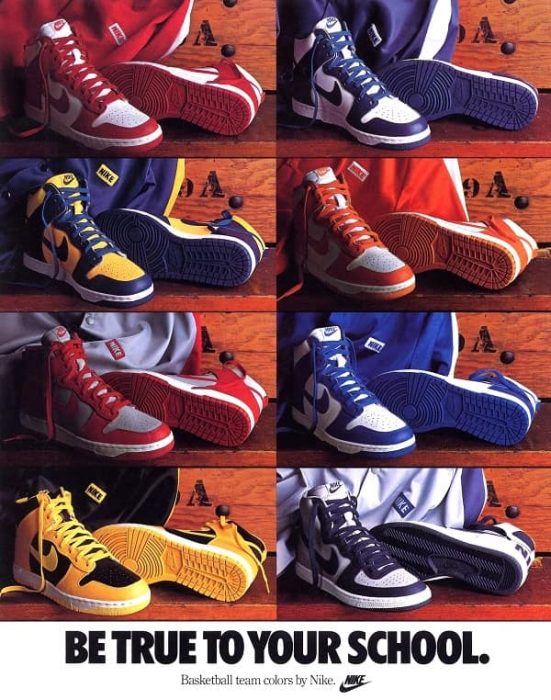
That 1985 launch debuted under the “Be True to Your School” (BTTYS) campaign. The collection featured eight two-tone leather high-tops matched to powerhouse university basketball teams. Programs included Kentucky, Michigan, Syracuse, St. John’s, UNLV, Georgetown, Iowa, and Villanova. Bold school color blocking turned the 1985 release into an instant sideline staple. Readers comparing Moore’s 1985 blueprints can inspect our Jordan 1 vs Dunk structural comparison.
How Did the 2002 Sandy Bodecker Skateboarding Era Reshape Both Cuts?
Although the 1985 shoe started on college hardwood, its flat rubber cupsole attracted street skateboarders in the 1990s. Skaters valued the durable leather overlays, lateral board feel, and discounted clearance rack prices. By 1999, collector demand prompted retro capsules like the Japan-exclusive CO.JP City Attack series and the 1999 Wu-Tang high-top. Even so, early 1990s corporate attempts to enter the skate market struggled until a dedicated division formed.
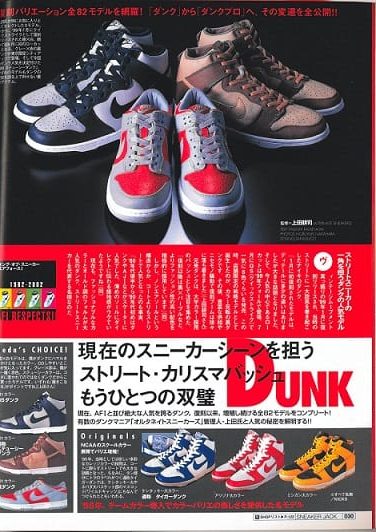
In 2002, executive Sandy Bodecker launched the dedicated skateboarding subdivision and introduced the padded SB Low Pro. Bodecker’s team added Zoom Air heel bags, stuffed mesh tongues, and elastic tongue-centering straps. They also distributed limited colorways exclusively through independent core skate shops. That 2002 pivot cemented Nike skateboarding history and fueled the 2019 and 2020 resurgence across both cuts.
What Are the Structural Differences in Nike Dunk High vs Low Design?
Collar height, eyelet count, and ankle articulation separate the two silhouettes in daily wear. The High features a 5.5-inch padded ankle collar, a 9-eyelet lacing system, and a rear heel tab overlay. That taller leather wrap stabilizes the ankle joint during lateral cuts. The extra upper material adds roughly 1.9 ounces per shoe (14.9 oz vs 13.0 oz in a men’s US 9).
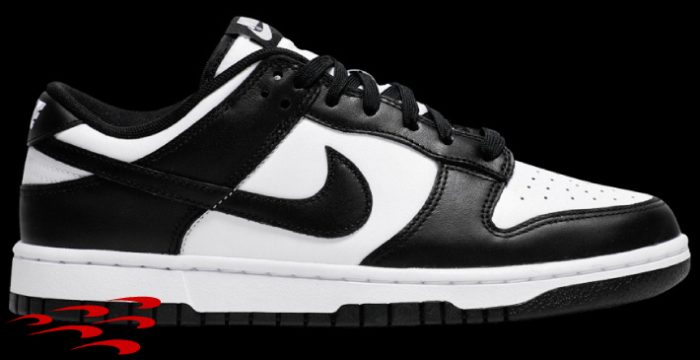
The Low trims the collar height to 3.2 inches below the ankle bone and uses a 7-eyelet lacing layout. Below the upper, both versions share the exact same 1985 rubber cupsole and EVA foam midsole wedge. Both outsoles also mold the classic concentric forefoot pivot circle. At retail, the extra leather on the High commands $125 to $130 MSRP, compared to $115 retail for standard Lows.
| Design Specification | High-Top Cut | Low-Top Cut | On-Foot Impact |
|---|---|---|---|
| Collar Height & Eyelets | 5.5 inches / 9 eyelets | 3.2 inches / 7 eyelets | High locks ankle; Low frees mobility |
| Single Shoe Weight (US 9) | 14.9 oz (422 grams) | 13.0 oz (368 grams) | Low feels 1.9 oz lighter per foot |
| Standard Sportswear Retail | $125 to $130 MSRP | $115 MSRP | Low costs $10 to $15 less at retail |
| Primary Use Case | Retro hoops styling & autumn wear | All-season lifestyle & skate wear | Low pairs easier with shorts and denim |
Why Do Hypebeasts and Sneakerheads Split Between Low and High Cuts?
Community discussions across forums and social feeds highlight a clear divide between purist collectors and trend-driven buyers. Veteran enthusiasts prefer the High for its authentic 1985 collegiate proportions and larger color-blocked leather panels. General release high-tops often trade near their $125 to $130 retail prices on secondary markets. That accessible pricing lets collectors acquire heritage BTTYS colorways without paying steep resale premiums.
From a secondary market standpoint, the Low dominates modern hyped sneakers and boutique collaborations. Since the 2019 and 2020 crossover boom led by Travis Scott and StrangeLove, Beaverton has prioritized the low-top canvas. Most celebrity and skate-shop storytelling packs now drop on the 7-eyelet frame. As a result, resellers and trend shoppers focus heavily on low-top style codes during weekly launch calendars.
What Are the Best-Selling High and Low Colorways by Sales Volume?
Transaction records over a 12-month aftermarket tracking window confirm that low-top releases generate nearly seven times the unit volume. The Low Panda (released March 10, 2021 at $115 retail) led all colorways with 242,607 pairs sold. Second place went to the Low Grey Fog (September 21, 2021) with 34,970 pairs sold. The Women’s Low Rose Whisper (March 1, 2022) ranked third among low-tops with 30,551 pairs sold.
With 242,607 pairs traded in a 12-month window compared to 34,771 for its high-top twin, the 2021 Low Panda proved that 7-eyelet versatility drives modern resale liquidity.
Among high-top releases over the same 12-month window, the High Panda (January 27, 2022, $125 retail) led with 34,771 pairs sold. The High Blue Chill (November 23, 2022) recorded 6,285 pairs sold, while the Women’s High Pink Prime (May 5, 2022) logged 5,509 pairs sold. Sellers moving pairs priced at $150 or more pay an 8% fee per eBay athletic shoe fee rules. By comparison, StockX seller fee schedules charge a 9% base fee plus 3% processing.
| Colorway Edition | Cut & Release Date | 12-Month Pairs Sold | Retail Price & Typical Ask |
|---|---|---|---|
| Black White “Panda” Low | Low (3/10/2021) | 242,607 pairs | $115 retail / $125 to $145 ask |
| Grey Fog / Rose Whisper (W) | Low (9/21/2021 & 3/1/2022) | 34,970 / 30,551 pairs | $115 retail / $135 to $165 ask |
| Black White “Panda” High | High (1/27/2022) | 34,771 pairs | $125 retail / $120 to $140 ask |
| Blue Chill / Pink Prime (W) | High (11/23/2022 & 5/5/2022) | 6,285 / 5,509 pairs | $125 retail / $115 to $135 ask |
How Should Buyers Size, Style, and Secure Popular Releases at Retail?
Selecting the right pair starts with consulting a dedicated size and fit guide before checkout. Standard Sportswear High and Low releases fit true to size on a medium D-width last. Padded SB editions fit snugger in the forefoot and often require going up 0.5 US size. For wardrobe pairing across seasons, our guide on how to style Dunks covers relaxed denim, cargo pants, and shorts.
When limited colorways launch via 10-minute Nike SNKRS draw drops and boutique raffles, manual checkout queues fill within seconds. Buyers who use an all-in-one sneaker bot automate task entries across SNKRS and Shopify storefronts simultaneously. Collectors comparing established automation software regularly evaluate Valor AIO, Cybersole, Stellar AIO, and NikeShoeBot to compete on release morning.
Why Do SB Versions Fit Tighter Than Standard Sportswear Pairs?
SB Low and High models include a thick, foam-stuffed tongue, internal elastic tongue-centering straps, and a Zoom Air heel insole. Those skate-specific reinforcements reduce internal forefoot volume, prompting most wearers to go up 0.5 size compared to standard Sportswear releases.
Does the High-Top Crease Less in the Toe Box Than the Low-Top?
Both cuts use the same synthetic-backed smooth leather and forefoot flex point on general release pairs, so toe creasing develops similarly after 5 to 10 wears. However, the 9-eyelet collar on the High distributes ankle flexion across a taller shaft, reducing heel slip.