How Well Do You Know Your Favorite Sneaker Designers?

Iconic sneaker designers shaped global footwear culture by engineering the silhouettes and cushioning systems that define modern streetwear. Learning how well you know your favorite footwear architects starts with examining the creative minds behind Nike and Adidas. From Peter Moore and Tinker Hatfield to Virgil Abloh and Chitose Abe, seven visionaries built the industry’s greatest catalogs.
- Foundational Architects: Bruce Kilgore created the 1982 Air Force 1 and 1986 Air Jordan 2, while Peter Moore designed the 1985 Air Jordan 1 and Nike Dunk before joining Adidas in 1993.
- Tinker Hatfield’s Run: Hatfield engineered the 1987 Air Max 1 and designed Air Jordan 3 through 15, plus anniversary models 20, 23, and 2010 through 30.
- Collaborative Icons: Kanye West, Virgil Abloh, Chitose Abe, and Hiroshi Fujiwara bridged luxury fashion and athletic footwear from 2009 through 2021 and beyond.
- Aftermarket Legacy: Original collaborations like the 2014 Fragment Air Jordan 1 (SKU 716371-040) and 2017 Off-White Chicago Jordan 1 (SKU AA3834-101) trade for $3,500 to $5,500 on resale platforms.
How Did Peter Moore Shape Nike, Jordan Brand, and Adidas?
Peter Moore served as Nike’s creative director during the mid-1980s. He designed the 1985 Air Jordan 1 alongside the original Wings logo and Jumpman silhouette. During that same 1985 collegiate basketball season, Moore led the team behind the Nike Dunk “Be True To Your School” pack. He also created the bold heel branding on the 1985 Nike Terminator. Those leather high-tops established the blueprint for modern lifestyle retro drops.
After departing Beaverton, Moore co-founded the sports marketing agency Sports Inc. and later transitioned to Herzogenaurach. He officially joined Adidas in 1993 to spearhead the Adidas Equipment (EQT) performance division. There, he introduced the slanted three-bars mountain logo that still anchors the brand’s athletic identity. Few executives in footwear history have authored flagship logos and silhouettes for both global sportswear rivals.
Which Air Jordan and Air Max Models Did Tinker Hatfield Create?
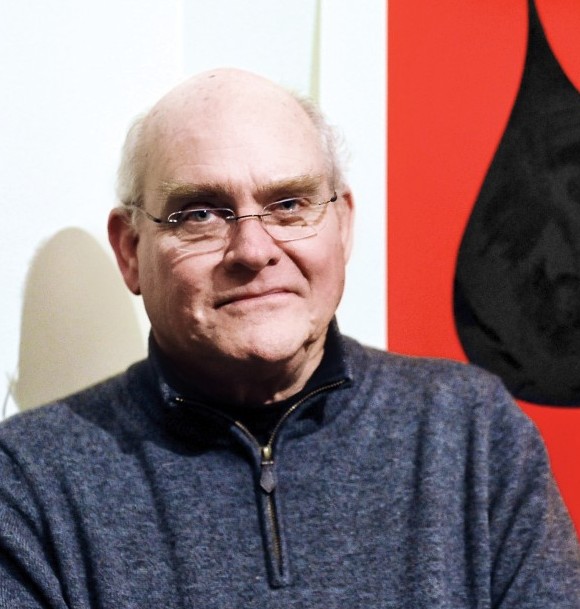
Trained as an architect at the University of Oregon, Tinker Hatfield joined Nike in 1981. He transitioned to footwear design in 1985 after studying the exposed structural steel of the Centre Pompidou in Paris. Hatfield cut a window into the midsole of the 1987 Air Max 1 to make encapsulated cushioning visible. He followed that breakthrough with the 1990 Air Max 90 and the futuristic 1989 Nike Mag.
When Michael Jordan considered leaving Nike in 1988, Hatfield stepped in to design the Air Jordan 3. That model introduced elephant-print overlays, a visible Air unit, and a mid-cut collar. Hatfield subsequently designed Air Jordan 3 through 15, returned for models 20 and 23, and co-directed 2010 through 30. Hatfield continues to serve as Nike’s Vice President for Design and Special Projects.

| Sneaker Designer | Primary Brand Era | Signature Silhouettes | Key Milestone Year |
|---|---|---|---|
| Peter Moore | Nike & Adidas EQT | Air Jordan 1, Nike Dunk, Terminator | 1985 & 1993 |
| Tinker Hatfield | Nike & Jordan Brand | Air Max 1, Air Jordan 3 to 15, 20, 23, 30 | 1987 & 1988 |
| Bruce Kilgore | Nike Basketball & Running | Air Force 1, Air Jordan 2, Sock Racer | 1982 & 1986 |
| Virgil Abloh | Off-White x Nike & LV | “The Ten” Collection, Jordan 1, Jordan 4 | 2017 & 2018 |
Why Is Bruce Kilgore Essential to Air Force 1 and Jordan History?
Before Tinker Hatfield took over the signature basketball line, industrial designer Bruce Kilgore engineered the foundation of Nike Basketball. In 1982, Kilgore introduced the Nike Air Force 1 for pro players. It was the first basketball court shoe to house pressurized cushioning inside a concentric pivot-point cupsole. Drawing cues from the Nike Approach hiking boot, Kilgore sloped the collar to preserve ankle mobility.
Four years later, Kilgore collaborated with Peter Moore to craft the 1986 Air Jordan 2. Manufactured in Italy, the shoe featured faux-iguana skin panels, full-grain leather uppers, and zero quarter-panel Swoosh branding. That bold design pushed performance basketball shoes into the luxury footwear category. Kilgore also pioneered the 1985 Nike Sock Racer and the mechanical Shox column concept.
How Did Kanye West and Virgil Abloh Redefine Sneaker Collaborations?
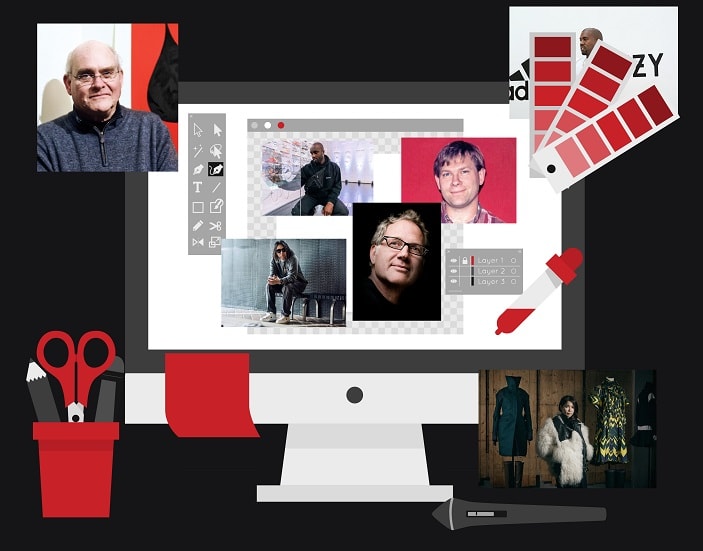
Non-athlete cultural figures transformed the footwear industry during the late 2000s and 2010s. As detailed in our Kanye West fashion influence retrospective, Kanye West launched the first musician signature shoe at Nike. He released the 2009 Air Yeezy 1 ($215 retail price) and 2012 Air Yeezy 2 ($245 retail price). After moving to Adidas in 2013, West scaled the Yeezy Boost 350 and 700 lines globally.
Longtime creative partner Virgil Abloh elevated deconstructed footwear design with his 2017 Off-White x Nike “The Ten” capsule. Using exposed foam tongues, Helvetica medial text, and red zip-ties, Abloh reimagined ten archival classics. He later became artistic director of Louis Vuitton menswear in 2018. Collectors study the Virgil Abloh official archive and our Virgil Abloh archive designs guide to track his enduring legacy.

What Made Chitose Abe and Hiroshi Fujiwara Global Footwear Icons?
Japanese designers Chitose Abe and Hiroshi Fujiwara brought Tokyo tailoring and subcultural restraint to global sportswear. After working as a pattern cutter at Comme des Garcons, Abe founded Sacai in 1999. She launched her first NikeLab apparel capsule in 2015 before unveiling the 2019 Sacai x Nike LDWaffle. That silhouette fused the LDV and Waffle Racer with double Swooshes, followed by new VaporWaffle colorways across 2021.
Known as the godfather of Ura-Harajuku streetwear, Fragment Design founder Hiroshi Fujiwara co-created Nike’s HTM line in 2002. Rather than altering panel geometry, Fujiwara relies on disciplined color blocking and a debossed double-lightning-bolt heel stamp. His 2014 Fragment Jordan release history centerpiece (SKU 716371-040, $185 retail price) and 2021 Travis Scott x Fragment collaborations remain grail releases.
Great footwear design balances two competing forces: Tinker Hatfield and Bruce Kilgore solved biomechanical court problems, while Virgil Abloh and Chitose Abe turned archival patterns into cultural artifacts.
How Can Collectors Secure Limited Designer Collaborations at Retail?
When Nike or Adidas drops a flagship designer collaboration, retail inventory vanishes within seconds. Buyers face strict Nike SNKRS Draw rules and boutique anti-bot queues on launch morning. Missing out at retail pushes collectors onto secondary marketplaces where rare pairs command steep markups. Resellers pay an 8% fee on pairs priced at $150 or more under the eBay athletic shoe fee structure, or a 9% base commission plus 3% payment processing per the StockX seller fee schedule.
Looking back at the best 2021 sneaker releases and current calendars, serious buyers prepare their setups early. Multi-platform software options include Valor AIO, Cybersole, Stellar AIO, and NikeShoeBot. These tools automate carting and checkout tasks across Shopify boutiques and major footwear sites. Following our automated sneaker bot guide helps you configure proxies and billing profiles cleanly.
| Iconic Designer Release | Designer & Year | Original Retail Price | Secondary Market Range |
|---|---|---|---|
| Air Jordan 1 High Chicago (1985) | Peter Moore (1985) | $65 retail price | $4,000 to $15,000+ per pair |
| Fragment x Air Jordan 1 High | Hiroshi Fujiwara (2014) | $185 retail price | $3,200 to $4,500 per pair |
| Off-White x Air Jordan 1 Chicago | Virgil Abloh (2017) | $190 retail price | $4,500 to $6,000 per pair |
| Sacai x Nike LDWaffle Green Gusto | Chitose Abe (2019) | $160 retail price | $450 to $650 per pair |
Who designed the original Air Jordan Wings logo and the Jumpman silhouette?
Peter Moore sketched the original Air Jordan Wings logo on a napkin during a flight in 1984 and also oversaw the early Jumpman hangtag concept before Tinker Hatfield placed the Jumpman on the Air Jordan 3 tongue in 1988.
What does the HTM acronym stand for in Nike design history?
Founded in 2002, HTM stands for Hiroshi Fujiwara, Tinker Hatfield, and Mark Parker, serving as an experimental design collective that debuted Flyknit weaving and limited-edition lifestyle silhouettes.
Tagged