Nike Direct to Consumer Strategy: D2C Revenue, SNKRS, and Retail Impact

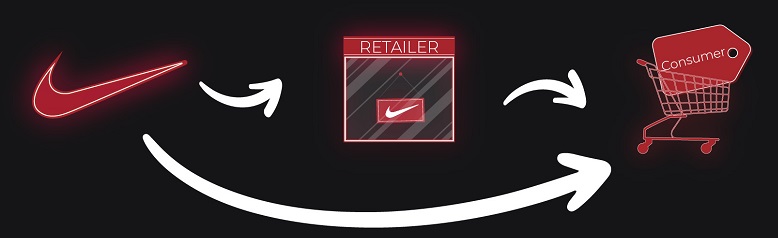
The Nike Direct to Consumer business model shifts footwear distribution away from third-party wholesale chains. Instead, sales move toward brand-owned digital apps and flagship stores. Launched under the 2017 Consumer Direct Offense, that shift shapes how release allocations will affect sneakerheads worldwide. By routing drops through SNKRS, the brand captures full retail prices while tightening mall inventory.
- 2017 Strategy Launch: Announced in 2017, the Consumer Direct Offense targeted a 40% digital revenue share by the 2025 fiscal year, up from 21% in 2021 reports.
- Foot Locker Impact: Foot Locker saw its market value drop by 35% (roughly $950M) in 2022 after disclosing that Swoosh allocations would fall from 75% in 2020 to 55% by Q4 2022.
- Member Exclusivity: First-party channels host customization via Nike By You and member-only Exclusive Access releases such as the 2021 Off-White Dunk Low “The 50” capsule.
- Centralized Competition: Consolidating limited inventory onto SNKRS and regional brand domains concentrates buyer traffic into 10-minute digital draw windows.
How Did the 2017 Nike Direct to Consumer Pivot Reshape Footwear Sales?
For decades, athletic footwear distribution relied on multi-brand retail chains. Mall doors put Air Jordans and rival silhouettes like Adidas Yeezys onto local shelves. Before 2017, wholesale orders from third-party department stores generated the majority of annual brand revenue. Under that traditional structure, the manufacturer sold bulk inventory to retailers at roughly 50% of the retail box price.
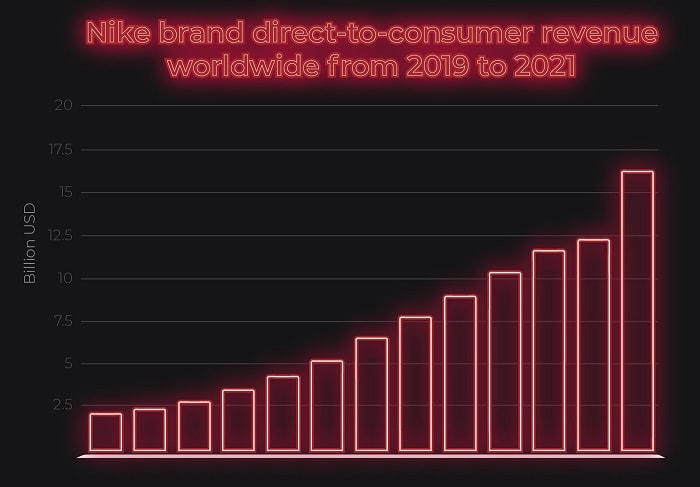
In 2017, executives introduced the Consumer Direct Offense to prioritize first-party e-commerce and flagship doors. According to Marketing Week coverage of CEO John Donahoe, the company targeted a 40% digital sales share by fiscal year 2025. By late 2021, digital transactions already accounted for 21% of total company revenue per corporate filings. Flagship House of Innovation and Rise retail locations supported that online expansion in major cities.
What Is the D2C Distribution Model and How Does It Work?
A direct-to-consumer distribution model eliminates intermediary wholesale accounts. As a result, the manufacturer sells finished footwear directly to end buyers. Instead of splitting a $180 retail price with a mall chain, the brand retains the full $180 transaction value. Shoppers browse, enter draws, and complete purchases directly through the official website or mobile sneaker apps like SNKRS. Orders then ship directly from regional distribution centers to residential doorsteps.
Operating a first-party pipeline gives the manufacturer control over product presentation, launch timing, and discounting rules. Third-party stores often mark down slow-moving colorways by 20% to 30% on clearance racks. Direct distribution instead manages inventory flow through company-owned factory stores. Simultaneously, the platform collects sizing, location, and browsing data from over 100 million registered member accounts.
| Distribution Metric | Pre-2017 Wholesale Model | 2017 to 2025 D2C Strategy | Impact on Buyers |
|---|---|---|---|
| Digital Revenue Share | Under 10% of total sales (pre-2017) | 21% in 2021; 40% target by FY 2025 | More drops shift to mobile apps |
| Gross Revenue Capture | Roughly 50% wholesale invoice price | 100% of full retail MSRP captured | Fewer third-party coupon markdowns |
| Foot Locker Brand Share | 75% of Foot Locker purchases (2020) | Capped at 55% to 60% by Q4 2022 | Lower retro stock at mall chains |
| Launch Access Method | In-store raffles and physical lineups | SNKRS 10-minute draws and EA drops | Centralized digital queue competition |
How Do SNKRS Exclusive Access and Customization Benefit Members?
Cutting out wholesale intermediaries allows the brand to reward active account holders with personalized product access. Through the Nike By You customization platform, members select leather textures, Swoosh colors, and custom heel embroidery. Those custom builds carry a $20 to $35 retail premium over baseline models. Finished pairs ship directly from contract factories to the buyer within 3 to 5 weeks.
On the SNKRS app, the Direct to Consumer strategy powers Exclusive Access (EA) invitations. Those reservations let selected members buy high-demand pairs before public launch day. Certain landmark collaborations bypass standard retail shelves entirely. In August 2021, Virgil Abloh’s 50 Off-White Dunks (“Dear Summer” Lots 1 through 50, $180 retail) released exclusively via SNKRS Exclusive Access invitations. That rollout proved that a 50-colorway capsule could sell out without traditional store displays.
Why Did Wholesale Allocation Cuts Trigger a $950M Foot Locker Drop?
Scaling back wholesale shipments between 2020 and 2022 shook publicly traded sporting goods chains. During that period, the brand terminated wholesale accounts with dozens of regional chains. It also reserved marquee retro releases for its own digital and flagship channels. No retail partner felt the allocation tightening more acutely than mall giant Foot Locker. Smaller regional boutiques also saw their general release allocations shrink across quarterly booking cycles.
In February 2022, Foot Locker announced that no single supplier would exceed 55% of its total merchandise by Q4 2022. Annual Swoosh purchases were capped at 60%, down from a whopping 75% share in 2020. Following that disclosure, Complex reported Foot Locker lost $950M ($950 million) in market value. Its share price plunged 35% in a single trading session per market data.
How Does D2C Consolidation Affect Aftermarket Resale Pricing?
Concentrating limited releases inside Nike SNKRS draw windows alters how inventory enters the secondary market. A $180 collaborative Dunk or $210 retro Jordan now drops primarily through a single 10-minute digital draw. When fewer pairs reach 500 regional mall doors, local foot-traffic advantages disappear. Every buyer nationwide competes inside the same randomized selection pool at 10:00 AM Eastern.
Centralizing marquee drops inside first-party apps removes local store backdoors while turning every limited release into a nationwide digital lottery.
Pairs that sell out on SNKRS move immediately to secondary marketplaces. Sellers then calculate net payouts after platform commissions. According to eBay athletic shoe fee schedules, listings sold at $150 or more incur an 8% final value fee. Reselling a $180 retail Off-White Dunk Lot at a $450 aftermarket price deducts $36 in eBay fees, leaving a $414 net payout.
| Release Channel | Example Release (Retail MSRP) | Allocation Share Trend | Secondary Market Net (After 8% Fee) |
|---|---|---|---|
| SNKRS Exclusive Access | 2021 Off-White Dunk Lot ($180 retail) | 100% first-party app allocation | $414.00 net on $450 resale ask |
| SNKRS 10-Minute Draw | Retro Air Jordan High ($180 retail) | 65% to 75% of limited stock | $257.60 net on $280 resale ask |
| Nike By You Custom | Custom Dunk Low ($130 to $150 retail) | 100% direct factory-to-member | $147.20 net on $160 resale ask |
| Mall Wholesale Chains | General Release Retro ($115 to $150) | Reduced from 75% (2020) to 55% (2022) | Trades near $115 to $150 retail |
How Can Collectors Adapt Their Setup for Centralized Digital Drops?
When a major release drops primarily through one digital storefront, checkout preparation determines whether buyers pay retail or resale. Manual shoppers improve their odds by maintaining active SNKRS profiles and watching in-app livestreams. Saving verified payment methods and shipping addresses before launch morning also prevents form timeouts. Even so, high-volume drops attract hundreds of thousands of simultaneous entries within seconds.
Collectors who automate multi-account entries pair their software with clean IPs from the best proxies for sneaker sites and low-latency sneaker servers. Following a structured sneaker bot setup guide helps users isolate billing profiles and avoid IP blocks. Testing proxy connections an hour before launch prevents unexpected checkout drops. Buyers comparing multi-module automation tools regularly evaluate Valor AIO, Cybersole, Stellar AIO, and NikeShoeBot across SNKRS and boutique drops.
Why Did the Brand Rebalance Some Wholesale Accounts After 2023?
After aggressive wholesale cuts between 2020 and 2022 created shelf space for rival running brands at multi-brand chains, executives selectively restored wholesale partnerships with retailers like Macy’s, DSW, and Foot Locker starting in 2023 and 2024 while keeping marquee limited drops anchored on SNKRS.
How Does SNKRS Exclusive Access Select Eligible Member Accounts?
SNKRS Exclusive Access uses account engagement signals including prior draw entries on related silhouettes, watched Behind the Design videos, interactive poll participation, and purchase history to distribute personalized reservation links 24 to 72 hours before public launch.