Nike Joyride vs Adidas Boost: TPE Beads, BASF Foam & Specs

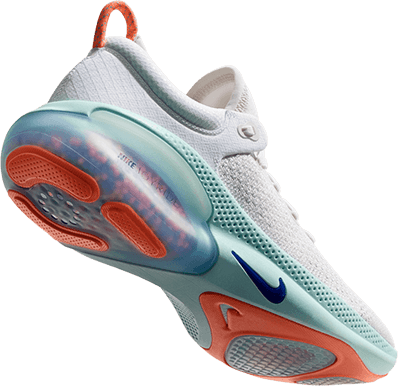
Nike Joyride is a pod-based running cushioning system launched in August 2019 at $180 retail to compete directly against Adidas Boost. Where the battle of the beads begins, Beaverton’s midsole packs 10,000 loose TPE microspheres into four zoned pods. Meanwhile, Herzogenaurach fuses 2,500 expanded TPU capsules into one solid slab. Below we compare impact absorption, 2013-2021 history, and resale value.
- Pod bead architecture: Packs roughly 10,000 loose TPE copolymer beads across 4 zoned pods (5,000 beads in the heel pod alone).
- Material lab testing: Engineers tested 150 polymer compounds before launching the Joyride Run Flyknit priced at $180 in August 2019.
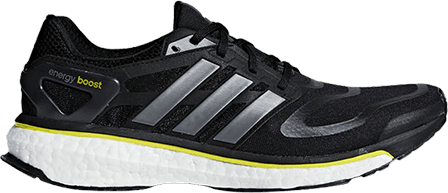
- BASF eTPU rival: Competes with Adidas Boost, introduced on the 2013 Energy Boost ($150 retail) and 2015 Ultraboost 1.0 ($180 retail).
- Lifestyle retention: Boost-equipped Yeezy 350 V2 models ($220 retail, including the 2021 Mono Pack) hold stronger resale than bead runners.
How Do the 10,000 TPE Beads Inside Nike Joyride Pods Cushion Foot Strikes?
Four zoned underfoot pods hold roughly 10,000 thermoplastic elastomer (TPE) beads that shift in all directions on impact.
According to the official Nike Joyride engineering brief, lab teams tested 150 candidate materials before selecting a copolymer blend. Each bead measures 2 millimeters in diameter and compresses like wet beach sand under load. Designers placed 50% of the total bead volume (about 5,000 beads) inside the heel cavity per lab data.
Only 5% of the beads sit under the toes per design data to encourage a snappy forefoot push-off. Zoned tuning prevents the spheres from bunching in one corner during 5-kilometer recovery jogs. Readers curious about global midsole tooling can explore our breakdown of where Nike shoes are made across Asian partner factories.
How Did Adidas Boost Evolve From the 2013 Energy Boost to the 2015 Ultraboost?
German chemical giant BASF and Adidas introduced expanded TPU cushioning on the $150 retail Energy Boost in February 2013.
Distance runners immediately validated the responsive midsole in elite competition. Kenyan marathoner Dennis Kimetto broke the world record at the 2014 Berlin Marathon wearing the Adizero Adios Boost. However, early 2013 and 2014 racing flats appealed primarily to competitive track clubs rather than casual streetwear buyers.
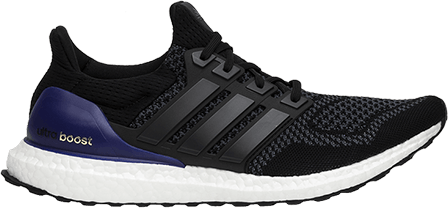
That crossover arrived in February 2015 with the $180 retail Ultraboost 1.0. Designers paired a breathable Primeknit sock upper with 20% more Boost capsules underfoot per release data. According to Highsnobiety’s Ultraboost 1.0 retrospective, cultural adoption surged after musicians wore the Core Black colorway onstage. Our guide on popular Yeezy Boost releases shows how that foam anchored lifestyle silhouettes.
How Does Fused BASF eTPU Compare With Loose TPE Microspheres on the Road?
Fused BASF eTPU pellets return 55% to 60% of impact energy per lab data, whereas TPE beads prioritize step-in softness.
To manufacture a Boost midsole, BASF steams solid TPU granules into closed-cell foam capsules called Infinergy. Factory molds fuse 2,500 pellets into a single midsole unit. Because the capsules are bonded together, the sole stays stable across 500 miles of road running. It also resists stiffening in -20°C winter weather. By contrast, loose TPE beads inside the $180 retail Joyride Run Flyknit displace around your plantar fascia.
Runners choose Joyride for slow, low-impact recovery days and Ultraboost for stable daily mileage and all-day standing comfort.
At 11.4 ounces (323 grams) in men’s size 10, the Joyride Run Flyknit weighs nearly the same as the 10.9-ounce (310-gram) Ultraboost 1.0.
| Cushioning Feature | Nike Joyride (2019) | Adidas Energy Boost (2013) | Adidas Ultraboost 1.0 (2015) |
|---|---|---|---|
| Core Polymer Tech | Loose TPE copolymer beads | Fused BASF eTPU capsules | Fused BASF eTPU (+20% volume) |
| Pellet / Bead Count | ~10,000 loose beads (4 pods) | ~2,000 fused eTPU pellets | ~2,500 fused eTPU pellets |
| Original Retail MSRP | $180 retail (Run Flyknit) | $150 retail (2013 debut) | $180 retail (2015 debut) |
| Men’s Size 10 Weight | 11.4 oz (323 grams) | 9.8 oz (278 grams) | 10.9 oz (310 grams) |
Why Did Visible Air and 2021 Yeezy Boost Models Win Everyday Streetwear?
Heritage storytelling kept visible Air and Boost-equipped Yeezys ahead of bead pods in everyday streetwear rotations.
Within Beaverton’s catalog, legendary footwear designers like Tinker Hatfield turned pressurized gas windows into cultural icons. Those visible Air units still anchor classic Air Jordan retros every weekend. Meanwhile, the Adidas Yeezy partnership placed full-length Boost inside ribbed 350 V2 midsoles priced at $220 retail.
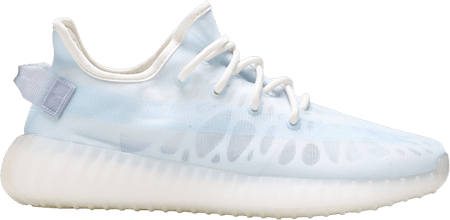
Models like the Yeezy 500 ($200 retail) and Yeezy 700 V3 ($200 retail) dropped Boost in favor of adiPRENE or EVA foam. Buyers noticed the firmer ride on those Boost-less pairs immediately. In June 2021, the $220 retail Yeezy 350 V2 Mono Pack replaced Primeknit with translucent monofilament mesh while keeping full-length Boost underfoot. Collectors still prize that spongy underfoot feel for daily errands.
How Do Reuse-A-Shoe Recycling and Puma Jamming Comparisons Factor In?
Loose-bead midsoles sparked comparisons to the 2017 Puma Jamming while advancing recyclable TPE material loops.
Two years before the August 2019 Joyride debut, Puma released its $160 retail Jamming runner. That 2017 Puma shoe filled one clear midsole cage with free-floating NRGY polyurethane beads. Per Sneaker Freaker’s Joyride vs. Puma Jamming analysis, Beaverton improved lateral stability by separating its TPE beads into four sealed compartments.
From an environmental standpoint, unbound TPE beads are easier to separate and reprocess than cross-linked glues. Worn pairs collected through the Reuse-A-Shoe program are shredded into Nike Grind granules. Those recycled rubber and polymer pellets resurface community basketball courts, running tracks, and playground tiles worldwide. Over 30 million worn shoes have entered that recycling stream since 1992.
What Are the Secondary Market Prices and Seller Fees on $180 to $220 Pairs?
Secondary market data shows 2015 Ultraboost 1.0 OG pairs and $220 Yeezy 350 V2 releases outperforming inline Joyride runners.
General-release Joyride Run Flyknit pairs ($180 retail) trade between $95 and $145 on StockX. By comparison, the 2015 Ultraboost 1.0 OG Purple averages $240 and the 2021 Yeezy 350 V2 Mono Ice ($220 retail) averages $255. Checking our historical archive on how much Yeezys cost on resale illustrates how Boost cushioning supports secondary bids.
According to the eBay athletic shoe fee schedule, sneakers sold for $150 or more carry an 8% flat fee. Per the StockX seller fee schedule, Level 1 sellers pay 9% commission plus 3% payment processing. Automated checkout software such as Valor AIO, Cybersole, and NikeShoeBot assists collectors during regional Shopify and Footsite drops.
| Cushioned Footwear Model | Launch Retail | StockX Resale Average | eBay Net Payout (8% Fee) |
|---|---|---|---|
| Joyride Run Flyknit OG (2019) | $180.00 retail | $135.00 average | $117.11 net (under $150 tier) |
| Joyride CC3 Setter MMW (2019) | $200.00 retail | $215.00 average | $197.80 net payout |
| Ultraboost 1.0 OG Purple (2015) | $180.00 retail | $240.00 average | $220.80 net payout |
| Yeezy 350 V2 Mono Ice (2021) | $220.00 retail | $255.00 average | $234.60 net payout |
Can the TPE beads inside the four midsole pods pop or leak during a run?
No, the beads are solid 2-millimeter TPE copolymer spheres housed inside thick abrasion-resistant rubber pods rather than gas-filled bags.
Which Yeezy models do not include BASF Boost cushioning in the midsole?
The Yeezy 500 uses adiPRENE+ cushioning, the Yeezy 700 V3 uses EVA foam inside a TPU cage, and the Yeezy Slide uses injected EVA foam.
Tagged