Where Are Nike Shoes Made? Factory Map and Country Breakdown
6 min read
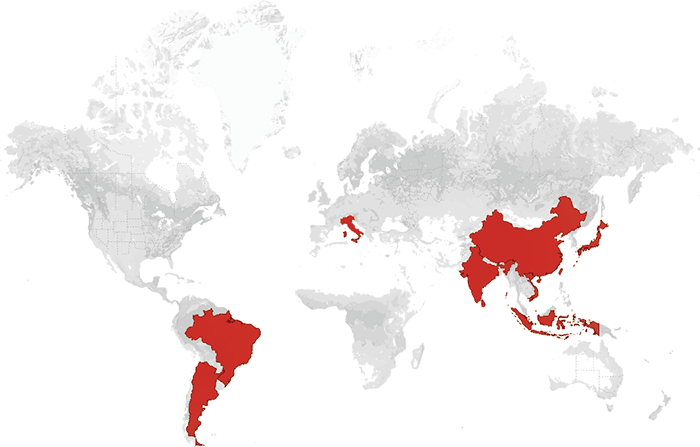
Understanding where are Nike shoes made starts with the brand’s public manufacturing map across 41 countries. Independent contract factories in Vietnam, China, and Indonesia produce the vast majority of pairs for the $145.73B footwear giant, while Italy and the US handle specialty runs. China leads by plant count with 112 factories and over 120,000 workers across all product lines.
How Do Contracted Factories Compare With Owned Plants?
The numbers are all the company’s own or a third party’s. Every row says which. The one figure Nike does not publish is a per-country share of footwear. That cell is left empty on purpose: a number nobody can check is worth less than a blank. Checking the interior size tag code confirms the exact country and factory behind any pair. Public supply chain disclosures track worker headcount and material sourcing across every plant.
Independent factory audits review labor standards and environmental compliance across all three main regions. Comparing two-letter plant codes across retro releases shows how assembly shifts between Vietnam and China. Reviewing annual 10-K filings alongside the factory map clarifies footwear versus apparel output. Matching tongue tag dates against supplier lists helps collectors verify production eras on older pairs.
Nike shoes are made in 41 countries, by factories Nike pays but does not own. The countries that come up most are China, Vietnam, Indonesia, Japan, Thailand and Italy. China is the heaviest entry on the map by factory count, with 112 factories and over 120,000 workers, though that figure covers equipment and clothing as well as shoes. Converse manufacturing sits under the same umbrella.
The map also lists Italy and Japan, which surprises people. Those are small entries next to the Asian ones. They are why a pair can carry a European or Japanese origin on the tongue without contradicting the rest of the list.
The bit most people miss is ownership. Corporate filings confirm that Nike holds a 0% ownership share in those contract factories. According to the company’s documented history, it was founded on January 25, 1964 as Blue Ribbon Sports by Bill Bowerman and Phil Knight. It has contracted its manufacturing rather than owning it ever since.
Why does the map not say which country makes the most shoes?
The map is silent on that. The reason is that the company publishes factory counts and worker numbers by country, not a per-country split for footwear. So anyone telling you “China makes most Nike shoes” is reading factory count as shoe count. Those are different things.
What can be said honestly is that Vietnam, Indonesia, and China dominate the footwear factories, though the exact ranking between them is not something the public map settles. We would rather leave that cell blank than fill it with a guess.
The number people quote for that split comes from the company’s annual filings, not the map. It changes every year. If you need it, the filing is the place to read it. It is the only place we would trust it from.
The whole list is public. You can check it yourself.
Why are the factories spread out like that?
The spread is deliberate, and it comes down to three reasons, none of them an accident.
Production cost: A pair costs a fraction of what you pay for it: by the arithmetic we did for a pair of Jordans, about 14% of the retail price, which is the same reason Yeezys and Adidas come out of very similar factories.
Labour cost: Wages in Asia and South America are a fraction of what the same work costs in the US or Europe.
Supply chain risk: Brands avoid depending on a single country. If production stops somewhere, the other regions keep running and the drops keep landing, which is why its various sub-brands all keep shipping when one region has a bad year.
The rest of the price is not manufacturing at all. Footwear entering the United States carries a 20% import duty, according to Shoemakers Academy, and the shop keeps roughly 50% of the ticket before the maker counts anything.
How ethical is it, really?
The ethics question is the one the factory map cannot answer. The accusations go back to the 1970s. In the 1990s the company took the full weight of them: reports of low wages and child labour in contracted factories showed a brand name attached to none of the direct legal responsibility because it did not own the buildings.
What changed since is factory monitoring. It did change things. What has not changed is the structure. A contractor is still a contractor, so a story surfaces every few years. That 0% factory ownership share explains why independent auditing remains essential.
Knowing where the shoes are made is the part of this any of us can actually do something with. That is why it is worth knowing at all, and why the map being public matters more than any single number on it.
The accusations start in the 1970s. Monitoring came later.
What is Nike Grind?
The sustainability work is two programmes, and neither makes it a sustainable brand. If that is what you are after, there are brands built that way from the start. Nike Grind is the material made from old shoes. Through the Reuse-A-Shoe programme, worn pairs get ground down instead of thrown out. The result becomes courts, tracks, playgrounds and new sneakers. The company publishes what gets made with Nike Grind.
It started in 1992 and it is still running more than thirty years later. This is longer than most corporate recycling schemes survive. Thirty-four years is not a pilot. That longevity is the strongest argument for taking it seriously.
The point of the programme is the second product. Ground rubber goes into surfaces, ground foam into padding. A worn pair ends as material rather than as landfill. It has outlived most corporate schemes because it produces something the company can sell.
What does Move to Zero actually commit to?
Move to Zero is the umbrella the rest sits under: the company’s stated goal of zero carbon and zero waste. It is a goal rather than a state of affairs. It is worth reading as exactly that.
The honest summary is that the programmes are real, the goal is unmet. The factory structure underneath has not changed. All three things are true at once.
Zero carbon covers the emissions from making and moving the product. This is where almost all of a shoe’s footprint sits, and zero waste covers what leaves a factory as scrap. Neither carries a public date. For that reason, it reads as a direction rather than a promise. Judge it by what gets published, not by the slogan.
Running since 1992.Does Nike own its factories?
Nike does not own its footwear plants. Every factory on the map is a contracted business. It sets the terms and monitors them, but the buildings and the employment belong to somebody else.
Are Converse made in the same factories?
Converse uses largely the same factory network. Converse sits under Nike and its manufacturing runs through the same contracted network. For that reason, the same countries come up for both.
Can I look up a specific factory?
You can look up any active supplier online. The manufacturing map is public and lists the contract factories by country along with worker numbers. It is the only first-hand source on this.
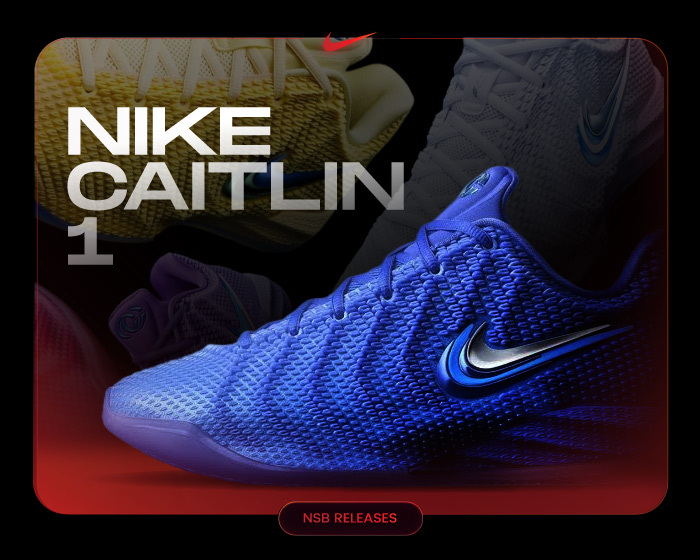
Caitlin Clark’s rise from college basketball sensation to professional superstar has been one of the biggest stories in sports. Now, Nike is cementing her…