Sustainable Sneakers: Top Eco-Friendly Footwear Brands & Guide

Modern sustainable sneakers replace virgin petroleum plastics and hides with Amazonian wild rubber, organic cotton, and recycled ocean polyester. Footwear labels are changing the world one step at a time by targeting a 0% net carbon footprint by 2030. Retail prices range from $89 canvas pairs to $180 recycled-knit runners.
- Pioneer Independent Labels: Includes Veja (founded 2004), Etiko (2005), Good Guys (2011), Flamingo’s Life (2015), and Cariuma (2018).
- Material Benchmarks: Per brand filings, Good Guys builds 100% vegan shoes in Portugal, while Allbirds targets near 0% carbon emissions by 2030.
- Major Brand Scale: Since 2015, Adidas and Parley have produced over 30 million pairs alongside 2020 Primeblue and Primegreen fabrics.
- Circular Footwear Lines: Nike Move to Zero pairs like the Space Hippie 01 ($130 retail) and Next Nature Dunk ($115) use 20% to 50% recycled weight.
How Did Veja, Cariuma, and Etiko Pioneer Ethical Footwear Production?
French footwear label Veja launched in 2004. The founders paired minimalist court design with transparent South American supply chains. As detailed on the official Veja sustainability project, the brand sources organic Brazilian cotton and Amazonian rubber. Its name translates to “look” in Portuguese, urging buyers to examine how shoes are made. Flagship Campo and V-10 pairs retail between $150 and $175.

In Brazil, two former footwear executives founded Cariuma in 2018 to prioritize small-batch quality and reforestation. Cariuma models like the OCA Low ($89 retail) use organic cotton canvas and natural tapped rubber. Every purchase funds two newly planted trees in the Brazilian rainforest.
Australia’s Etiko started even earlier in 2005 when founder Nick Savaidis built a Fairtrade-certified alternative. Named after the Greek word “ithika” for ethical, Etiko produces organic cotton low-tops priced at $110 retail.
What Makes Flamingo’s Life, Good Guys, and Allbirds Stand Out in Materials?
European and Pacific labels expanded bio-based construction in the 2010s. They replaced animal hides with corn waste, apple skins, and Merino wool. In 2015, founder Carlos Garcia launched Flamingo’s Life in Elche, Spain, producing handcrafted trainers in family-run factories. Retailing from $150 to $185, each Flamingo’s Life collection funds ocean cleanup or reforestation projects.
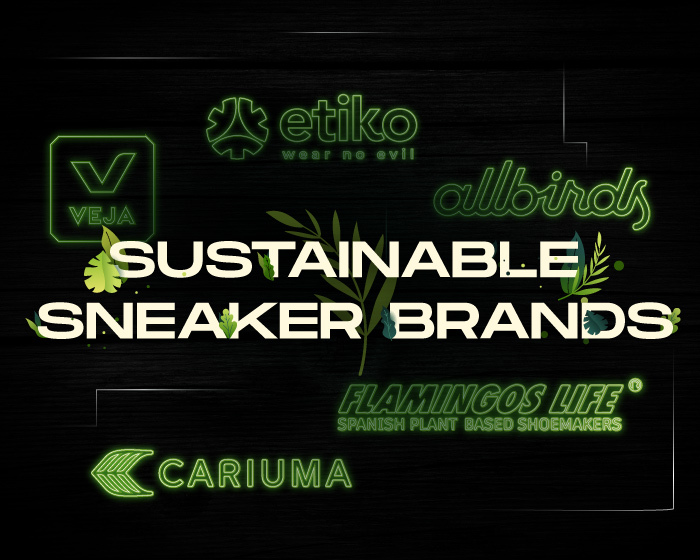
In Paris, Marion Hanania founded Good Guys Don’t Wear Leather in 2011, offering 100% vegan footwear per brand data. Her leadership remains a standout milestone for women in the sneaker industry building independent footwear labels. Good Guys produces 100% cruelty-free shoes ($160 to $210 retail) in European workshops using apple-skin leather.
Meanwhile, former New Zealand footballer Tim Brown and Joey Zwillinger founded Allbirds in San Francisco. Their Wool Runner ($110 retail) pairs Merino wool with a SweetFoam midsole derived from Brazilian sugarcane. Following record global temperatures and wildfires in 2023, Allbirds committed to cutting its carbon footprint toward 0% by 2030 per company filings.
| Eco-Footwear Brand | Founding Year & Origin | Signature Bio-Material | Retail Price Range |
|---|---|---|---|
| Veja | 2004 (Paris / Brazil) | Amazonian Rubber & Organic Cotton | $150 to $175 |
| Etiko & Cariuma | 2005 (AU) / 2018 (Brazil) | Fairtrade Canvas & Natural Rubber | $89 to $110 |
| Good Guys & Flamingo’s | 2011 (France) / 2015 (Spain) | 100% Vegan Apple & Corn Leather | $150 to $210 |
| Allbirds | 2016 (NZ / San Francisco) | Merino Wool & Sugarcane SweetFoam | $110 to $140 |
How Do Nike Move to Zero and Adidas Parley Compare at Global Scale?
Multinational sportswear giants manufacture hundreds of millions of pairs annually, so their material shifts carry huge impact. As part of the ongoing Nike vs Adidas rivalry, both companies launched flagship circular design programs. Under the Nike Move to Zero initiative, the Oregon brand repurposes factory scrap into Nike Grind rubber outsoles.

Nike’s 2020 Space Hippie 01 ($130 retail) used 85% recycled yarn and 50% recycled weight. Meanwhile, Adidas launched its partnership with Parley for the Oceans in 2015 under the “End Plastic Waste” banner. Since 2015, Adidas has sold over 30 million Parley pairs worldwide. In 2020, Adidas also introduced 100% recycled Primeblue and Primegreen fabrics per company data.
Both sportswear giants now publish per-pair carbon scores inside product tags. Shoppers can compare material percentages across performance runners and lifestyle retros.
What Do Eco-Conscious Shoes Cost at Retail and on Resale Platforms?
Everyday canvas pairs from Cariuma ($89 retail) and Etiko ($110 retail) sell as stocked basics. By contrast, limited recycled releases from Nike and Adidas trade actively on secondary platforms. The 2016 Adidas UltraBoost Uncaged Parley ($200 retail, 7,000 pairs) averages $290 on the aftermarket. Similarly, the 2020 Nike Space Hippie 03 ($180 retail) averages $245 in deadstock condition.
Producing over 30 million Parley Ocean Plastic pairs since 2015 proved that intercepted marine waste could scale from a $200 limited collector drop into a 2020 Primegreen standard.
In the retro basketball category, Nike’s Next Nature Dunk Low series ($115 retail) uses 20% recycled material by weight. Popular colorways like the White/Black and White/Mint Next Nature Dunks trade between $125 and $160 on resale platforms.
How Do Marketplace Seller Fees Apply to Space Hippie and Parley Models?
Sellers listing Space Hippie or Parley collaborations on secondary marketplaces must deduct transaction fees to find net payouts. According to the eBay athletic shoe fee policy, sneakers selling for $150 or more carry an 8% final value fee. On a $290 sale of the 2016 UltraBoost Parley ($200 retail), eBay deducts $23.20, leaving $266.80 net.
By comparison, the StockX seller fee schedule charges Level 1 accounts a 9% transaction fee plus a 3% processing fee. On a $245 Space Hippie 03 sale ($180 retail), that 12% deduction equals $29.40, leaving $215.60 net.
For pairs priced below $150, such as a $135 Next Nature Dunk Low sale, StockX’s 12% fee deducts $16.20, leaving $118.80 net. Choosing the lower fee tier on $150+ pairs preserves more of the resale spread.
| Recycled Sneaker Release | Original Retail | Gross Resale Price | eBay / StockX Net Payout |
|---|---|---|---|
| Adidas UltraBoost Parley (2016) | $200 | $290 | $266.80 (eBay 8% Fee) |
| Nike Space Hippie 03 Volt (2020) | $180 | $245 | $215.60 (StockX 12% Fee) |
| Nike Space Hippie 01 Grey (2020) | $130 | $175 | $161.00 (eBay 8% Fee) |
| Nike Dunk Low Next Nature | $115 | $135 | $118.80 (StockX 12% Fee) |
How Can Buyers Secure Limited Next Nature and Recycled Drops at Retail?
Securing limited Next Nature Dunks ($115 retail) or Parley runners on release morning requires preparation before stock sells out. Our retail sneaker buying guide outlines how to verify SNKRS accounts and billing profiles ahead of 10:00 AM EST launches. Preparing multiple size entries prevents missed drops on popular women’s and men’s runs.
When special-edition eco-capsules release across Shopify boutiques and Nike channels, collectors use automated checkout software. Platforms including Valor AIO, Cybersole, Stellar AIO, The Shit Bot, and NikeShoeBot manage multi-task carting workflows across supported retail drops. Readers can review our Nike bot comparison guide to evaluate SNKRS module support.
Pairing clean residential proxies with verified shipping profiles keeps tasks responsive during regional restocks. Whether buying a $150 Veja Campo for daily wear or targeting a $115 Next Nature release on SNKRS, preparation secures pairs at retail.
What does the brand name Veja mean in Portuguese?
Founded in 2004, Veja is the Portuguese word for “look,” chosen to encourage consumers to look beyond the finished shoe at the organic farms and Amazonian rubber tappers behind its production.
How many pairs of Parley Ocean Plastic shoes has Adidas produced since 2015?
Since launching its partnership with Parley for the Oceans in 2015, Adidas has produced over 30 million pairs of shoes made with intercepted marine plastic waste, alongside its 2020 Primeblue and Primegreen fabrics.