6 Sneaker Accessories Every Sneakerhead Should Own

The six sneaker accessories every sneakerhead should own are dubraes, laces, aglets, insoles, shoe trees and a sneaker bag. Some make a pair completely yours, but the rest keep your kicks comfortable, in shape or safe on the move. On 9 October 2026, the priced ones we checked ran from $5.95 for Lace Lab laces to $88.00 for the Crep Protect Sneaker Bag, according to each retailer’s own page.
- Laces: Lace Lab listed its Jordan 1 replacement laces at $5.95 a pair on 9 October 2026.
- Insoles: Superfeet listed its All-Purpose Support Medium Arch insole at $59.99 on the same day.
- Shoe trees: Woodlore listed a pair of its men’s combination cedar trees at $29.95 that day.
- Style pieces: dubraes and metal aglets are mostly about how your laces look.
Dubraes vs lace locks: what is the difference?
A dubrae is a lace tag that is there for looks, while a lace lock is a clip that holds your laces tight.
Nothing adds a touch of personality to your kicks the way dubraes do. Wikipedia’s shoelace article describes shoelace tags, “sometimes called deubré”, as tags with two holes or slots that the lace passes through. One you’ll know sits on the Air Force 1. According to Wikipedia’s Air Force 1 entry, that medallion is engraved “AF-1” with “’82” beside it, and it slides off the lace.
Don’t confuse them with lace locks, because those have a functional reason to be on your kicks. Lace Lab’s lace lock page says a lock “helps you quickly secure your laces without tying them”, and it listed its gold locks at $4.95 on 9 October 2026. A dubrae, by contrast, mostly keeps tabs on the middle of the cord. The fun part is that you can get hella creative with them.
Which replacement laces fit your sneakers?
The right replacement laces match the shape of the originals and the number of eyelets, because more holes need a longer cord.
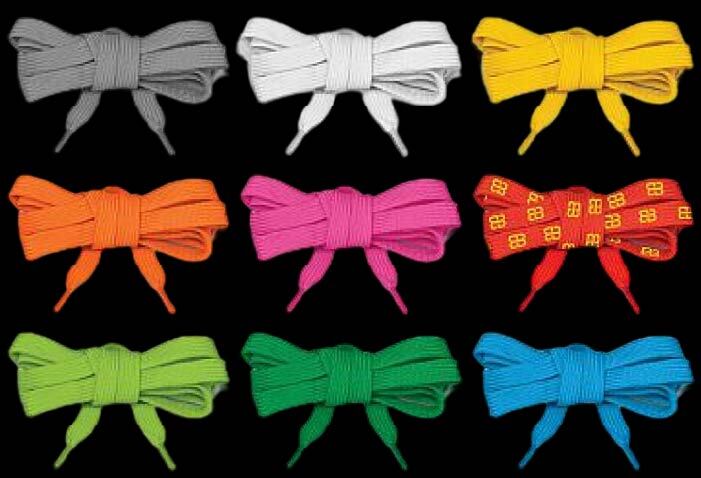
We have to talk about the shoe laces themselves, because we’d call them the most important accessory. They do the work, keep your feet locked in, and look good on top of it. Some brands add an extra pair to some of their kicks, but you can also pick your own and let your creativity go wild.

A new set of laces is a cheap way to change how a pair looks. Length is easy to get wrong, because a cord that’s too short won’t tie. According to Lace Lab’s Jordan 1 lace page, a Jordan 1 High takes a 72-inch lace for a tied look and a Low takes 54 inches. So, according to that page, the High needs 33% more cord than the Low (18 ÷ 54 = 0.33).
According to the length table in Wikipedia’s shoelace article, six holes take 100 cm and eight take 120 cm, a 20% jump. If you’re redoing a pair of Jordans, our guide on how to lace Jordan 1s walks through it.
Jordan 1 lengths from Lace Lab’s product page; hole counts from Wikipedia’s shoelace table Shoe or hole count Length Jordan 1 Low 54 in Jordan 1 Mid 63 in Jordan 1 High, untied look 63 in Jordan 1 High, tied look 72 in 5 holes 85 to 90 cm 6 holes 100 cm 7 holes 110 cm 8 holes 120 cm 10 holes 130 cm Why do aglets deserve their own mention?
Aglets are the small plastic or metal tips on the ends of your laces, and you can turn them into statement pieces.
According to Wikipedia’s aglet entry, the tip keeps the fibers from unraveling and makes the cord easier to feed through eyelets. They’re often plastic or metal. However, the same entry says many companies add metal sheaths for durability. The word comes from the French aguillette, a little needle or pin.
This is where you can have fun, because nobody expects much from a tip. You can print custom text on them for an Abloh-esque feel, or go for luxury with shiny metal tips. Lace Lab’s Gold Bullet Aglets come as four metal tips plus one super glue, and the page listed them at $5.95 on 9 October 2026.
Four tips cover both ends of two laces, so one pack does one pair. The catch is fitting them, because the page says to put two to three drops of glue in each tip and hold it on the lace for a few seconds.
Do you need aftermarket insoles in your sneakers?
You need aftermarket insoles only when the factory ones don’t suit your feet, because comfort and arch support differ from person to person.
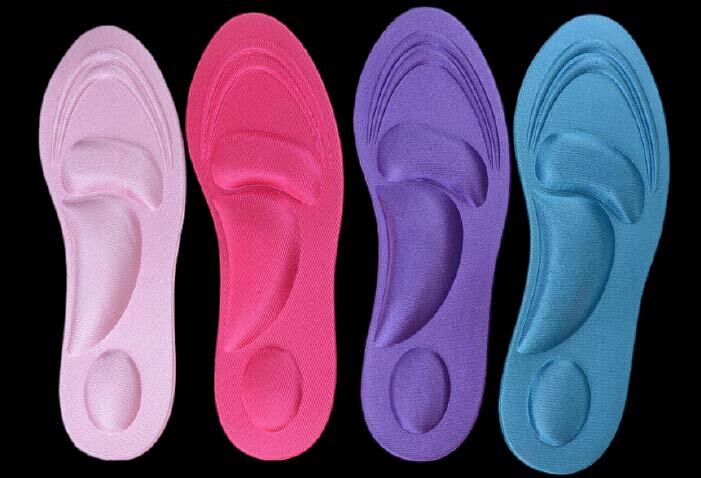
People’s needs are always different, and what works for you might not work for someone else. That’s why insoles are the invisible accessory. The Insole Store’s guide to different types of insoles describes many kinds, including these three. Orthotic arch supports have “a rigid or semi-rigid support plate”. Cushioned arch supports get their arch from padding alone, but flat cushioned insoles have no arch support at all.

Insoles are the add-on nobody sees, and the one your feet notice most. The same guide says to match the insole to your arch, whether it’s neutral, low or high, because the wrong one is likely to feel uncomfortable. For a price point, Superfeet’s page listed its All-Purpose Support Medium Arch insole at $59.99 on 9 October 2026. It’s trim-to-fit, so you cut it to your size. You don’t have to sacrifice your drip for comfort, but comfort comes first.
Do shoe trees stop sneakers from creasing?
Shoe trees help stop creases from forming and keep your kicks in their OG shape between wears.
Although they aren’t accessories per se, shoe trees are a must-have if you like to take care of your pairs. Wikipedia’s shoe tree entry puts it plainly:
A shoe tree is a device approximating the shape of a foot that is placed inside a shoe to preserve its shape, stop it from developing creases, and thereby extend the life of the shoe.
Cedar is the wood to look for, because it soaks up sweat. Woodlore says its aromatic cedar “absorbs moisture” and “deodorizes naturally”, and on 9 October 2026 its men’s combination cedar shoe tree was listed at $29.95 a pair. Plastic trees are lighter for travel. However, the Wikipedia entry says they lack the moisture absorption of wood.
If you want to start a sneaker collection, you’re gonna need the props to go with it. For creases you already have, our guide on how to uncrease shoes picks up where trees stop.
When is a sneaker bag worth carrying?
A sneaker bag is worth carrying when you’re on the move, because it keeps your pairs apart from everything else you pack.
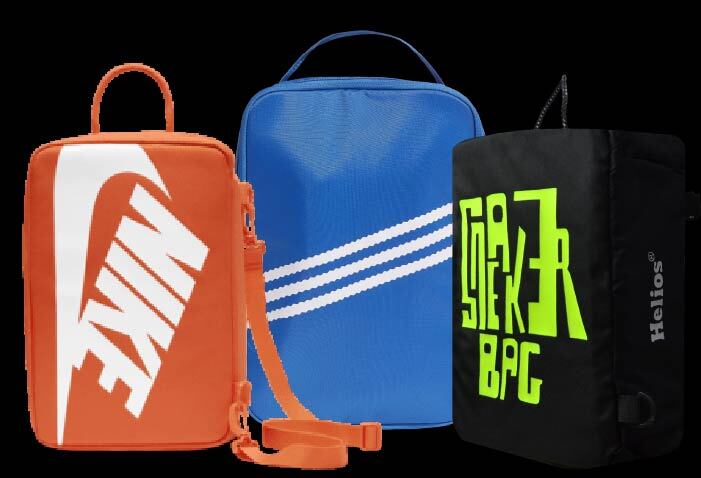
Bags are great additions if you travel, hit the gym or just wanna save space. Crep Protect describes its Sneaker Bag as a “premium duffle-styled bag” for the “transportation of your sneakers”, and its page listed it at $88.00 on 9 October 2026. How big a bag you need depends on what you carry. The page doesn’t say how many pairs it holds, so look at the size before you buy.

A bag for your pairs makes sense on the move, not on the shelf. However, bags aren’t a good option for long-term storage, so keep that in mind. Kicks that sit for months need a different setup, because a bag is made for the trip, not the shelf. Our sneaker storage guide is the better read for that.
The six sneaker accessories at a glance
In short, dubraes and aglets are about looks, laces do both jobs, and insoles, trees and bags are about comfort and care.
Accessory What it does Example we checked Listed price, 9 Oct 2026 Source Dubrae (lace tag) Looks Air Force 1 medallion Comes on the shoe; no stand-alone price checked Wikipedia Lace locks, for comparison Hold laces without a knot Gold Lace Locks $4.95 Lace Lab Replacement laces Fit and looks White Jordan 1 Replacement Shoelaces $5.95 Lace Lab Metal aglets Looks, stop fraying Gold Bullet Aglets, 4 tips $5.95 Lace Lab Insoles Comfort and arch support All-Purpose Support Medium Arch $59.99 Superfeet Shoe trees Shape and moisture Men’s Combination Cedar Shoe Tree, 1 pair $29.95 Woodlore Sneaker bag Carrying pairs Sneaker Bag $88.00 Crep Protect We checked the product pages of Lace Lab, Superfeet, Woodlore and Crep Protect on 9 October 2026, and the prices above are what those pages listed. Based on the figures from those pages, the five priced items out of the six add up to $189.84 (5.95 + 5.95 + 59.99 + 29.95 + 88.00).
According to the same figures, the bag alone is about 46% of that total (88.00 ÷ 189.84), and the insoles are about 32% (59.99 ÷ 189.84). So the small style pieces cost the least, while the comfort and care items cost the most. Market prices move and are shown for reference, not as a promise.
- Dubrae (deubré)
- A lace tag with two holes or slots that the lace passes through.
- Lace lock
- A spring-loaded clip that secures your laces without a knot.
- Aglet
- The plastic or metal tip at each end of a lace.
- Orthotic arch support
- An insole built on a rigid or semi-rigid plate.
- Shoe tree
- A foot-shaped insert that holds a shoe’s shape between wears.
Our take: what to buy first, and the pair that comes before it
Our take is to start with laces and shoe trees, because together they cover looks, fit and shape for $35.90 at the prices listed above.
Insoles come next if your feet need them, while dubraes and aglets are the fun extras. A bag makes sense once you travel with your kicks, but it isn’t a home for them. If you’re shopping for someone else, our sneakerhead gift ideas list is another place to look.
But before you get the accessories, you gotta get the kicks. If the pair is hyped, that’s the hard part, because demand for the same shoe all lands at the same time. Our guide on how to cop kicks for retail is where we’d start. And if sneaker botting is new to you, that explainer covers how checkout bots fit into a release.