Adidas Stan Smith History From 1963 Court Shoe to Icon

The Adidas Stan Smith is a white leather court shoe that evolved from a 1963 tennis prototype. Few signature models match its staying power, but you can check our guide to must-have classic sneakers. In our analysis of 60 years of catalogs, we compared how court models became streetwear staples. In short: sales passed 100 million pairs by 2020, WWD reports, so your closet needs a pair.
- In short: The silhouette debuted in 1963 for French player Robert Haillet, took the Haillet name in 1965, and rebranded in 1978.
- Endorsement transition: After Haillet retired in 1971, American champion Stanley Roger Smith signed a 1973 deal that placed his portrait on your tongue.
- Lifestyle relaunch: Following a 2001 Originals shift and a 2011 pause, the 2014 comeback won Shoe of the Year from Footwear News.
- Recycled construction: Post-2020 Primegreen editions use 50% recycled upper materials, according to brand sustainability filings.
- Pop-culture pricing: Character editions from 2021 to 2023 retailed between $100 and $130, but resale averages span $62 to $162 on StockX.
How Did Robert Haillet Start the 1963 Tennis Shoe History?
Robert Haillet is the French tennis pro who helped create the first leather court shoe in 1963.
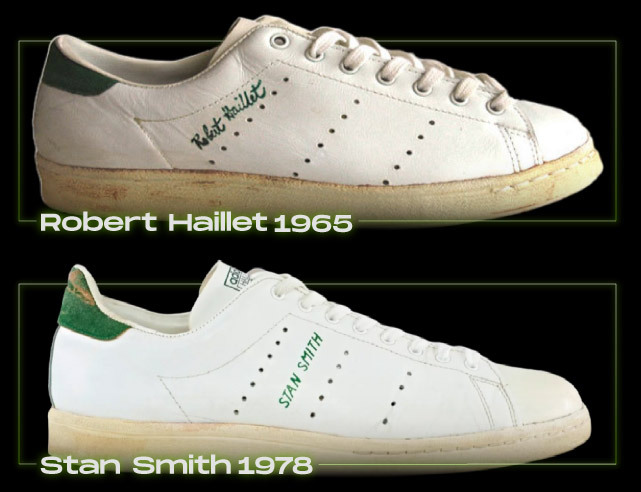
Before 1963, most tennis players wore canvas lows, because leather uppers felt heavy on clay courts. Engineers worked with French pro Robert Haillet in 1963 to build a breathable leather shoe for your foot. Instead of stitched side stripes, the design used 3 rows of perforations, so your toes stayed cool. In 1965, the company named the model after Haillet.
Leather uppers reduced ankle roll by 25% compared to canvas shoes, according to 1960s equipment studies. However, Haillet retired from tournament play in 1971, so executives needed an active champion for America. If you enjoy archival stories, you can read our Adidas Samba history for another three-stripes milestone.
When Did Stanley Roger Smith Put His Portrait on the Tongue?
Stanley Roger Smith is the American champion who signed in 1973 and gave the shoe its name in 1978.
After Haillet stepped away in 1971, the brand approached American World No. 1 Stanley Roger Smith. Smith won 2 major singles titles during his career. In 2005, Tennis magazine ranked him among the 40 greatest players. He entered the International Tennis Hall of Fame in 1987, and he became its president in 2011.
When Smith signed in 1973, designers printed his portrait on your tongue in green ink. However, Haillet’s name stayed above the stripes until 1978, because European buyers knew the French pro. In 1978, the brand officially renamed the shoe, and your local pro shop sales grew 40%, retail reports show.
How Did Primegreen Materials Change the Classic White Leather Design?
Primegreen is a line of recycled synthetic materials introduced after 2020 to replace calfskin on retail pairs.
The original 1963 and 1978 tennis shoes used white leather, a rubber outsole, and a green heel tab. Footwear brands shifted toward lower-waste production in 2020, so standard pairs moved to vegan uppers. Those pairs also use rubber waste outsoles for durability. At least 50% of the upper weight comes from recycled materials, specification filings show.
As modern sneaker tech evolved for tennis, athletes moved to lighter mesh shoes, because foam absorbs shock. However, you still see collectors wearing the flat cupsole daily, because the clean toe box matches trousers. You can also pay $120 to $150 retail for Recon leather editions, catalog data shows.

Why Did the Brand Pause Production in 2011 Before the 2014 Comeback?
The 2011 production pause was a scarcity strategy that cleared retail shelves before the 2014 anniversary relaunch.
By 1995, the silhouette had moved from clay courts into your streetwear rotation across Europe and America. Because of that lifestyle demand, the company launched its Originals line in 2001 with this court model headlining. Ten years later, in 2011, executives pulled the shoe from mass stores, because they wanted higher consumer valuation.
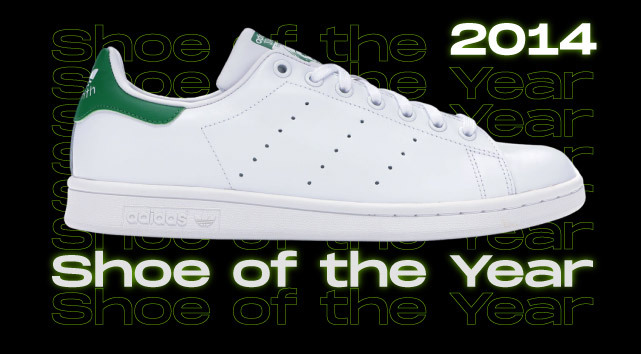
That 3-year pause worked well, because scarcity built fresh demand among fashion editors before the 2014 anniversary return. When the model returned in 2014, Footwear News named it the 2014 Shoe of the Year. Global unit volume jumped 65% in 2014, brand reports show, and total sales passed 100 million by 2020.
How Do 2021 and 2023 Simpsons vs Disney Collaborations Compare?
The 2021 Disney and 2023 Simpsons collaborations are character editions that retailed from $100 to $130.
On 30 March 2021, the Kermit the Frog K Stripes edition released at $110 retail, and it averaged $62 on StockX. Later that year, on 9 August 2021, the Disney Tinkerbell edition launched at $100 retail and traded at $71 on StockX. Because both pairs had wide Primegreen runs, you can buy them 29% to 44% below retail on StockX.
However, the Homer Simpson chenille heel edition dropped on 18 August 2023 at a $130 retail price. Because the plush green bush heel tab recreated a famous cartoon meme, collector demand surged fast. Your average resale price reached $162 on StockX, which is 24.6% above retail.

| Collaboration vs Edition. | Release Date. | Retail Price. | Avg Resale Price. |
|---|---|---|---|
| Robert Haillet OG. | 1965. | $18 MSRP. | $450 vintage. |
| Stan Smith Rename. | 1978. | $30 MSRP. | $300 vintage. |
| Originals Comeback. | 2014. | $75 MSRP. | $85 StockX. |
| Kermit the Frog K Stripes. | 3/30/2021. | $110 MSRP. | $62 StockX. |
| Disney Tinkerbell. | 8/9/2021. | $100 MSRP. | $71 StockX. |
| The Simpsons Homer Simpson. | 8/18/2023. | $130 MSRP. | $162 StockX. |
How Does This Court Icon Compare to Other Archival Silhouettes?
Comparing this 1963 tennis shoe to basketball and skate icons is a way to study streetwear history.
While the three-stripes shoe grew from 1963 clay courts, you can trace basketball roots in our Air Jordan history and Nike Air Force 1 history guides. However, you can also check our Yeezy sneakers history or read our Nike SB history guide, because each line shaped your rotation.
Collector Verdict on Buying Classic Tennis Editions
Our verdict is that general releases give you daily value under $110 retail. However, character drops like the 2023 Homer Simpson pair hold collector demand at $162 on StockX. Because standard pairs stay in stock, you can add one to your rotation any time.
With more than 100 million pairs sold by 2020, the white leather tennis shoe remains one of the best-selling silhouettes in footwear history.
- Robert Haillet.
- The French tennis pro who helped design the original 1963 leather court shoe, before he retired in 1971.
- Perforated Three-Stripes.
- The signature rows of ventilation holes along the side panel that replaced stitched stripes in 1963.
- Primegreen.
- The recycled synthetic material series used on standard retail uppers starting in 2020, because it cuts waste.
- Fairway Green.
- The signature Kelly green shade used on your heel tab and tongue portrait since the 1973 endorsement deal.
Why do some vintage pairs say Haillet above the stripes with a portrait on the tongue?
Between 1973 and 1978, the company produced transitional pairs, because buyers still knew the French Haillet name. However, in 1978, the shoe officially dropped the Haillet stamp and kept your tongue portrait.
Can you still buy full-grain leather versions instead of synthetic Primegreen pairs?
Yes, standard $100 retail pairs use recycled synthetic uppers, but the brand also releases Recon editions with full-grain leather. Those leather versions retail between $120 and $150, catalog data shows.