What Is Rarible? Multi-Chain NFT Marketplace, Fees & Guide

Understanding what is Rarible begins with its 2020 launch as a community-governed marketplace for digital art and gaming assets. Evaluating how its reputation lives up to its name requires examining its 2.5% transaction fee and lazy minting tools. Native RARI governance tokens also give holders direct protocol voting rights. Collectors compare its digital order books against the physical sneaker market projected to reach $30 billion by 2030 per industry forecasts.
- Platform Launch: Founded in 2020 alongside the $RARI governance token, which recorded a $7.20 historical benchmark in early 2022 per market data.
- Multi-Chain Architecture: Supports minting and trading across Ethereum (ERC-721 and ERC-1155), Flow, and Tezos blockchains with Nori carbon removal integration.
- Three Listing Modes: Offers Fixed Price instant checkout, Timed Auctions with 10-minute anti-sniping extensions, and Open for Bids order books.
- Fee And Royalty Structure: Deducts a 2.5% base marketplace fee while enforcing 5% to 10% creator royalties and gas-free lazy minting.
What Is Rarible and How Did It Launch in 2020?
Rarible is a decentralized peer-to-peer marketplace founded in early 2020 by Alexei Falin and Alexander Salnikov. The platform enables creators and collectors to mint and trade digital media without middlemen. When collectors ask what is Rarible and how it differs from the OpenSea marketplace, the core distinction is community governance. In July 2020, the platform introduced $RARI as the first governance token in the sector.
According to CoinMarketCap RARI token records, the token traded at $7.20 in March 2022. Total token supply is permanently capped at 25,000,000 units across the protocol. Holders lock $RARI to vote on protocol fee adjustments, moderation rules, and community treasury grants. Beginners studying essential NFT terminology use the storefront to filter digital art, photography, music files, and metaverse land parcels.
Which Blockchains and Carbon Removal Tools Does It Support?
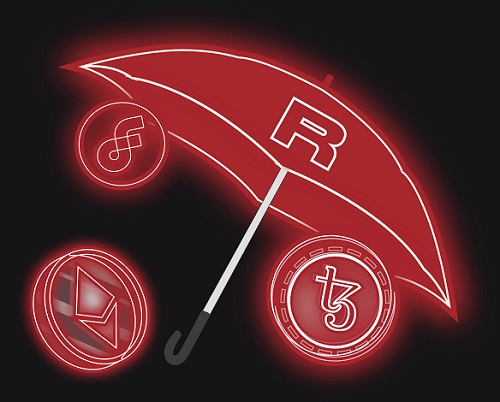
The marketplace supports multi-chain smart contracts across Ethereum, Flow, and Tezos. That multi-network setup prevents users from being locked into a single blockchain’s gas fees. On Ethereum, the platform indexes both single-edition ERC-721 tokens and multi-edition ERC-1155 collectibles. Creators seeking sub-dollar transaction costs often mint on Tezos or Dapper Labs’ Flow blockchain. Network fees on Tezos and Flow cost less than $0.01 per mint.
To address energy consumption concerns from early proof-of-work blocks, the platform partnered with the Nori Carbon Removal Marketplace. That integration lets artists and collectors pay for verified carbon removal certificates inside the checkout flow. By retiring verifiable carbon tonnes, creators certify their digital collections as carbon-neutral. Eco-conscious buyers can filter verified low-carbon collections directly on the storefront dashboard.
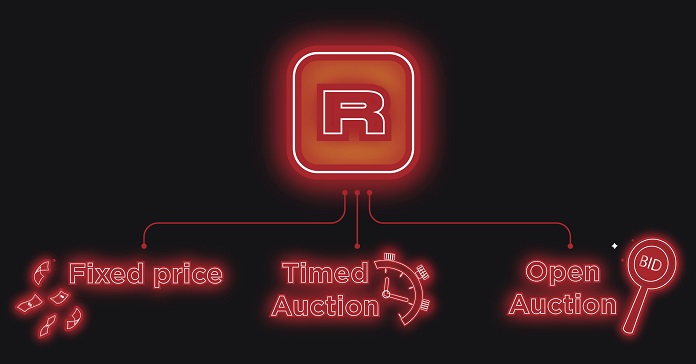
How Do Fixed-Price, Timed Auction, and Open-Bid Listings Work?
Sellers listing a digital collectible on the platform choose among 3 distinct execution mechanics: Fixed Price, Timed Auction, and Open for Bids. Users learning how to create an NFT most frequently select Fixed Price when launching a multi-edition drop. Under Fixed Price mode, the seller sets an exact cryptocurrency ask. The first buyer to confirm wallet payment receives the token immediately.
Timed Auctions allow the seller to establish a minimum reserve price along with a scheduled start and end timestamp. To prevent last-second bot sniping, any bid submitted during the final 10 minutes extends the clock by 10 minutes. Meanwhile, Open for Bids leaves the token unpriced on the order book. Shoppers studying how to buy NFTs can submit custom offers at any time.
How Do 2.5% Fees, Royalties, and Lazy Minting Operate?
The protocol’s fee schedule combines a 2.5% base marketplace commission with automated creator royalties and deferred lazy minting. Whenever a secondary sale settles on the smart contract, the platform deducts 2.5% of the transaction value. In addition, original artists configure a 5% to 10% royalty margin during initial setup. That 5% to 10% creator royalty schedule transfers automatically to the artist’s wallet on every subsequent resale.
For new creators worried about upfront Ethereum gas costs, the platform pioneered Lazy Minting. Under Lazy Minting, an artist uploads artwork metadata and signs a cryptographic permission message off-chain for $0 in gas fees. The ERC-721 or ERC-1155 token is only written to the blockchain after a buyer purchases the piece. Smart contracts bundle the minting gas fee into the buyer’s checkout transaction.
| Platform Feature | Technical Specification | Cost / Fee Structure | Primary User Benefit |
|---|---|---|---|
| Marketplace Base Fee | Smart-contract settlement | 2.5% per completed trade | Lower than physical hub commissions |
| Creator Royalties | On-chain royalty split | 5% to 10% set by creator | Automated artist compensation |
| Lazy Minting Mode | Off-chain signature storage | $0 upfront gas for creator | Buyer pays mint gas at purchase |
| Timed Auction Rule | Anti-snipe timer logic | +10 min extension on late bids | Prevents last-second bid sniping |
How Does Digital Trading Compare to the $30 Billion Sneaker Market?
Many collectors balance digital collectibles alongside physical footwear because sneakers offer tangible cultural utility and lower price volatility. According to NBC News coverage of Cowen equity research, the global secondary sneaker market is projected to reach a $30 billion valuation by 2030. Physical Air Jordan, Nike Dunk, and Kobe releases anchor streetwear demand across every economic cycle.
However, physical footwear exchanges charge higher transaction commissions than a 2.5% blockchain protocol to cover warehouse authentication. According to the StockX seller fee schedule, Level 1 sellers pay a 9% transaction fee plus a 3% payment processing fee. Similarly, the GOAT seller fee structure deducts a 9.5% base commission plus $5 and a 2.9% cash-out fee. Meanwhile, the eBay sneaker fee schedule charges 8% on pairs sold for $150 or more.
While a $500 digital collectible trade incurs a $12.50 base platform fee (2.5%), a $500 physical sneaker sale on eBay incurs a $40.00 fee (8%) before creator royalties or shipping.
What Tools Help Collectors Balance Web3 and Retail Sneaker Drops?
Managing both digital mints and physical sneaker drops requires community release intelligence and automated checkout software. Joining a dedicated sneaker cook group gives collectors early variant monitors, raffle lists, and Web3 whitelist alerts inside one Discord server. Beginners also study our sneaker bot setup guide to configure billing profiles, virtual cards, and residential proxy subnets.
When Saturday morning footwear releases go live across Shopify boutiques and Footsites, manual buyers rarely beat automated checkout queues. Collectors comparing leading desktop software evaluate Valor AIO, Cybersole, Stellar AIO, and NikeShoeBot across Windows and macOS operating systems. Running multi-site checkout tasks alongside hardware wallet security lets collectors participate in both physical streetwear and digital collectibles safely. Diversifying across both asset classes keeps release calendars active year-round.
| Marketplace Platform | Primary Asset Type | Base Seller Fee | Authentication & Settlement |
|---|---|---|---|
| Rarible | Ethereum, Flow & Tezos NFTs | 2.5% (+ 5-10% royalty) | On-chain contract (~15 seconds) |
| eBay ($150+ Sneakers) | Authenticated Footwear | 8.0% flat final value fee | Physical hub inspection (3-7 days) |
| StockX (Level 1) | Deadstock Sneakers & Apparel | 9.0% fee + 3.0% processing | Physical hub inspection (5-10 days) |
| GOAT | New & Used Footwear | 9.5% + $5 + 2.9% cash-out | Physical hub inspection (5-10 days) |
What is the difference between an ERC-721 and an ERC-1155 token on the marketplace?
An ERC-721 token is a strictly one-of-one unique item, whereas the ERC-1155 standard allows a creator to mint multiple identical editions (such as 50 copies of a digital poster) under a single smart contract.
Does lazy minting work across all blockchains supported by the platform?
Lazy minting was built primarily for Ethereum ERC-721 and ERC-1155 collections where upfront gas fees can exceed $10 to $30. On low-cost networks like Flow and Tezos, standard on-chain minting already costs less than $0.01.