How to Create an NFT: 6-Step Minting, Wallet & Gas Fee Guide

Learning how to create an NFT and enter the virtual world takes 6 clear steps. Prepare original media, pick a blockchain, configure a wallet, select a marketplace, upload metadata, and list. Minting costs span $0 on lazy-minting chains up to $600 during peak Ethereum gas spikes. Every token proves verifiable ownership on-chain.
- 6 core steps: Create original files, pick a chain, fund a wallet, select a marketplace, upload metadata, and list.
- Flexible formats: Mint PNG art, 3D sneaker models, GIFs, MP4 clips, or WAV audio files under 100 MB.
- Minting fee range: Lazy minting and Layer-2 chains start at $0 to $2, while heavy Ethereum contracts reach $50 to $600.
- Creator royalties: Configure 2.5% to 10% secondary creator royalty rates depending on marketplace policy.
What Original Media Formats Can You Turn Into an NFT?
Creators can mint original illustrations, 3D sneaker renders, photos, GIFs, short videos, or audio files.
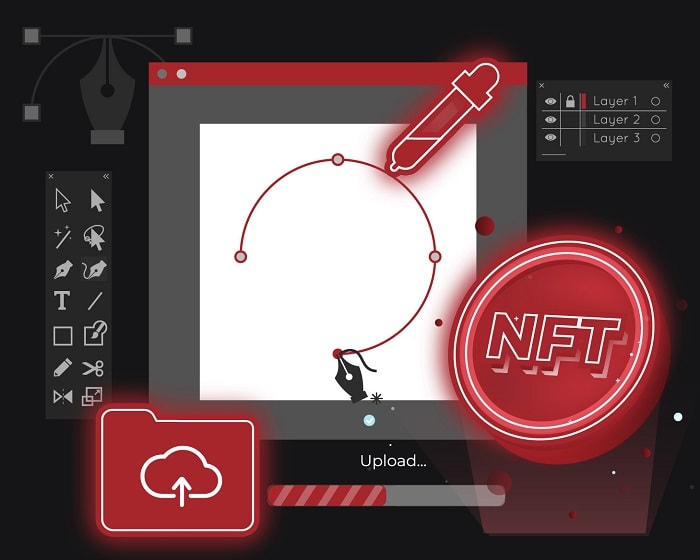
Originality is mandatory because marketplaces delist copied uploads and suspend accounts infringing trademarks. As covered in our look at digital sneaker collectibles, artists craft unique 3D avatars, loops, or bespoke digital art. Export crisp master files in PNG, SVG, MP4, or GLB under 100 MB.
Decide early between a 1-of-1 unique token (ERC-721) and a multi-copy run of 10 to 100 editions (ERC-1155). Pairing crisp artwork with plain licensing terms tells buyers whether they gain personal display or commercial rights.

How Do Ethereum, Polygon, Base, and Solana Compare for Minting?
Ethereum offers deep collector liquidity, while Polygon, Base, and Solana cut gas fees below $1.
Per Ethereum’s official NFT guide, ERC-721 contracts remain the benchmark for fine art and blue-chip drops. However, mainnet congestion can push custom contract deployments from $25 up to $600 during busy waves. High gas makes small test runs expensive for newcomers.
Layer-2 chains like Polygon and Base keep Ethereum wallet compatibility while cutting mint costs under $0.05. Solana handles fast mints near $0.02 in SOL and hosts active sneaker and gaming communities. Pick the network where your target collectors already hold wallets.
| Blockchain Network | Token Standard | Typical Mint Gas Fee | Best Creator Fit |
|---|---|---|---|
| Ethereum Mainnet | ERC-721 / ERC-1155 | $10 to $600 (peak) | 1-of-1 fine art and prestige drops |
| Polygon / Base (L2) | ERC-721 / ERC-1155 | $0 to $0.10 per mint | Low-cost editions and testing |
| Solana | Metaplex / cNFT | $0.01 to $0.05 per mint | Large PFP sets and collectibles |
| Lazy Minting | Deferred on-chain | $0 upfront creator cost | Beginners testing first uploads |
How Do You Set Up and Fund a Non-Custodial Crypto Wallet Safely?
Non-custodial wallets like MetaMask, Coinbase Wallet, and Phantom sign mint transactions and receive payouts directly.
MetaMask and Coinbase Wallet support Ethereum, Polygon, and Base smoothly. Phantom covers both Solana and Ethereum networks inside 1 browser extension. Readers checking how to buy digital collectibles use the exact same wallet setup.
Transfer starter gas funds priced near $20 to $50 in ETH, POL, or SOL from a regulated exchange to cover contract fees. Write your 12-word recovery phrase on paper and store it offline away from cloud backups. Security guides stress that anyone with that phrase controls 100% of wallet funds permanently.
Which Marketplace Fees and Lazy-Minting Rules Should Creators Compare?
OpenSea, Magic Eden, Rarible, and Foundation differ across 2.5% to 5% fees, blockchains, and lazy minting.
Per Motley Fool marketplace comparisons, review both upfront charges and final commissions before connecting. OpenSea and Rarible offer multi-chain drops plus $0 lazy minting, letting the first buyer cover gas at checkout. Magic Eden leads Solana and cross-chain drops with clean creator tools.
Standard sale commissions sit near 2.5%, while curated art galleries like Foundation charge 5%. Platform terms also specify whether 5% to 10% secondary creator royalty fees apply on future resales. Connecting a wallet requires 1 signature and never asks for your seed phrase.
What Metadata, Supply Limits, and Roadmaps Should You Add Before Minting?
Clear titles, decentralized IPFS storage, trait tags, fixed supply caps, and realistic roadmaps build buyer trust.
Uploading opens a metadata form for token name, story description, portfolio URL, and rarity traits. Pick decentralized IPFS or Arweave storage so your image stays online even if private servers shut down. Double-check every spelling before locking metadata, since on-chain entries stay permanent.
Multi-piece collections of 50 to 1,000 items benefit from a transparent release plan. According to Mintable roadmap guidelines, clear milestones outperform vague promises every time. State physical print perks, merch drops, or holder access honestly prior to mint day.
Locking files on IPFS storage and proofing every trait label before signing prevents permanent metadata mistakes.
How Do Fixed Prices, Auctions, and Wallet Safety Protect Creators?
Fixed prices move multi-edition sets smoothly, timed auctions fit 1-of-1 pieces, and hardware wallets stop drains.
Once minted, pick either a fixed buy-now price in ETH/SOL or a 24-to-72-hour reserve auction. Fixed tags priced at $15 to $150 suit accessible prints, while auctions suit rare 1-of-1 art. Comparing digital drops with our physical resale overview shows why transparent pricing sells faster.
- Use a burner wallet: Keep vault assets on a hardware device and mint projects from a separate hot wallet.
- Read every signature: Never approve blind “setApprovalForAll” prompts sent via random direct messages.
- Log tax records: Save CSV timestamps of gas fees and completed sales for accurate annual reporting.
- Diversify collectibles: Creators mixing Web3 collectibles with physical drops often check Stellar AIO, Refract, Valor AIO, and NikeShoeBot.
| Sale Format | Best Artwork Type | Pricing Mechanism | Key Creator Tip |
|---|---|---|---|
| Fixed Price | Multi-edition sets (10-500) | Instant buy-now tag | Keep entry tags realistic |
| Timed Auction | Unique 1-of-1 digital art | Highest bid wins at close | Set a sensible reserve floor |
| Open Edition | Community drops (24-48h) | Unlimited mint in window | Use Polygon or Base low gas |
| Private Listing | Direct collector commissions | Reserved buyer wallet | Verify buyer address twice |
Can beginners mint their first digital collectible completely free?
Yes, several marketplaces support gasless lazy minting at $0 upfront cost, writing the token on-chain only when a buyer checks out. Polygon and Base mints also cost under $0.05.
Does minting artwork automatically grant the buyer full copyright ownership?
No, holding a token verifies blockchain authenticity and display ownership, while copyright stays with the creator unless you attach an explicit commercial license agreement.