What Is a Sneaker Bot? Full 2026 Checkout & Proxy Guide

Understanding what is a sneaker bot starts with how automated checkout software monitors product pages and carts limited footwear sizes. This full 2026 guide explains how multi-threaded desktop programs and mobile companion apps compete on high-demand drops. Beyond the core software, operators allocate $50 or more per month toward proxy pools and store accounts per setup data.
- Core Architecture: Automates 3 sequential drop phases: billing profile autofill, product monitor polling, and multi-threaded checkout execution.
- Proxy Infrastructure: Combines rotating residential IPs and static ISP subnets starting near $50 per month per provider schedules to prevent HTTP 429 rate limits.
- Firewall Telemetry: Operates alongside edge security layers like Cloudflare, DataDome, and Akamai that inspect TLS handshakes and CAPTCHA tokens.
- Storefront Coverage: Spans Shopify boutiques, regional Footsites, Demandware waiting rooms, and randomized draw systems in 2026.
What Is a Sneaker Bot and How Does It Automate Checkout?
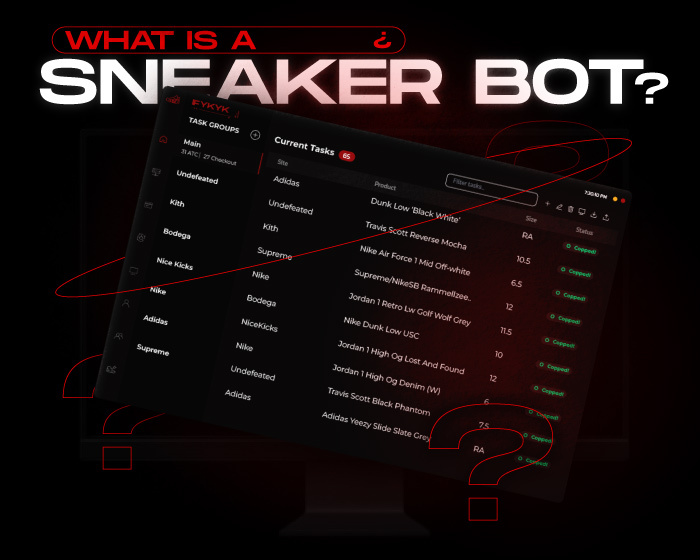
A sneaker bot is a specialized computer program that automates online footwear purchases across retail webstores. When collectors ask what is a sneaker bot, the simplest answer is a multi-threaded checkout client built for release days. A human shopper clicks through 5 separate checkout screens for a single pair. By contrast, automated software runs 50 to 200 concurrent checkout threads at once.
Each thread targets a specific shoe SKU, size range, and payment profile the instant inventory loads. On high-demand Air Jordan, Kobe Protro, or Travis Scott releases, boutique stock often sells out in under 5 seconds. Desktop automation tools and 2026 mobile companion apps compress form-filling and cart submission into background requests. That workflow eliminates manual typing mistakes during high-pressure morning launches.

How Do Profiles, Tasks, and Product Monitors Work Together?
Every automated checkout workflow relies on 3 interconnected software components: billing profiles, product monitors, and execution tasks. Before a release begins, the operator saves shipping addresses and email credentials inside encrypted billing profiles. Virtual card issuers allow users to generate 10 to 50 unique card numbers linked to one bank account. Separate cards prevent duplicate billing blocks during multi-pair checkouts.
Next, the operator creates checkout tasks specifying the target storefront, sizing preference, and product identifier. Tasks locate products using early variant URLs, style codes, or keyword filters such as “+Jordan +4 -TD -PS.” Separate monitor threads poll the storefront every 1500 to 3500 milliseconds for live stock. Once the monitor detects inventory, execution tasks submit the cart and payment payload immediately.
What Proxies and Accounts Does a 2026 Setup Require?
Running multiple checkout threads requires external proxy networks and verified store accounts. Without proxies, retail firewalls quickly block the operator’s home IP address. According to Shopify API rate limit documentation, storefronts throttle IP addresses that send excessive requests during flash sales. Assigning 1 unique proxy IP to each checkout task makes 100 local tasks appear as 100 separate shoppers across different cities.
Operators choose between two primary proxy categories depending on the drop format. Rotating residential proxies route traffic through home broadband connections and cost around $50 per month per provider plans. By contrast, static ISP proxies run in datacenters with residential ASN registration. Because ISP subnets carry no bandwidth caps, operators use them for continuous product monitoring. Combining both proxy types balances low-latency polling with diverse residential checkout IPs.
How Do Retail Firewalls and CAPTCHA Systems Filter Traffic?
Retail websites deploy edge web application firewalls and interactive challenge prompts to filter automated scripts. As explained in Cloudflare bot management documentation, modern security layers inspect TLS handshakes, HTTP/2 headers, and mouse telemetry. Moreover, Nike bot protection systems use account-based draw filtering and device fingerprinting. Each storefront engine requires a tailored task delay and proxy strategy.
To pass behavioral checks, the best sneaker bots emulate natural browser environments, keystroke cadences, and pointer movements. Storefronts also trigger reCAPTCHA v2, reCAPTCHA v3, hCaptcha, or FunCaptcha checkpoints during peak traffic spikes. Understanding how CAPTCHA challenges work helps operators pair built-in Gmail harvesters with third-party solving APIs. Aged Gmail accounts receive higher trust scores during one-click challenge verification. High v3 scores reduce manual image grid prompts during live drops.
| Setup Component | Primary Technical Role | Recommended Allocation | Typical Monthly Cost |
|---|---|---|---|
| Residential Proxies | Rotate home IPs on queue drops | 3 GB to 10 GB data plan | $50 to $120 per month |
| Static ISP Proxies | Poll product monitors without data caps | 25 to 50 static IPs | $45 to $90 per month |
| CAPTCHA Solver / Gmails | Clear checkpoint security challenges | 5 to 15 aged Gmail accounts | $15 to $40 per month |
| Store Accounts & VCCs | Prevent duplicate-order cancellations | 1 unique profile per checkout | $0 to $25 per month |
Are Automated Checkout Tools Legal Under US Consumer Rules?
Using automated checkout software to purchase retail footwear is legal under United States federal law. However, automated purchasing violates most retailer terms of service. According to Federal Trade Commission online shopping guidance, the 2016 federal BOTS Act regulates public concert, theater, and sporting event ticket sales. Footwear, streetwear, and collectible releases fall outside federal ticket statutes.
At the store level, private e-commerce retailers enforce 1-pair-per-customer limits under their published terms of sale. Store fraud filters scan incoming orders for identical shipping addresses, repeated card numbers, or flagged proxy subnets. When a store detects duplicate profile data, it can cancel the order or suspend the customer account. Disciplined operators jig apartment formatting and rotate virtual cards to maintain order compliance.
Assigning a 1:1 ratio between checkout tasks, clean residential proxy IPs, and unique virtual payment cards reduces post-checkout order cancellations across boutique drops.
How Do All-in-One Sneaker Bots Compare Across Storefronts?
Choosing an All-in-One sneaker bot in 2026 depends on which retail engines and operating systems a collector targets. Single-site scripts only cover one storefront architecture. That limitation leaves users idle when release calendars shift between Shopify boutiques and major chains. Multi-module desktop suites let operators switch task groups between Shopify, Footsites, Demandware, and brand launches inside one dashboard.
When comparing established platforms, collectors evaluate Valor AIO, Cybersole, Stellar AIO, and NikeShoeBot across operating system support and module coverage. Native Windows and macOS compatibility allows users to run tasks locally on home fiber connections. Operators also rent remote cloud servers in Virginia or London to reduce network latency. Testing monitor delays and proxy health twenty minutes before every drop ensures smooth task execution.
| Bot Platform | Operating System Support | Core Storefront Modules | Workflow Architecture |
|---|---|---|---|
| Valor AIO | Windows and macOS | Shopify, Finish Line, JD Sports | Task groups + integrated solver |
| Cybersole | Windows (local or server) | Shopify, Supreme, Mesh | Quick-task links + mobile app |
| Stellar AIO | Windows and macOS | Amazon, Target, Walmart, Footsites | Server monitors + local tasks |
| NikeShoeBot | Windows and macOS | Shopify, Nike, Adidas, Footsites | Multi-module AIO + companion app |
How does a desktop checkout program differ from a mobile companion app?
Desktop software manages hundreds of concurrent tasks, proxy lists, and account pools across multiple storefronts. Mobile companion apps allow operators to trigger pre-configured task groups, solve checkpoints, and monitor live checkouts remotely from a smartphone.
Why do operators use both residential and ISP proxies during the same sneaker release?
ISP proxies have no bandwidth caps, making them ideal for running continuous product monitor threads before a drop goes live. Once inventory appears, rotating residential proxies provide diverse home IP addresses for the checkout tasks.