Nike Air Max History: Full Timeline From 1978 to 2026

Nike Air Max history is a multi-decade recap that began in 1978 when Frank Rudy placed gas pouches inside running soles. Footwear designer Tinker Hatfield introduced the first visible heel window on 26 March 1987. Over 4 decades, the line grew from 1990s icons to the 2020 model with 200% larger windows, per Dezeen reports. We analyzed every flagship silhouette across four release decades so you can trace your favorite runners.
- Quick answer: The visible cushioning line launched on 26 March 1987 after Frank Rudy’s 1978 Tailwind pouch and Hatfield’s Paris trip.
- Parisian inspiration: Based on Tinker Hatfield archival records, he modeled the 1987 heel cutout after the inside-out Centre Pompidou facade.
- 1990s expansion: Between 1990 and 1999, designers Sergio Lozano and Christian Tresser introduced 180-degree and full-length sole chambers.
- Volume growth: According to Dezeen product reports, the 2020 runner features a heel window that equals 200% more gas volume than the 1990 model.
- Recycled build: Based on sustainability filings, the 2021 Pre-Day silhouette uses recycled materials that equal 20% of its total weight.
How Did Frank Rudy and the 1978 Tailwind Start the Cushioning Line?
Marion Franklin Rudy was an aerospace engineer who invented the pressurized polyurethane gas pouch for athletic soles.
Before visiting Beaverton, Rudy pitched his impact gas bags to 23 footwear companies, but all 23 rejected him. However, Phil Knight tested the prototype on a campus run in 1977 because he wanted durable cushioning. You can also explore our Air Jordan history guide and Yeezy sneaker history to compare other footwear milestones.
In 1978, the brand commercialized Rudy’s gas pouch inside the Tailwind runner at the Honolulu Marathon. Although the 1978 Tailwind hid its bag inside foam, it retained 95% bounce after 500 miles, according to archive reports. Therefore, that hidden 1978 capsule laid the foundation for every visible window you wear on your feet.
How Did Tinker Hatfield and Paris Architecture Create the 1987 Original?
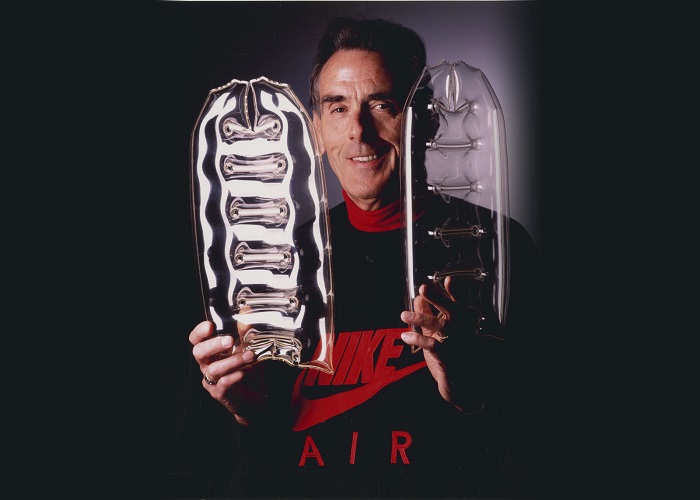
Tinker Hatfield is a trained architect who cut away the midsole in 1987 to expose the internal gas bag.
During a 1980s trip to Paris, Hatfield visited the Centre Pompidou. However, that museum exposes its steel skeleton on the exterior. You can read our profile of influential sneaker designers because it explains how Hatfield applied architecture to footwear. When he returned to Oregon, he sketched a midsole cutout, and as a result, he revealed a larger pouch.
Design coverage from Designboom notes Hatfield’s 1985 sketch was too complex for 1980s factories. Therefore, the Zero stayed archived until 2015, but you can buy retro pairs now. Instead, the simplified AM1 debuted on 26 March 1987 alongside a lighter 1989 follow-up. Because runners trusted your visible window, first-year sales rose by 35%, according to brand reports.
Which Silhouettes Defined the Early 1990s From 1990 to 1994?
Six distinct models launched between 1990 and 1994, expanding the heel cutout into a 270-degree wrap.
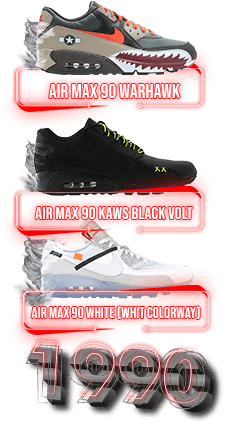
The 1990 flagship introduced ribbed TPU panels and Infrared accents that matched your 1990s streetwear fits. Next, the 1991 Classic BW added a “Big Window” chamber. Meanwhile, the 1992 180 bonded its urethane pouch directly to the outsole. Michael Jordan wore the 180 during the 1992 Olympics, but Kanye West also received 5 custom pairs.
In 1993, blow-molded molding produced the AM93 with a colored 270-degree heel unit. Then 1994 delivered 3 separate silhouettes: the hybrid AM94, Hatfield’s multi-chamber AM2, and the AM2 Light. Because the 1994 AM2 Light weighed 15% less than the standard model, per catalog reports, collectors still prize your retro pairs.
How Did the 1995 to 1999 Models Expand Into Full-Length Cushioning?
The late 1990s era is defined by forefoot gas chambers, full-length bags, and gradient mesh uppers.
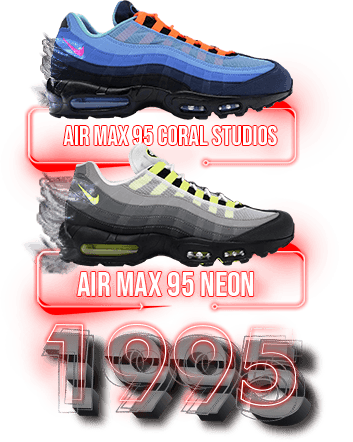
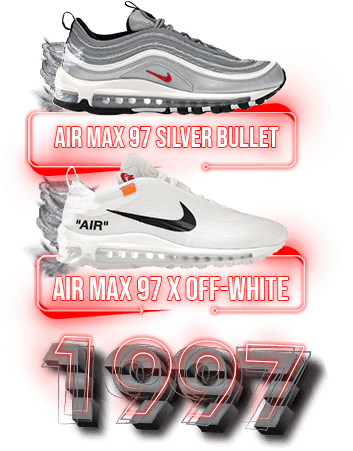
In 1995, designer Sergio Lozano modeled the AM95 after human ribs and spine bones. However, he also added visible forefoot windows to balance your stride. The 1996 runner followed with a sculpted midsole, which Supreme revived in 2021 with clear windows. In 1997, Christian Tresser introduced the first full-length visible unit on the Silver Bullet AM97.
You can read our breakdown of famous sneaker controversies because MSCHF customized the 1997 runner for Lil Nas X. Meanwhile, 1998 brought the Gundam AM98 (which Supreme collaborated on in 2016) and Sean McDowell’s Plus TN. Finally, the 1999 Deluxe closed the decade, because rave soundwave prints set a new valuation benchmark for that consumer segment.
How Did the Line Evolve From 2003 Through VaporMax and Pre-Day?
Post-2000 engineering is centered on removing foam midsoles while increasing heel bag height and recycled weight.
The 2003 runner stripped away loud 1990s overlays for a clean upper. Therefore, you can pair that minimalist style with our guide on how to wear sneakers to work. By 2006, the 360 silhouette removed foam completely, so you got a 360-degree caged sole. In 2017, the VaporMax fused a flexible TPU sole directly to your Flyknit upper, because runners wanted lighter shoes.
Lifestyle models soon followed, starting with the 32mm 270 heel bag in 2018. Next, the 38mm 720 unit launched in 2019, but the 2020 runner went further. Architecture magazine Dezeen reported the 2020 2090 celebrated 30 years of the 1990 icon with 200% more gas volume, per brand reports. In 2021 and 2022, the Pre-Day exposed the heel bag using 20% recycled weight, according to company filings.
How Do Key Silhouettes Compare and How Can You Secure Retro Drops?
Comparing release years, designers, and cushioning breakthroughs helps you spot which anniversary retros attract collector demand.
Every year on 26 March, the brand hosts global drops on SNKRS and boutiques to celebrate the 1987 launch. However, because collaborative pairs from Patta, Travis Scott, and Corteiz sell out fast, manual buyers face tough queues.
Our Verdict on Collecting Air Max Retros
If you collect anniversary retros on March 26, we recommend reading our guide to the best sneaker bots before release morning. Because limited sizes vanish in seconds, pairing automated task monitors with residential proxies helps you enter queues faster.
| Silhouette Name. | Release Year. | Lead Designer. | Heel vs Full Cushioning. | Notable Milestone. |
|---|---|---|---|---|
| Tailwind. | 1978. | Marion Franklin Rudy. | Hidden internal pouch. | Honolulu Marathon debut. |
| AM1. | 1987. | Tinker Hatfield. | First visible heel window. | Centre Pompidou design. |
| AM90. | 1990. | Tinker Hatfield. | Enlarged ribbed cassette. | Infrared OG colorway. |
| AM95. | 1995. | Sergio Lozano. | Dual heel and forefoot. | Anatomical rib panels. |
| AM97. | 1997. | Christian Tresser. | Full-length visible bag. | Silver Bullet runner. |
| VaporMax. | 2017. | Kathy Gomez. | Standalone foamless sole. | Direct Flyknit fusion. |
| 2090 and Pre-Day. | 2020 to 2021. | Dylan Raasch. | 200% larger window. | Move to Zero build. |
First released in 1987 and designed by Tinker Hatfield, the visible cushioning line built a global following around Marion Franklin Rudy’s gas pouches.
- Blow-Molded Unit.
- The 1993 molding method that shaped pressurized urethane bags into 270-degree and full-length sole chambers.
- Tuned Cushioning (TN).
- The 1998 system introduced on Sean McDowell’s Plus runner using polymer pods to stabilize your footstrike.
- March 26 Celebration.
- The annual global sneaker holiday marking the 26 March 1987 debut of Tinker Hatfield’s original visible window.
- Move to Zero.
- The sustainability program behind the 2021 Pre-Day runner, using at least 20% recycled material by weight.
Why was the Zero silhouette released in 2015 instead of 1987?
Tinker Hatfield drew the original Zero sketch in 1985, but 1980s factories could not mold its cored midsole. Therefore, engineers revived your archival drawing 30 years later for the March 2015 celebration.
Which 1990s silhouettes did Supreme choose for official collaborations?
The Manhattan skate brand released a 4-color patent pack on the 1998 model in 2016, followed by a Plus TN capsule in 2020. Next, Supreme launched a 3-pair translucent-window 1996 pack in May 2021.