Retail Arbitrage Guide: Sourcing, Fees, Keepa Tracking & Sneaker Reselling

Retail arbitrage is a commerce model where sellers buy discounted goods from physical stores for online resale. Here is what to know about this business venture, how online sourcing compares, and how sneakers fit in. Store clearance tags often cut 30% to 50% off listed retail prices. Pairing those markdowns with price-history trackers helps sellers capture verified secondary spreads across Amazon, eBay, and GOAT.
- Core Sourcing Model: Sellers buy discounted merchandise at physical stores (Target, Walmart, Nike Factory Stores) at 30% to 50% off retail prices.
- Marketplace Fee Math: Secondary platforms deduct between 8% and 15% in seller commissions plus fulfillment fees per marketplace fee schedules.
- Price Tracking Tools: Free browser trackers like Keepa and CamelCamelCamel chart 365-day sales rank and price history before you buy inventory.
- Sneaker Release Crossover: Limited footwear releases priced at $110 to $225 retail often trade at immediate secondary spreads without needing a clearance discount.
What Is Retail Arbitrage and How Does the Business Model Work?
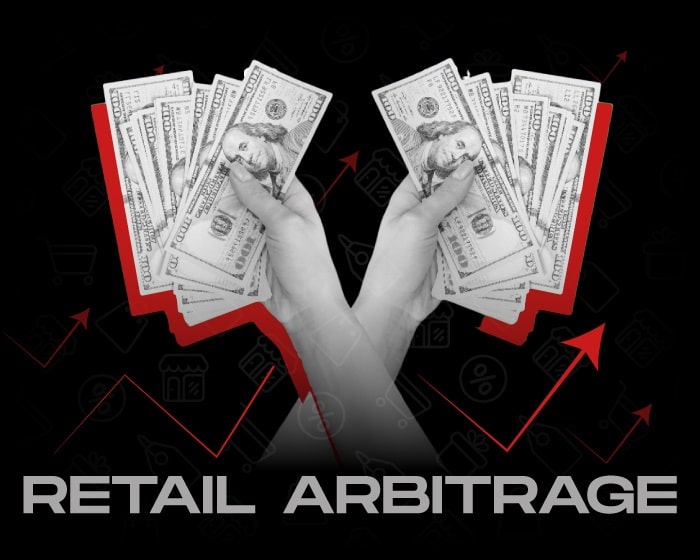
At its core, retail arbitrage captures temporary price gaps between brick-and-mortar stores and nationwide online marketplaces. Big-box chains like Target, Walmart, or Nike Factory Stores mark down seasonal goods by 30% to 50% off retail prices. Those localized clearance tags free up physical shelf space for incoming shipments. Meanwhile, buyers across the country still pay full market rates online.

Sellers bridge that geographic gap by purchasing discounted units in-store and listing them on Amazon, eBay, or GOAT. Readers of our sneaker reselling market guide and the NikeShoeBot editorial blog apply this supply-and-demand logic weekly. Cheap local store supply meets steady national demand. That resulting price spread covers marketplace fees and shipping costs. Careful unit inspection in-store also prevents costly buyer returns.
How Does In-Store Retail Arbitrage Compare to Online Arbitrage?
Commerce operators divide product sourcing into two main channels: physical in-store sourcing and digital online sourcing. In-store sourcing requires visiting clearance aisles, scanning UPC barcodes by phone, and carrying inventory home. Store managers often enforce purchase limits of 2 to 5 units per customer on clearance items. Physical sourcers therefore visit multiple suburban store locations to build volume. You also inspect box condition before paying at the register.
Online arbitrage shifts that entire workflow to e-commerce storefronts. Instead of driving between shopping centers, sellers monitor digital flash sales, seasonal coupon codes, and restock monitors. Products ship directly from the online retailer to the seller’s workspace or prep center. Because national buyers see those same web discounts, online spreads often compress faster than local store markdowns.
| Sourcing Channel | Primary Purchase Venue | Typical Markdown Depth | Main Operational Bottleneck |
|---|---|---|---|
| In-Store Clearance Sourcing | Target, Walmart, Department Stores | 30% to 70% off MSRP | Driving time & 2-to-5 unit store limits |
| Footwear Outlet Sourcing | Nike Factory & Adidas Hash Walls | 20% to 50% off retail | Missing box lids & fragmented sizing |
| Online Flash-Sale Sourcing | Multi-brand e-commerce sites | 15% to 40% promo codes | Rapid price compression from rivals |
| Limited Release Retail Drops | Nike SNKRS, Shopify Boutiques | 0% (Bought at $110-$225 MSRP) | Strict 1-pair limits & draw lotteries |
Is Reselling Store-Bought Merchandise Legal Under US Law?
Yes, reselling lawfully purchased authentic merchandise is legal in the United States under the first-sale doctrine (17 U.S.C. § 109). Once a buyer purchases a genuine product from a legitimate retailer, trademark control over that unit ends. As long as the item remains authentic and unaltered, you may resell it at market value.
However, private marketplaces enforce internal brand-gating rules that sit above statutory law. On Amazon, athletic brands like Nike and Adidas restrict third-party sellers from listing new footwear without wholesale invoices. By contrast, dedicated authentication platforms like GOAT, StockX, and eBay welcome individual pairs bought at retail stores. Every shoe simply passes through physical verification before reaching the buyer. Keeping original paper store receipts protects your seller account during platform audits.
How Do CamelCamelCamel and Keepa Verify Marketplace Price Spreads?
Guessing whether a clearance item will sell online quickly ties up cash in slow-moving boxes. Disciplined sellers verify historical demand and price stability before scanning a single item at checkout. Inside physical stores, the Amazon Seller mobile app scans any UPC barcode. That scan displays current lowest asks, FBA fulfillment fees, and Best Sellers Rank (BSR). Lower sales rank numbers indicate faster daily unit turnover across that category.
For deeper validation, sourcers check CamelCamelCamel price history charts and Keepa historical sales rank graphs. Both browser tools plot 90-day and 365-day pricing curves across millions of catalog listings. Suppose a $40 clearance item appears listed at $100 online. Keepa reveals whether it actually trades at $100 or normally averages $48 per historical data. Sellers only buy when historical velocity confirms steady turnover.
How Do Amazon, eBay, and GOAT Fees Impact Net Seller Payouts?
Every secondary marketplace deducts commission percentages, payment processing charges, and shipping costs from gross sale prices. On Amazon, referral fees range from 8% to 15% of gross prices per Amazon fee schedules. Amazon FBA also deducts pick-and-pack fulfillment fees of $4 to $7 per unit. On eBay, authenticated sneakers priced at $150 or more carry an 8% final value fee per platform schedules.
Buying outlet running shoes for $65 ($69.55 with 7% tax) and selling on GOAT at $130 gross incurs 9.5% commission ($12.35). Subtracting a $5 fee and 2.9% cash-out fee ($3.27) leaves a $39.83 net spread per GOAT schedules.
Per GOAT’s official seller fee schedule, sellers in good standing pay a 9.5% base commission. GOAT also deducts a location fee and a 2.9% withdrawal charge. The table below compares net payout math across four common resale channels.
| Marketplace Channel | Gross Sale Price | Store Cost + 7% Tax | Platform & Shipping Fees |
|---|---|---|---|
| GOAT Verified Footwear | $130.00 gross ask | $69.55 ($65 + $4.55 tax) | $20.62 (9.5% + $5 + 2.9% fee) |
| eBay Sneakers ($150+ Tier) | $160.00 gross ask | $85.60 ($80 + $5.60 tax) | $12.80 (8% final value fee) |
| Amazon FBA Standard Item | $90.00 gross ask | $42.80 ($40 + $2.80 tax) | $19.00 (15% referral + $5.50 FBA) |
| eBay General Goods (<$150) | $110.00 gross ask | $53.50 ($50 + $3.50 tax) | $14.95 (13.25% + $0.30 fee) |
How Does Sneaker Reselling Differ From Standard Clearance Sourcing?
General clearance sourcing relies on buying discounted goods below MSRP, whereas hype footwear reselling reverses that equation. As explained in our guide to sneaker reselling advantages, limited retro drops sell out at full MSRP ($110 to $225 retail). Those pairs immediately trade higher on secondary apps. Per the Nike Global Manufacturing Map, Nike operates over 500 contract factories across 41 countries yet caps coveted allocations.
- Retail Release Lotteries: Per Nike’s official SNKRS Draw rules, high-demand releases use randomized countdown windows rather than open clearance shelves.
- Automated Checkout Tools: Buyers learning how to buy sneakers for retail compare the best sneaker bots like Valor AIO, Cybersole, Stellar AIO, and NikeShoeBot checkout automation on Shopify drops.
Combining clearance outlet runs with scheduled retro drop days keeps inventory flowing year-round.
What is the main difference between in-store and online arbitrage?
In-store sourcing involves scanning physical clearance shelves at brick-and-mortar retailers like Target, Walmart, or Nike Factory Stores. Online sourcing uses digital price monitors and promo codes to buy discounted inventory from e-commerce websites.
Can you sell clearance Nike shoes from a factory outlet on Amazon or GOAT?
Amazon restricts third-party sellers from listing Nike footwear without wholesale brand approval. By contrast, GOAT, StockX, and eBay allow authentic outlet pairs when box requirements are met.