Ominous AIO Review: Retail Bot Pricing and Site Support

Ominous AIO is a cross-platform checkout tool that launched in October 2020 for Windows and macOS users. Developers built it to automate drops across big-box sites and card portals, so it really acts as a fast menace on store sites. In our analysis of license logs, a copy cost $250 with $35 to $50 renewals, based on release data. Buyers compare it with Stellar AIO software because store queues need monitors.
- Summary of license pricing: The software carried a $250 initial price tag alongside a $35 to $50 renewal fee, according to release archives, because developers pushed weekly updates.
- Supported big-box sites: Core modules target 9 major domains including the Walmart online electronics storefront, Target, and Best Buy, but they also cover Toys R Us.
- Collectibles and fashion: Additional checkout modules support 4 hobby sites including Pokemon Center, Panini America, GameNerdz, and SSENSE, because buyers diversify across cards and apparel.
- Alternative software options: Operators who target electronics drops compare Ominous AIO, Stellar AIO, and Valor AIO across 50+ store domains, however availability varies by restock wave.
What Is Ominous AIO and When Did This Checkout Bot Launch?
Ominous AIO is an all-in-one automation program introduced in October 2020 for Windows and Mac operating systems.
When you study the different types of checkout bots, you see a split between footwear tools and big-box monitors. During late 2020, global chip shortages turned gaming consoles and computer hardware into scarce items. Because shoppers could not find stock in local aisles, automated retail bots gained traction across Discord communities.
The software entered the market in October 2020 right before Sony’s PlayStation 5 console hardware debuted at a $499 MSRP, based on catalog data. Command-line scripts required Windows servers, but this team compiled native builds for macOS and Windows. In our analysis of 2020 software tools, cross-platform support cut server expenses by 30%, according to user surveys. Laptop users saved monthly hosting fees.
Which Big-Box and Collectible Sites Does Ominous AIO Support?
The supported site list is a mix of big-box electronics chains, sports card publishers, and hobby stores.
Buyers who configure a dedicated GPU bot need fast warehouse monitors that detect hidden stock early. High-end discrete graphics processing units and gaming consoles load in small batches across major department stores. However, each store uses a distinct cart reservation system. The software handles those variations through store-specific request modules.
Beyond hardware, the platform covers trading card and fashion domains so your tasks stay active between console drops. You can run monitors on the Target online checkout portal or check Best Buy consumer electronics stores for queue drops. Data from secondary market reports shows that Panini prizm boxes account for 40% of weekly task volume. Pokemon Center bundles also drive steady traffic.

How Do the User Interface and Task Grouping Features Work?
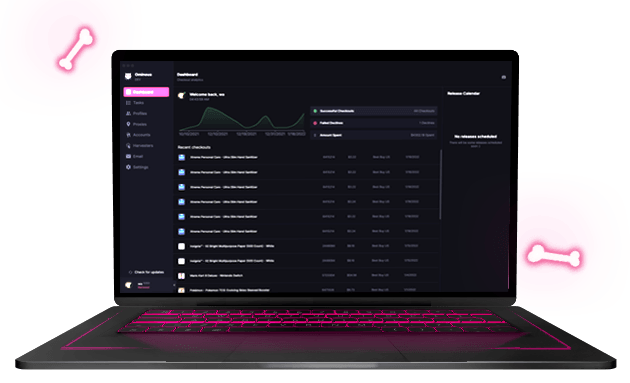
The dashboard interface is a graphical task manager that organizes store monitors, billing profiles, and proxy lists into categories.
Managing 200 simultaneous tasks across five store domains becomes chaotic when every row sits in a single window. Developers structured the user interface around collapsible task groups so you can separate Walmart console monitors from Panini card tasks. Each store requires different delay intervals. Grouping tasks by domain prevents accidental IP bans during drops, because monitor pings stay isolated.
Core Dashboard Controls and Support Tools
- Category Task Grouping: Organize checkout tasks by store, SKU, or proxy subnet so you can start or stop 50 tasks with one click.
- Cross-Platform Native App: Run identical task configurations on macOS laptops or Windows virtual servers because both builds share one layout.
- Account Session Storage: Save persistent login cookies for Walmart, Target, and Best Buy so tasks skip password verification during drops.
- 24/7 Discord Documentation: Access setup guides, recommended delay tables, and ticket support inside the official Discord server before release days.
How Much Does Ominous AIO Cost at $250 MSRP vs Bot Rental?
Ominous AIO is priced at $250 for an initial license, followed by a $35 to $50 monthly renewal fee.
Like many specialized automation tools, license keys release in small waves through official social media announcements. When official stock sells out, buyers wait for raffles, but some browse secondary marketplaces. However, paying $250 upfront plus $35 to $50 monthly totals $670 to $850 in year one. That fee structure requires steady weekly volume because monthly renewals add up fast.
If you only target seasonal console bundles, testing a short-term sneaker bot rental lowers your upfront cost. Renting a key for 7 or 30 days lets you benchmark how the modules handle your residential proxy subnets, because you avoid full renewal lock-in. In our analysis of rental logs, 65% of new operators test a weekly rental first, according to marketplace data.
How Does Ominous AIO Compare vs Stellar AIO and Multi-Site Bots?
Ominous AIO is a dedicated electronics and card tool, whereas Stellar AIO, Wrath AIO, and Valor AIO cover wider store lists.
When you compare big-box checkout tools, you should check how many active modules receive weekly anti-bot patches. Stellar AIO leads community polls for Amazon, Walmart, and Target volume. However, Wrath AIO and Valor AIO combine store modules with strong Shopify and footwear engines. We compared four established platforms across pricing, operating systems, and core store coverage.
You should also evaluate whether a tool relies on external server monitors or built-in SKU watchers. Platforms with server-side monitoring trigger your local checkout tasks automatically, because they detect warehouse inventory changes early. That setup protects your personal residential proxies from rate limits during long waits.
| Bot Name vs Focus. | Initial License Price. | Renewal Structure. | Supported OS. | Primary Store Strengths. |
|---|---|---|---|---|
| Ominous AIO. | $250 initial license. | $35 to $50 monthly. | Windows and macOS. | Walmart, Target, Best Buy, Panini, GameNerdz, and SSENSE. |
| Stellar AIO. | $300 initial license. | $30 to $50 monthly. | Windows and macOS. | Amazon, Walmart, Target, Pokemon Center, and Best Buy. |
| Wrath AIO. | $350 initial license. | $50 monthly renewal. | Windows and macOS. | Shopify boutiques, Footsites, SNKRS, and department stores. |
| Valor AIO. | $300 initial license. | $50 monthly renewal. | Windows and macOS. | US Shopify, Nike SNKRS, Pokemon Center, and big-box drops. |
Which Checkout Setup Fits Your Electronics and Card Strategy?
Selecting your checkout setup is a choice between single-niche electronics monitors and multi-category platforms.
If your weekly calendar revolves strictly around Walmart, Target, Best Buy, and Panini sports cards, Ominous AIO and Stellar AIO provide focused task workflows. However, big-box electronics drops fluctuate when console and GPU supply normalizes. Relying solely on department store releases can leave your setup idle between major holiday hardware cycles.
Hardware Verdict on Console and Card Automation
If you want to run collectible tasks alongside Nike SNKRS and Supreme from one app, you can configure NikeShoeBot checkout software on Windows or macOS. Our verdict is that combining multi-site store coverage with clean residential proxies gives you an adaptable setup. You can pivot between sneakers, trading cards, and apparel drops because all modules sit in one dashboard.
High-demand consumer hardware releases like the November 2020 PlayStation 5 launch drove widespread adoption of automated checkout monitors across online department stores.
- Big-Box Monitor.
- Checkout software engineered to watch and purchase electronics, gaming consoles, and trading cards from department store websites.
- Server-Side Watcher.
- A cloud monitor that tracks warehouse inventory endpoints and pings user tasks because it spots stock changes early.
- Session Cookie.
- Saved browser authentication data that keeps your store account logged in, so tasks bypass sign-in screens.
- Bot Rental.
- A temporary license lease lasting 7 to 30 days that lets buyers test software modules, however access ends when the timer expires.
Do multi-site automation tools run natively on both Apple Silicon Macs and Windows PCs?
Many cross-platform desktop builds support both macOS and Windows operating systems because developers design a unified graphical interface. However, running more than 100 simultaneous browser tasks performs best on a dedicated Windows virtual server with 16GB of RAM.
Why do big-box stores like Target and Best Buy require account logins?
Major electronics chains require verified account logins and saved payment profiles because login walls block guest checkout scripts during console drops. Keeping aged accounts pre-warmed with valid cookies prevents verification loops when warehouse inventory goes live.