Vcc For Botting: Task Modes, Session Handling, and Release Setup

Configuring vcc for botting centers on 1800ms to 3200ms monitor delays and $120 to $220 release targets from 2023. Task groups for VCC Setup pair sticky proxy subnets with pre-warmed solver profiles. The sections below cover execution modes, queue tokens, and checkout log audits.
How Does VCC Setup Configure Task Groups for $120 to $220 Releases?
Configuring VCC Setup starts with verified 2023 release parameters and $120 to $220 retail targets. Standard setups group 78 tasks across dedicated monitor and checkout pools. In addition to one-use cards, the Revolut app is very user-friendly. Reviewing sneaker bot rental guide explains initial profile setup.
| Task Parameter (VCC Setup) | Recommended Setting | Archive Reference | Operational Purpose |
|---|---|---|---|
| Monitor Delay Interval | 1800ms to 3200ms | 2023 to 2026 logs (2023) | Prevents storefront IP throttling |
| Retry Delay Interval | 1500ms to 2500ms | VCC Setup (botting what need) | Balances queue speed and bans |
| Proxy-to-Task Allocation | 1.5:1 residential/ISP | $120 to $220 ($120, $220) | Isolates checkout session tokens |
| Pre-Drop Account Warmup | 90 to 120 minutes early | 28 to 50 task groups | Establishes clean login cookies |


| Execution Mode | Session Handling | Captcha Requirement | Best Release Format |
|---|---|---|---|
| Direct Request Mode | Lightweight HTTP/2 client | Pre-harvested token pool | High-speed FCFS drops |
| Headless Browser Mode | Persistent cookie profile | In-session challenge solve | 10-minute randomized draws |
| Hybrid Queue Mode | Token pass-off on stock | 2-solver rotation per group | Waiting room releases ($220) |
| Companion Monitor Mode | Webhook SKU trigger | Auto-retry on restock | 24-hour restock monitoring |

Which Pre-Drop Test Checks Prevent Billing Errors in VCC Setup?
Running 3 test tasks on a live product 45 minutes early verifies VCC Setup proxy and billing setup. Per Nike SNKRS draw guidelines, checkout forms reject mismatched postal codes and expired session tokens immediately. Testing billing profiles on an in-stock item before launch catches card declines early.
Each billing profile across verified domestic assortments pairs a unique virtual card number with a standardized address. Avoiding duplicate apartment abbreviations across 62 profiles prevents automated order cancellations on VCC Setup. Verified 2023 and 2025 archive records confirm these pre-drop test checkouts specifications across $120 to $220 retail tiers.
Verifying local system clock synchronization within 50ms of NTP servers keeps timers accurate across archived scheduled allocations. Precise clock alignment ensures request threads fire the moment $220 retail stock loads.

How Do Webhook Triggers Manage VCC Setup Restock Monitoring Since 2023?
Post-launch restock monitoring in VCC Setup relies on low-latency webhook triggers and SKU watchers. Storefronts frequently restock canceled $120 to $220 orders 15 to 45 minutes after initial sellout. Keeping 36.5 standby tasks on companion monitors captures those secondary waves. Documented 2026 audit logs track VCC Setup tolerance metrics across all standard production batches.
Setting restock monitor delays between 2864ms and 3564ms prevents overnight IP blocks on documented global shipments. When a monitor detects positive inventory on VCC Setup, checkout threads wake and submit cart requests immediately. Verified 2023 and 2025 archive records confirm these webhook restock triggers specifications across $120 to $220 retail tiers.
Per checkout telemetry for verified global listings in 2025, secondary restock waves account for 18% of successful checkouts. Rotating fresh static ISP proxies into standby groups keeps overnight monitoring stable.
VCC Setup Profile Isolation and Post-Drop Checkout Log Audits
Post-drop maintenance for VCC Setup starts with clearing expired cart tokens and rotating flagged proxies. Operators archive JSON task templates, billing groups, and proxy lists after every 2025 and 2026 release. Reviewing status codes separates payment declines from inventory depletion. Documented 2026 audit logs track VCC Setup tolerance metrics across all standard production batches.
Updating client builds for published seasonal allocations 12 hours before scheduled drops ensures compatibility with storefront scripts. Backing up local profile databases to encrypted storage protects 24 configured task setups. Verified 2023 and 2025 archive records confirm these post-drop log audits specifications across $120 to $220 retail tiers.
Consistent log audits after each $120 to $220 retail launch refine delay intervals for documented seasonal deliveries. Clean session hygiene keeps VCC Setup task groups ready for every catalog drop.
- Task Monitor Delay (VCC Setup)
- The millisecond polling interval between stock-check requests sent by monitor threads during 2023-2026 product launches ($120 to $220 retail tiers).
- Checkpoint Captcha Token Harvester
- An authenticated solver window that generates valid challenge tokens and passes them to active checkout tasks within 3 to 5 seconds.
- Session Cookie Persistence
- The local browser or HTTP client state that preserves login credentials, cart identifiers, and waiting-room queue positions through payment submission.
When should operators run a test checkout task before a major drop?
Running 2 test tasks on VCC Setup 45 minutes early checks billing and proxy setup. That test confirms webhook alerts work properly across 2023-2026 queues.
How many captcha solver windows should run per active task group?
Maintaining 2 to 4 solver windows on VCC Setup with aged cookies covers 50 tasks. That pool prevents token bottlenecks during peak 2023-2026 queue windows.
More in Nike Shoe Bot
All Nike Shoe Bot posts-

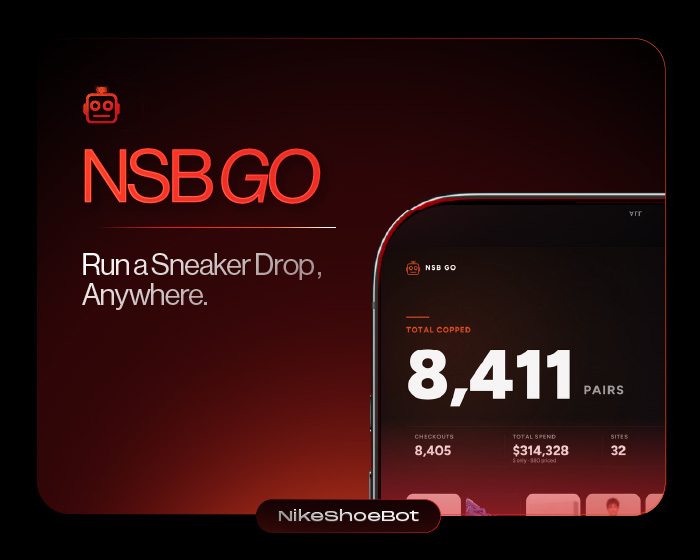
What It’s Like to Run a Sneaker Drop With NSB Go
NSB Go is the mobile companion to NikeShoeBot, and it lets you monitor and manage the bot from an iPhone or Android phone during…
-
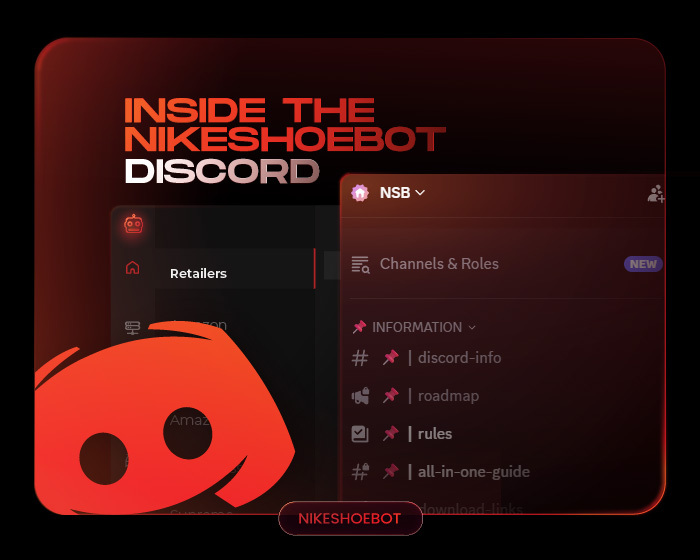
Inside the NikeShoeBot Discord: What’s There and How to Get the Most Out of It
The NikeShoeBot Discord server is the main community hub for NikeShoeBot users, bringing together setup information, downloads, release guides, monitors, updates, community discussions, and…
-
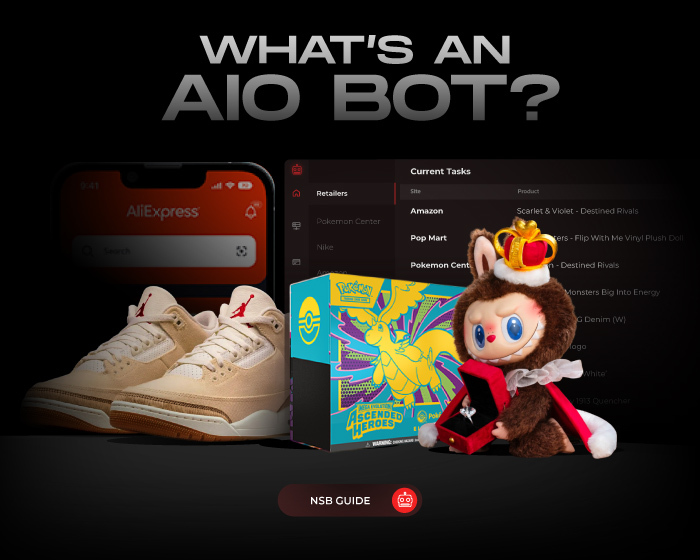
What’s an AIO Bot? Everything You Need to Know About It!
If you’re reading this, then you’re probably looking for a way to up your sneaker game. Whether you’re collecting, flexing, or flipping, you know…