7 High-Tech Sneakers Beyond Novelty: HyperAdapt, Adapt BB & Puma Fi

The seven most influential tech sneakers moved connected footwear beyond novelty between 2016 and 2020. They introduced motorized lacing, embedded gait sensors, and robotic assembly. Led by the $720 Nike HyperAdapt 1.0 in 2016 and the $350 Nike Adapt BB in 2019, these pairs trade from $185 to $490 in resale.
- Motorized Lacing Pioneers: Includes the 2016 Nike HyperAdapt 1.0 ($720 retail), 2019 Nike Adapt BB ($350), and 2020 Puma Fi ($330).
- Sensor & Display Builds: Features the Under Armour SpeedForm Gemini 3 ($160 retail), DigitSole Smartshoe ($450), and ShiftWear HD e-paper concept.
- Robotic Manufacturing: Adidas engineered the SpeedFactory AM4LDN ($200 retail) using automated motion-capture bonding and Boost foam.
- Battery & App Specs: The 2019 Adapt BB houses a 505 mAh battery lasting 10 to 14 days per wireless Qi charge.
How Did the 2016 Nike HyperAdapt 1.0 and 2019 Adapt BB Pioneer Auto-Lacing?
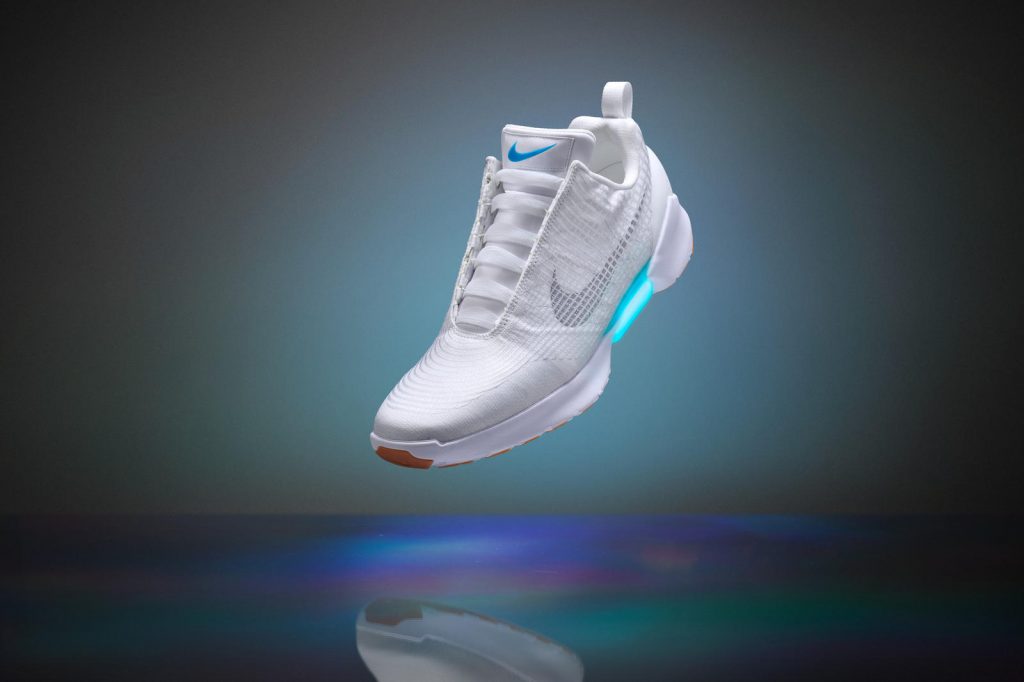
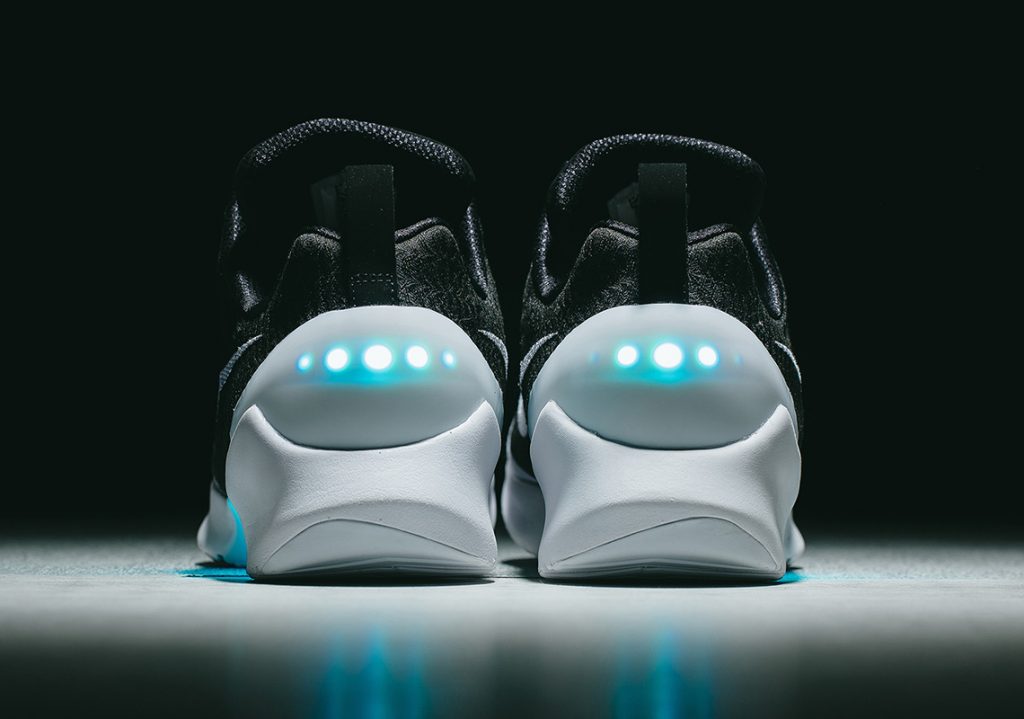
Designed by Tinker Hatfield and Tiffany Beers, the Nike HyperAdapt 1.0 debuted in November 2016 at $720 retail. It introduced Electro-Adaptive Reactive Lacing (E.A.R.L.), which used a heel sensor to tighten underfoot cables. Battery-powered LED lights in the midsole glowed whenever the internal motor adjusted tension.
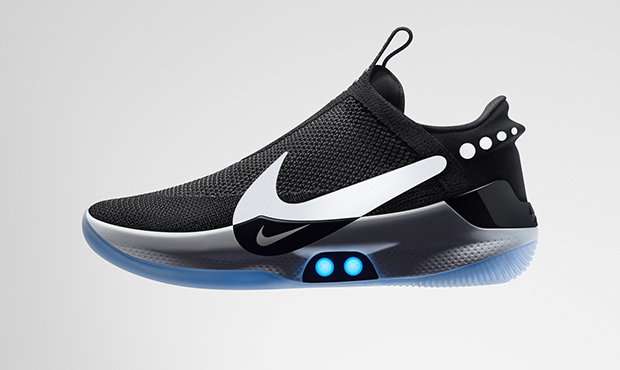
Three years later, Nike cut the entry price in half with the basketball-ready Adapt BB. As reported in The Verge’s 2019 Adapt BB breakdown, the shoe launched on February 17, 2019, for $350 retail. A custom FitAdapt gear train pulled 32 pounds of cord tension to lock down players’ feet.
Unlike the 2016 runner, the 2019 Adapt BB connected via Bluetooth to a smartphone app. Players could set custom tension presets and choose glowing LED colors. Its 505 mAh battery lasted 10 to 14 days per wireless Qi charge.
How Did the $330 Puma Fi Compete With Nike in Self-Lacing Footwear?
German sportswear rival Puma entered the motorized footwear race by unveiling the Puma Fi in early 2019. According to CNBC’s Puma Fi report, the Fit Intelligence shoe was scheduled for spring 2020 at $330 retail. That $330 price tag undercut the $350 Nike Adapt BB by $20 at retail.
Instead of placing the motor inside the midsole, Puma mounted a micromotor module on the tongue. Wearers swiped up or down on the tongue module to adjust Dyneema cables. They could also control fit through an iPhone or Apple Watch app. Power came from a removable battery pack that charged on a wireless dock.
“We really wanted to tackle digital technology to bring something into the physical world,” explained Charles Johnson, Puma’s Global Director of Innovation, when introducing the Fit Intelligence trainer priced at $330 retail.
Readers tracking how modern sneaker technology evolved since the 1980s can see direct lineage in the 2020 Fi.
What Did ShiftWear and DigitSole Attempt With Displays and Heating?
Outside major sportswear brands, hardware startups in the mid-2010s experimented with flexible e-paper screens and heated insoles. ShiftWear gained viral attention by proposing a high-top sneaker wrapped in HD color e-paper displays. The concept aimed to let owners beam animated smartphone graphics onto the shoe’s side panels.
French wearables company DigitSole took a biomechanical approach with its connected Smartshoe, priced at $450 retail at launch. The bulky upper housed an automatic tongue-tightening actuator alongside an internal foot heater. Built-in accelerometers measured 3D stride impact, pronation, and calorie burn over Bluetooth.
ShiftWear struggled to move past crowdfunding prototypes due to flexible battery limits. Meanwhile, DigitSole pivoted its sensor hardware into medical gait insoles. Both projects highlighted the engineering gap between concept renders and mass-market durability.
| Tech Sneaker Model | Release Era | Core Hardware Feature | Original Retail Price |
|---|---|---|---|
| Nike HyperAdapt 1.0 | Nov 2016 | E.A.R.L. Heel-Sensor Lacing | $720 |
| Nike Adapt BB | Feb 17, 2019 | Bluetooth FitAdapt & Qi Mat | $350 |
| Puma Fi (Fit Intelligence) | Spring 2020 | Tongue Micromotor & Watch App | $330 |
| UA Gemini 3 & Adidas AM4LDN | 2017 to 2019 | MapMyRun Chip / Robotic Bonding | $160 to $200 |
How Do SpeedForm Gemini 3 and SpeedFactory AM4LDN Improve Running?
Runners generally prefer lightweight, battery-free shoes over heavy motorized uppers. Because of that preference, Under Armour and Adidas focused on embedded sensors and robotic assembly. The Under Armour SpeedForm Gemini 3 RE ($160 retail) sealed an accelerometer inside its midsole. That chip lasted the lifetime of the shoe without charging.
By syncing with the MapMyRun smartphone app, the Gemini 3 RE recorded mileage, cadence, and stride length. It also measured pre-run muscular fatigue through a vertical jump test. Runners could leave their phones at home while logging up to five workouts onboard.
Meanwhile, the Adidas SpeedFactory AM4LDN ($200 retail) showcased automated robotic manufacturing at the brand’s German facility. Using athlete motion-capture data and glue-free bonding, Adidas fused a Torsion bar and Boost midsole. Both models proved that data-driven engineering could enhance comfort without adding motor weight.
What Are HyperAdapt and Adapt BB Pairs Worth After Resale Fees?
On the secondary market, self-lacing Nike releases from 2016 and 2019 trade as niche collector pieces. Their values depend on working charging mats and original boxes. Standard colorways of the 2016 HyperAdapt 1.0 ($720 retail) now average $380 in resale. Meanwhile, the 2019 Adapt BB Mag Wolf Grey colorway ($350 retail) averages $490.
According to the eBay athletic shoe fee policy, sneakers selling for $150 or more incur an 8% final value fee. On a $490 Adapt BB Mag sale, eBay deducts $39.20, leaving a $450.80 net payout. Subtracting the $350 retail cost leaves a $100.80 net spread.
By comparison, the StockX seller fee schedule charges Level 1 accounts a 9% transaction fee plus a 3% processing fee. On the same $490 sale, a 12% StockX fee deducts $58.80, leaving $431.20 net.
| Model & Colorway | Original Retail | Average Resale Price | eBay Net (8% Fee) |
|---|---|---|---|
| Nike Adapt BB Mag (2019) | $350 | $490 | $450.80 |
| Nike Adapt BB OG Black (2019) | $350 | $310 | $285.20 |
| Nike HyperAdapt 1.0 Black (2016) | $720 | $380 | $349.60 |
| Adidas SpeedFactory AM4LDN | $200 | $185 | $170.20 |
How Can Collectors Secure Limited Innovation Releases at Retail?
When footwear brands launch limited technology showcases or high-heat sneaker brand partnerships, initial allocations sell out within minutes. For example, the $350 retail Adapt BB Mag edition vanished immediately on Nike SNKRS in May 2019. Reading our retail sneaker buying guide helps collectors prepare verified accounts before drop windows open.
To compete on high-demand SNKRS and Shopify releases, buyers use automated checkout software such as Valor AIO, Cybersole, Stellar AIO, The Shit Bot, and NikeShoeBot. Our sneaker bot setup guide explains how to pair residential proxies with multi-task checkout workflows.
Whether collecting a 2016 motorized E.A.R.L. archive pair or targeting modern 3D-printed runners, securing pairs at retail avoids resale markups. Functional innovation remains one of the most collectible categories in footwear history.
How long does the battery last on the 2019 Nike Adapt BB?
The 505 mAh battery inside the February 17, 2019 Nike Adapt BB ($350 retail) lasts between 10 and 14 days on a single charge and recharges in roughly three hours on its wireless Qi mat.
Why did the 2016 Nike HyperAdapt 1.0 cost $720 at retail?
Released in November 2016, the HyperAdapt 1.0 carried a $720 retail tag because it was a low-volume first-generation showcase for Tinker Hatfield’s motorized E.A.R.L. lacing system before the $350 Adapt BB scaled production in 2019.