Pokémon Franchise: $489B Sales, Vintage TCG Grails & Market Guide

The Pokémon franchise is the world’s biggest media property, reaching $489 billion in lifetime sales per March 2025 data. Over nearly 30 years since its 1996 Game Boy debut, it has linked video games, anime, and trading cards. Here we compare 1999–2003 vintage cards, modern boxes, and sneaker resale.
- Cumulative revenue scale: Generated $489 billion in lifetime licensed retail and unit sales through March 2025 data.
- Vintage 1999–2003 grails: First Edition 1999 Base Set Charizard and Gold Star PSA 10 slabs trade from $15,000 to $420,000.
- Modern chase benchmarks: Sword & Shield Evolving Skies Umbreon VMAX (“Moonbreon”) trades between $950 and $1,450 in PSA 10.
- Sealed booster box MSRP: Standard 36-pack English booster boxes carry a $161.64 retail MSRP on official storefronts.
Why Did the Pokémon Franchise Reach $489 Billion Across 30 Years?
Video games, trading cards, and licensed merchandise pushed lifetime franchise sales to $489 billion by March 2025 data.
Satoshi Tajiri and Game Freak launched the series in Japan in February 1996. They built creature collecting and trading directly into the core game loop. According to Statista lifetime franchise sales data, cumulative retail revenue reached $489 billion as of March 2025. More than 64.8 billion individual trading cards have been printed across 16 languages.
Every console generation introduces 100+ new creatures while keeping 1996 icons like Pikachu and Charizard central. Readers tracking high-demand collectible categories see how 30-year nostalgia links 1999 Game Boy fans with younger Nintendo Switch players. Mobile hits like Pokémon GO and animated streaming series also sustain daily engagement across all age groups.

How Do 1999–2003 Vintage TCG Cards Compare to Modern Scarlet & Violet Chase Cards?
Vintage 1999–2003 holofoils command five-to-six-figure asks, while modern Special Illustration Rares trade from $80 to $1,450.
Between 1999 and 2003, Wizards of the Coast printed Base Set, Jungle, Fossil, and Neo Genesis in North America. Few children sleeved their cards in 1999. As a result, PSA 10 Gem Mint copies of the 1st Edition Shadowless Charizard (#4/102) trade between $250,000 and $420,000. Gold Star Rayquaza and Umbreon cards from the EX series also trade from $15,000 to $45,000 in PSA 10 data.
Modern sets from the 2020–2025 Sword & Shield and Scarlet & Violet eras rely on alternate art pull rates of 1 in 400+ packs. Our breakdown on how much rare TCG cards are worth compares Moonbreon, Charizard ex SIR, and Iono SIR across grading tiers.
Why Do Sealed Booster Boxes and Exclusive Promos Command High Aftermarket Prices?
Live rip-and-ship streams permanently reduce sealed booster box supply, pushing out-of-print sets above their $161.64 retail MSRP.
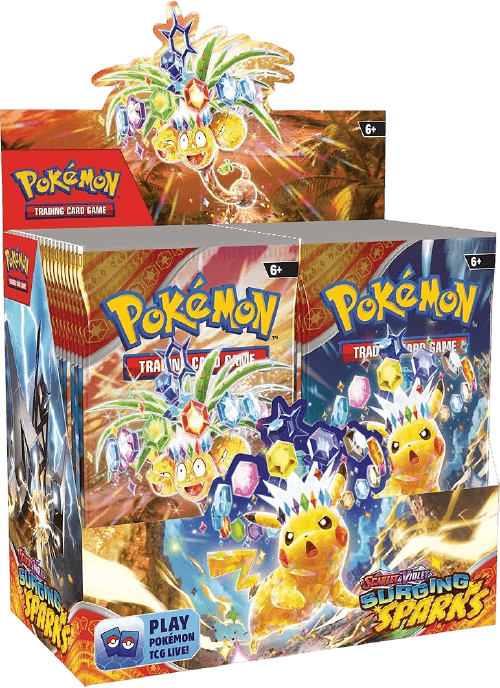
Every time a collector opens a 36-pack booster box, one fewer factory-sealed display exists in the market. Standard English booster boxes launch at a $161.64 retail MSRP ($4.49 per pack). Elite Trainer Boxes (ETBs) retail between $49.99 and $59.99. Exclusive editions sold on the official Pokémon Center storefront add a stamped promo card and two bonus packs.
This scarcity dynamic mirrors the mystery pull mechanics discussed in our blind box collector guide. Japanese Trophy cards and tournament promos also hold strong collector demand over multi-year cycles. Below is how four benchmark sealed boxes compare between original retail and current secondary asks.
| Sealed TCG Product | Release Era | Original Retail MSRP | Secondary Market Range |
|---|---|---|---|
| 1999 Base Set Booster Box (Unlimited) | January 1999 | $118.00 retail | $14,500 to $18,500 ask |
| 2016 XY Evolutions Booster Box | November 2016 | $143.64 retail | $780 to $920 StockX |
| 2021 Evolving Skies Booster Box | August 2021 | $143.64 retail | $720 to $860 StockX |
| 2023 Scarlet & Violet 151 Ultra-Premium | October 2023 | $119.99 retail | $185 to $230 StockX |
How Do Bearbrick, BAPE, and Uniqlo Collaborations Expand the Collector Audience?
Limited capsule collections with Medicom Toy Bearbrick, BAPE, and Uniqlo UT bridge TCG collectors with streetwear buyers.
Beyond cardboard packs, licensed collaborations turn classic Kanto starters into display art and apparel. Medicom Toy’s 1000% Bearbrick Pikachu and Charizard figures launch around $550 to $680 retail. They trade between $850 and $1,300 on secondary exchanges. BAPE Baby Milo graphic tees and Uniqlo UT artist capsules bring those motifs into daily rotations at $25 to $150 retail.
Official licensed vinyl figures and plush releases carry permanent batch tracking codes and holographic authenticity seals on the box base.
According to U.S. CPSC ASTM F963 toy compliance rules, commercial vinyl figures and plush collectibles imported into the United States require material safety testing and batch tracking labels.
How Does Sealed TCG Storage Compare to the Secondary Sneaker Market?
Acrylic-cased booster boxes and PSA slabs avoid polyurethane midsole crumbling and single-size liquidity bottlenecks.
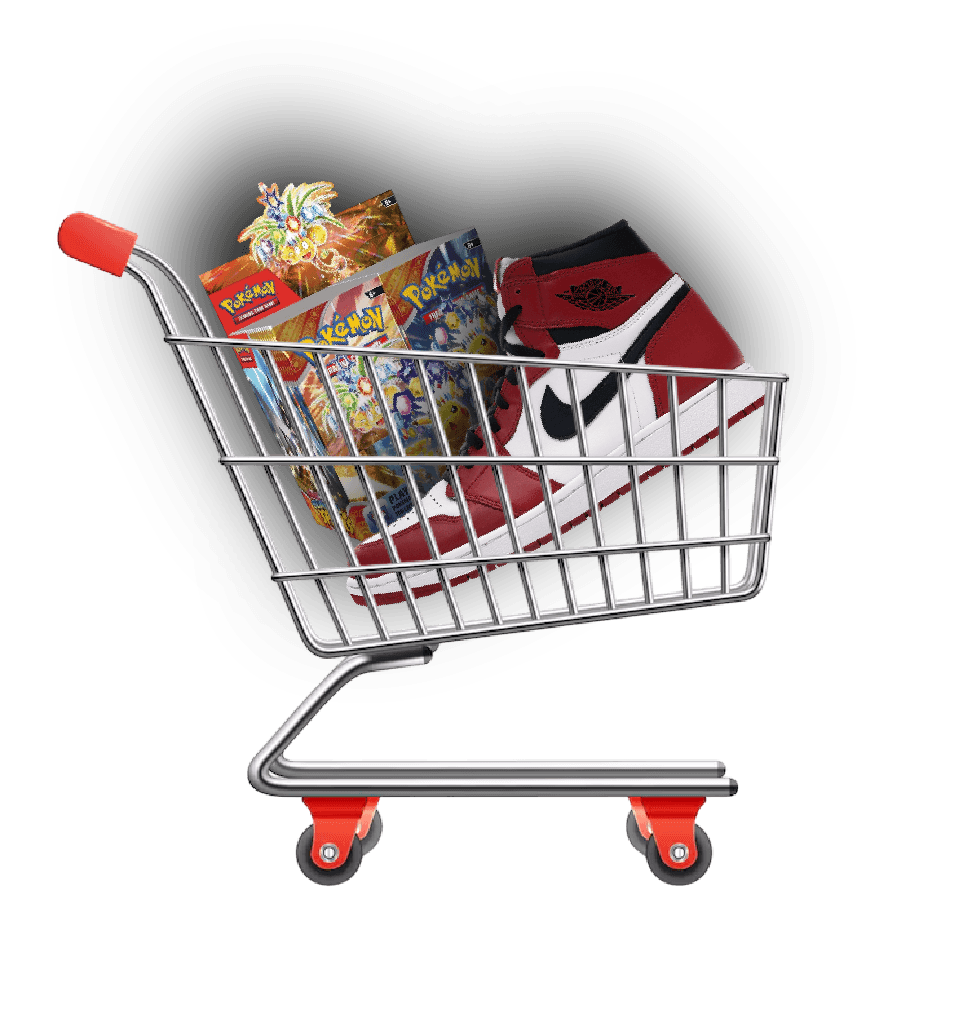
Comparing card collecting with traditional sneaker market history highlights two structural differences: shelf life and sizing. Polyurethane midsoles on vintage 1990s basketball shoes hydrolyze after 10 to 15 years. By contrast, a PSA-encapsulated card or shrink-wrapped booster box stored at 45% humidity data lasts for decades. Every collector also competes for the exact same card SKU rather than 18 shoe sizes.
According to the StockX seller fee schedule, Level 1 accounts pay a 9% transaction fee plus 3% payment processing on trading card boxes. Selling an $800 Evolving Skies box on StockX deducts $96.00 in percentage fees plus $4.00 shipping. That leaves a $700.00 net payout.
| Collectible Asset Class | Unit Size Variants | 20-Year Storage Stability | StockX Level 1 Fee Math ($800 Sale) |
|---|---|---|---|
| Sealed 36-Pack Booster Box | 1 universal SKU | Stable in UV acrylic case | 9% + 3% + $4 ($700.00 net) |
| PSA 10 Graded Chase Slab | 1 universal SKU | Ultrasonic sealed holder | 9% + 3% + $4 ($700.00 net) |
| Limited Retro Basketball Shoe | 15 to 18 men’s sizes | PU midsole hydrolysis risk | 9% + 3% + $4 ($700.00 net) |
| 1000% Medicom Bearbrick | 1 universal SKU | Stable ABS vinyl away from sun | 9% + 3% + $15 ($689.00 net) |
How Do Collectors Secure Sealed Booster Boxes and Exclusives at Retail?
Securing stamped Elite Trainer Boxes and booster cases at MSRP requires monitoring restock queues on major retail storefronts.
Stamped exclusives carry strict per-household limits of 2 to 4 units. As a result, online inventory often sells out within minutes of going live. According to Shopify storefront rate-limit documentation, high-traffic hobby shops enforce IP queue throttling during flash restocks. Checking our guide on where to buy TCG cards at retail helps collectors track verified distributors.
- Official storefront pre-orders: Monitor pre-order windows 60 to 90 days before set launch for stamped Elite Trainer Boxes.
- Big-box restock windows: Track weekly online restocks at Target, Walmart, Best Buy, and GameStop for $49.99 ETBs and $119.99 Ultra-Premium Collections.
- Multi-site checkout software: Automated platforms such as Valor AIO, Stellar AIO, Cybersole, and NikeShoeBot support checkout tasks across Shopify hobby stores and retail storefronts.
- Shrink-wrap verification: Always inspect factory booster boxes for authentic Pokéball-stamped shrink wrap before storing in UV-blocking acrylic cases.
What is the difference between a standard Elite Trainer Box and an exclusive version?
The exclusive version sold on the official storefront includes two additional booster packs (11 instead of 9) and a bonus promo card with a special stamp.
How many booster boxes come inside a factory-sealed master case?
A standard English factory master case contains 6 sealed 36-pack booster boxes, totaling 216 booster packs (2,160 cards).