StockX Removes Verified Authentic Tags: 2022 Nike Lawsuit and Policy Shift

Headline news that StockX removes verified authentic tags from its listings had sneaker collectors gone cray in November 2022. Amid Nike’s 2022 federal lawsuit over Vault NFTs, the exchange replaced its “Verified Authentic” guarantee with a “StockX Verified” badge. That wording change capped a turbulent 2022 marked by fee changes, layoffs, and a $100 promo code leak per reports.
- November 2022 Badge Change: Replaced “Verified Authentic” website copy with “StockX Verified” during the ongoing 2022 Nike federal trademark and counterfeit lawsuit.
- 2022 Seller Fee Structure: Level 1 sellers faced a 10% base transaction fee plus a 3% payment processing fee and a $4 domestic shipping charge per schedule.
- Two 2022 Layoff Rounds: Cut 8% of staff (over 100 employees) in June 2022 followed by a 5% workforce reduction in November 2022 per company filings.
- October 2022 Code Leak: Canceled roughly 50,000 orders after an unauthorized $100 discount code spread across social media per market reports.
Why Did the 2022 Nike NFT Lawsuit Happen Before StockX Removes Verified Authentic Tags?
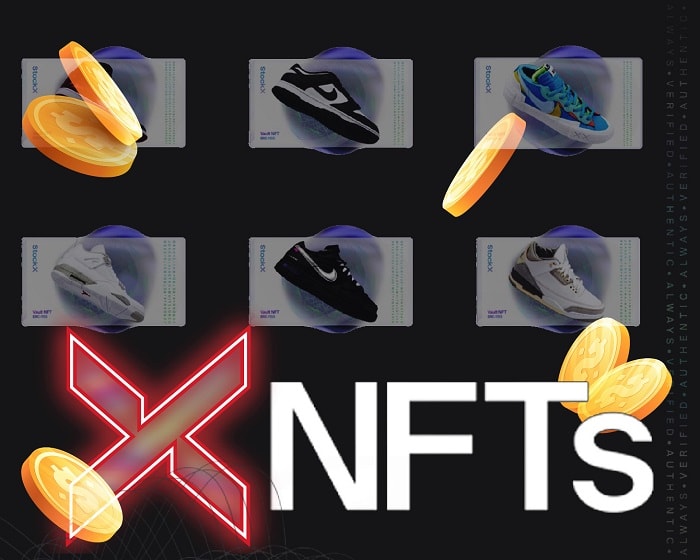
Readers who follow the NikeShoeBot sneaker news blog tracked a year-long legal clash between Beaverton and Detroit throughout 2022. The dispute began in February 2022 when the resale marketplace launched its StockX Vault NFTs. Those digital tokens were tied to physical sneakers stored inside a warehouse. Nike immediately filed a federal lawsuit in New York alleging trademark infringement and consumer confusion.
Three months later in May 2022, Nike escalated the case by amending its federal complaint. Nike stated that its investigators had purchased four pairs of counterfeit Air Jordan 1s on the exchange. Per CNET’s breakdown of Nike’s legal fight with StockX, the exchange called the allegations baseless and noted that Nike executives used the platform. Even so, the courtroom scrutiny placed its authentication claims under a microscope.
How Did the 10% Seller Fee and $4 Shipping Change Impact Sellers?
At the same time the legal battle unfolded, secondary sellers faced rising transaction deductions on the platform. Under the StockX Seller Program fee schedule active during that period, entry-level Level 1 sellers paid a 10% base transaction fee. In addition to that 10% commission, sellers paid a 3% payment processing fee and a $4 domestic shipping fee.
Combined, those deductions meant a Level 1 seller gave up 13% plus $4 on every pair sold per schedule. Anyone researching how the sneaker resale market works noticed the impact immediately. Narrow $15 to $25 price spreads over retail MSRP no longer covered platform commissions. Sellers had to complete higher quarterly sale volumes to unlock lower Level 2 through Level 5 fee tiers. High-volume consignors kept a clear cost advantage over casual sellers.
| 2022 StockX Timeline Date | Platform or Legal Event | Key Figure or Metric | Impact on Buyers & Sellers |
|---|---|---|---|
| February & May 2022 | Nike Vault NFT & Fake Lawsuit | 4 Alleged Fake Jordan 1s Cited | Challenged unconditional authenticity copy |
| June 2022 | First Workforce Layoff Round | 8% Staff Cut (100+ Employees) | Raised community questions on staffing |
| October 2022 | Leaked $100 Promo Code Chaos | ~50,000 Orders Canceled | Sparked buyer backlash over voided sales |
| November 2022 | 2nd Layoff & Tag Rewording | 5% Staff Cut / StockX Verified | Replaced Verified Authentic guarantee |
What Happened During the 2022 Layoffs and the $100 Discount Code Leak?
Workforce reductions during the second half of 2022 added further fuel to community skepticism. At the end of June 2022, StockX laid off 8% of its corporate workforce (over 100 employees) per company filings. Four months later in November 2022, Complex reported a second round of StockX layoffs that cut another 5% of remaining staff as e-commerce growth cooled.
Between those two layoff rounds, an operational crisis hit in October 2022. An internal $100 promotional discount code leaked on social media and spread rapidly. Thousands of users applied the $100 code to buy sneakers for near-zero totals before engineers disabled the coupon. Per Value Added Resource’s report on the leaked $100 StockX code, the company voided and canceled around 50,000 unauthorized orders.
What Is the Difference Between Verified Authentic and StockX Verified?
In November 2022, eagle-eyed buyers noticed that StockX had removed the green “Verified Authentic” badge from product pages. In its place appeared a redesigned “StockX Verified” icon. On the surface, the circular green hangtag shipped with inspected shoes looked nearly identical. Legally, however, shifting from an unconditional authenticity promise to a proprietary “StockX Verified” standard reduced strict liability exposure in federal court.
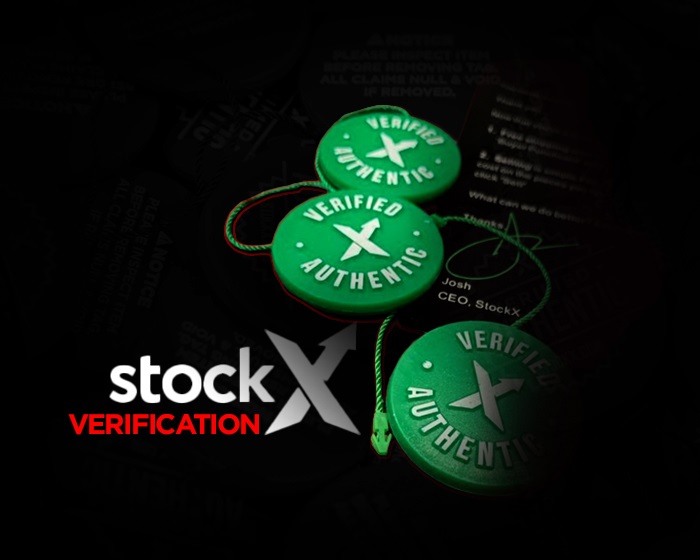
Under the “StockX Verified” phrasing, the platform certifies that an item passed its internal multi-point inspection checklist. It does not issue a direct manufacturer warranty. Only brand-authorized channels like Nike.com and SNKRS receive footwear directly from contract factories. Because of that supply chain reality, third-party human inspections always carry a small margin of error against high-grade replicas.
Replacing “Verified Authentic” with “StockX Verified” in November 2022 updated the platform’s legal promise. It now certifies compliance with StockX’s internal inspection checklist rather than a manufacturer guarantee.
How Do StockX and GOAT Seller Fees Compare Across Resale Price Tiers?
Collectors who sell deadstock pairs compare the 2022 Level 1 fee tier (10% base commission, 3% payment processing, and $4 shipping) against competing exchanges. Per the official GOAT seller fee schedule, sellers in good standing pay a 9.5% base commission. GOAT also deducts a $5 US fee and a 2.9% cash-out fee. Meanwhile, US athletic shoes imported through retail channels carry up to a 20% duty per US HTS Chapter 64 footwear tariff schedules.
On a $250 sneaker sale under the 10% + 3% + $4 fee schedule, StockX deducts $36.50, leaving a $213.50 net seller payout. On that same $250 sale on GOAT, combined deductions leave $214.50 net. The table below compares net payouts across four resale price tiers from $150 to $500.
| Gross Resale Price Tier | StockX 10% + 3% + $4 Deduction | StockX Net Seller Payout | GOAT 9.5% + $5 + 2.9% Net Payout |
|---|---|---|---|
| $150 Sneaker Sale | $23.50 Deducted | $126.50 Net | $127.00 Net |
| $250 Sneaker Sale | $36.50 Deducted | $213.50 Net | $214.50 Net |
| $350 Sneaker Sale | $49.50 Deducted | $300.50 Net | $302.00 Net |
| $500 Sneaker Sale | $69.00 Deducted | $431.00 Net | $434.00 Net |
Why Do Collectors Prefer Buying Nike SNKRS Releases Directly at Retail?
For sneaker collectors, the November 2022 tag controversy reinforced a simple rule. Checking out directly from Nike SNKRS or an authorized boutique eliminates every question about third-party verification. Buying at original retail MSRP also avoids paying secondary buyer processing fees and aftermarket markups. Preparing verified Nike SNKRS accounts with clean residential IPs before 10:00 AM EST is the first step.
Buyers who compare the best Nike bots and multi-site checkout software automate their entries across simultaneous retail drops. Platforms such as Valor AIO, Cybersole, Stellar AIO, and NikeShoeBot allow collectors to run parallel checkout tasks. Pairing these tools with residential proxy rotation across Shopify boutiques, Footsites, and Nike channels ensures pairs arrive straight from the manufacturer. Direct retail orders ship with original store receipts and zero secondary inspection fees.
Did StockX stop inspecting sneakers in person when it changed its tag wording in November 2022?
No, StockX continued routing sold items through its physical authentication centers for multi-point inspection. Only the public badge wording changed from “Verified Authentic” to “StockX Verified” during the Nike lawsuit.
Why did StockX cancel 50,000 orders in October 2022?
In October 2022, an unauthorized $100 discount code leaked online and was applied to tens of thousands of purchases. StockX voided roughly 50,000 orders under its terms of service.