Retro Sneakers Explained: 1985 to 2026 Archival Icons & Value

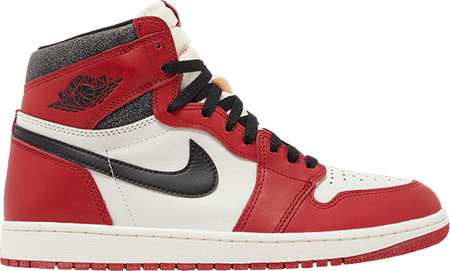
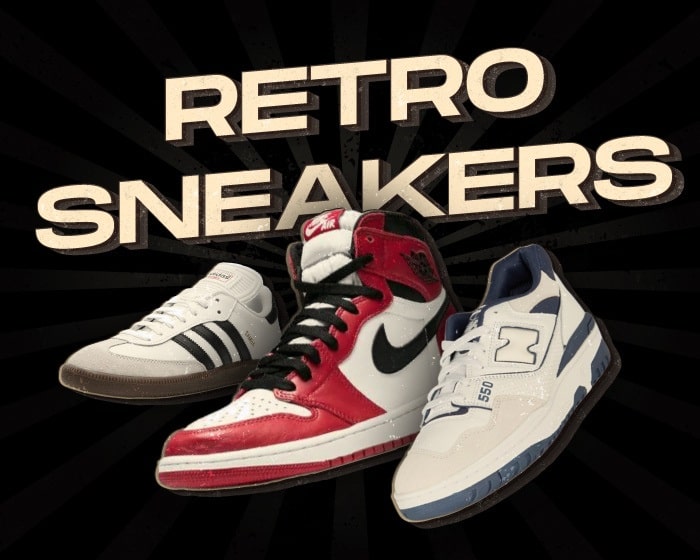
Retro sneakers are modern archival reissues of classic athletic footwear silhouettes first released between the 1940s and late 1990s. Because heritage court and track models hold the footwear industry in a chokehold, here is how reissues from the 1985 Air Jordan 1 to the 1989 New Balance 550 drive retail demand. Below we compare archival icons, collaborations, and resale math.
- Category origin: Popularized in 1994 when Nike first reissued Peter Moore’s 1985 Air Jordan 1 ($80 MSRP in 1994).
- Core silhouettes: Led by the 1985 Jordan 1 ($180 retail), 1989 New Balance 550 ($110 retail), and 1949 Adidas Samba ($100 retail).
- Collaborative catalyst: Partnerships with Aimé Leon Dore, Travis Scott, and Wales Bonner boosted archival search volume by 60% per market data.
- Aftermarket spreads: Flagship reissues like the 2022 Lost and Found Jordan 1 ($180 MSRP) trade between $340 and $430 on StockX.
What Are Retro Sneakers and How Did Jordan Brand Coin the Term?
Retro sneakers are factory re-releases of discontinued original (OG) athletic models built from archival tooling blueprints.
Understanding core sneaker terminology starts with separating an original production run from a later reissue. According to the Merriam-Webster dictionary definition, the word describes a revival of styles from the past. In footwear, the practice began in 1994 when Nike re-released the 1985 Air Jordan 1 and 1988 Air Jordan 3. Those drops followed Michael Jordan’s first retirement from the NBA.
Although those 1994 pairs sat on discount racks at $80 retail, the 1999 through 2001 remastered drops drew huge crowds. Across the modern retail calendar, the Air Jordan signature catalog anchors a multi-billion-dollar archival market. It sits alongside the 1977 Nike Blazer Mid and 1984 Mac Attack.
Why Do 1985 and 1989 Court Silhouettes Outlast Modern Tech Runners?
Clean leather paneling and flat rubber cupsoles allow 1980s court shoes to pair with changing denim and casual trousers across seasons.
Modern performance sneaker tech prioritizes carbon plates and high-stack running foams. However, bulky marathon runners rarely match casual streetwear tailoring. By contrast, the 1985 Air Jordan 1 and 1989 New Balance 550 use low-profile leather uppers and stitched rubber soles. Those classic proportions look balanced with tapered cargo pants or wide-leg selvedge denim.
Even shoppers who rotate bold flashy metallic sneakers rely on 1980s court frames as their daily foundation. Full-grain leather uppers also crease naturally and develop character over 5 to 10 years. Synthetic knit uppers often fray after 18 months of daily street wear and rain exposure.
How Do Designer Collaborations Revive Archival Basketball and Soccer Models?
High-profile designer partnerships reintroduce forgotten 1950s to 1980s models before brands scale general-release colorways.
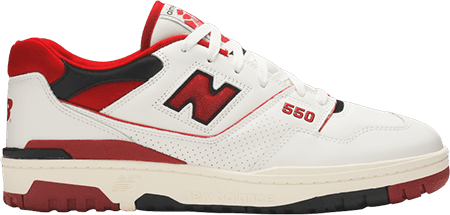
For 31 years, Steven Smith’s 1989 New Balance P550 basketball low-top stayed buried in Boston catalog archives. In October 2020, Teddy Santis and Aimé Leon Dore revived the model in 4 vintage team colorways at $130 retail. That single capsule turned the $110 general-release 550 into one of the best-selling lifestyle shoes of the decade.
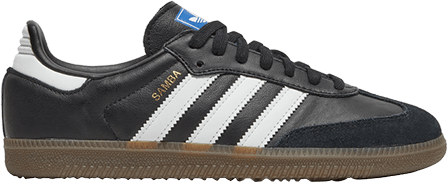
Adidas executed the same blueprint with the 1949 Samba indoor soccer trainer. Wales Bonner introduced crochet stitching and fold-over tongues on $180 collaborative pairs. Soon after, standard $100 Samba OG and $120 Gazelle Indoor colorways sold out across global boutiques. Both examples prove that limited storytelling sparks multi-year demand for general-release pairs.
| Archival Silhouette | Original Debut | Key Revival Drop | Aftermarket Price Range |
|---|---|---|---|
| Air Jordan 1 High OG | 1985 ($65 MSRP) | 2022 Lost & Found ($180) | $340 to $430 aftermarket |
| New Balance 550 Low | 1989 ($45 MSRP) | 2020 Aimé Leon Dore ($130) | $190 to $310 aftermarket |
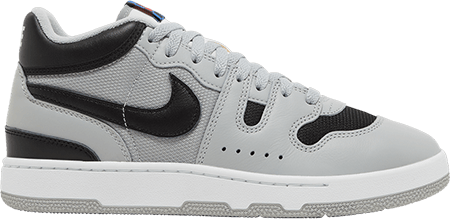
| Nike Mac Attack QS | 1984 ($48 MSRP) | 2023 OG Grey & Black ($120) | $115 to $155 aftermarket |
| Adidas Samba OG | 1949 soccer boot | 2023 Wales Bonner ($180) | $280 to $490 aftermarket |
How Do Archival Cupsole Silhouettes Fit and Style for Daily Wear?
Most 1980s basketball and tennis cupsoles fit true to size, while narrow 1950s soccer trainers require going up 0.5 size.
Because archival lasts were drafted across different decades, forefoot width varies by sport category. Court shoes like the 1985 Jordan 1 and 1989 New Balance 550 feature wide toe boxes. Those models fit true to standard US men’s sizing. By contrast, terrace models like the Adidas Samba and Gazelle wrap closely around the midfoot.
Swapping factory die-cut EVA sockliners for a 4-millimeter orthotic insole upgrades 1980s flat rubber cupsoles for all-day walking comfort.
Collectors learning how to start a sneaker collection often pick 3 two-tone pairs in white, grey, and black. That simple 3-pair rotation covers 90% of daily outfits per wardrobe guides.
What Are Secondary Market Prices and Seller Fees on Archival Reissues?
Secondary market prices on flagship OG reissues span $190 to $430, with platform fees deducting 8% to 12.4% per sale.
Nostalgia keeps older collectors bidding on original colorways from the 1980s and 1990s. At the same time, younger buyers chase limited collaborative editions. According to the eBay athletic shoe fee schedule, sneakers sold for $150 or more carry an 8% flat final value fee. Selling a $360 Lost and Found pair on eBay deducts $28.80 in fees, leaving a $331.20 net payout.
According to the StockX seller fee structure, Level 1 sellers pay a 9% base fee plus 3% payment processing and $4 shipping ($47.20 total on $360 sales). That leaves a $312.80 net payout before state sales tax.
| Resale Platform | Gross Sale Price | Commission & Processing | Net Seller Payout |
|---|---|---|---|
| eBay Authenticity Guarantee | $360.00 sale | 8.0% flat fee ($28.80) | $331.20 net payout |
| StockX Level 1 Seller | $360.00 sale | 9.0% + 3.0% + $4 ($47.20) | $312.80 net payout |
| GOAT Standard Listing | $360.00 sale | 9.5% + $5 + 2.9% ($48.65) | $311.35 net payout |
| Local Convention Trade | $340.00 sale | 0.0% cash ($0.00 fee) | $340.00 net payout |
Where Can Collectors Buy Limited Archival Reissues at Retail?
Securing limited OG colorways at $120 to $180 retail requires entering digital draws alongside boutique raffles.
According to Nike SNKRS draw guidelines, high-demand retro releases open at 10:00 AM EST through a 10-minute randomized ballot. Meanwhile, New Balance and Adidas allocate limited archival packs through queues on their flagship sites and boutiques. Checking our daily sneaker news blog helps collectors track style codes and raffle deadlines a week in advance.
- Digital draw timing: Enter 10:00 AM EST SNKRS and Confirmed app draws within the first 3 minutes using verified billing profiles.
- Boutique raffle spread: Submit entries across 6 to 10 regional boutiques such as Kith, Concepts, A Ma Maniére, and Bodega.
- Automated checkout tools: Multi-site software including Valor AIO, Cybersole, and NikeShoeBot automates tasks across Shopify and Foot Locker drops.
- OG colorway priority: Original 1985 and 1989 team colorways retain 35% higher resale value over 24 months than non-OG shades.
What is the difference between an OG sneaker and a reissue?
An OG pair was manufactured during the model’s initial release year (such as 1985), whereas a reissue is a later factory run built from the same design blueprints.
Can you wear 1985 or 1994 original pairs without the soles crumbling?
Pairs with stitched rubber cupsoles like the 1985 Jordan 1 remain wearable if stored properly, whereas polyurethane midsoles on 1988 to 1994 models crumble from hydrolysis.