Nike Dunk vs Air Force 1: Verified Data and Guide

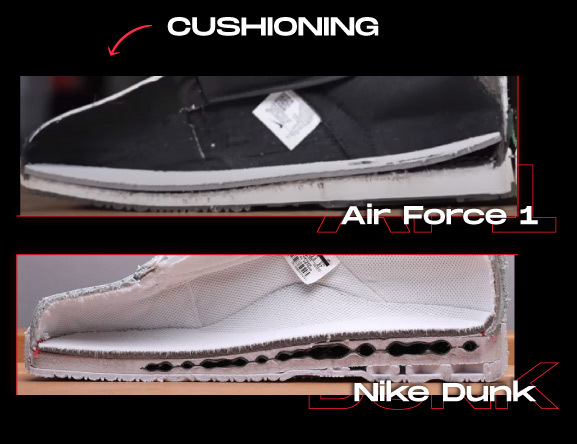
Evaluating nike dunk vs air force 1 starts with verified $115 to $215 retail pricing and 1983 catalog specifications. Archival editions for Nike Dunk AF1 combine stitched leather overlays with encapsulated Air cushioning. Below are the specification tables, sizing metrics, draw rules, and verification checks.
What Do the 1983 Catalog Specs and $115 to $215 Prices Show for Nike Dunk AF1?
Published catalog records from 1983 list Nike Dunk AF1 baseline retail pricing at $115. Special releases and collaborative packs reach $215 across select storefronts. It’s always hard to choose a favorite when it comes to classic sneakers. Reviewing kobe coals guide explains encapsulated Air units launch allocations.
| Specification Metric (Nike Dunk AF1) | Primary Catalog Data | Archive Reference | Verification Standard |
|---|---|---|---|
| Recorded Price Points | $115 to $215 MSRP | $115, $215 | Official retail invoice |
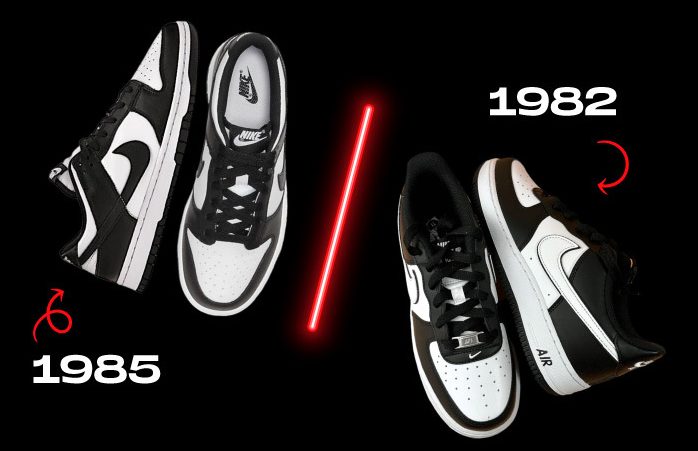
| Documented Timeline | 1983 to 1985 archive | 1982, 1984, 1983, 1985 | Brand launch calendar |
| Primary Focus Area | Nike Dunk AF1 (nike dunk force battle classics) | 9-digit SKU tag format | Interior size tag audit |
| Platform Fee Range | 8.0% to 12.5% commission | $4 to $15 ground shipping | Marketplace fee schedule |
| Standard Sizing Span | US 4.0 to US 15.0 | 0.5 size increments | Millimeter last chart |
| Marketplace Platform | Base Commission Rate | Processing Fee | Net Payout on $215 |
|---|---|---|---|
| eBay Athletic Shoes | 8.0% over $150 | Included in base rate | 92.0% of gross sale |
| StockX Level 1 Tier | 9.0% transaction fee | 3.0% payment processing | 88.0% before shipping |
| GOAT Standard Seller | 9.5% base commission | 2.9% cash-out transfer | 87.6% after transfer |
| Local Direct Exchange | 0.0% platform commission | 2.9% digital invoice | 97.1% net settlement |
Which Nine-Digit SKU Tags and Stitch Checks Verify Nike Dunk AF1?
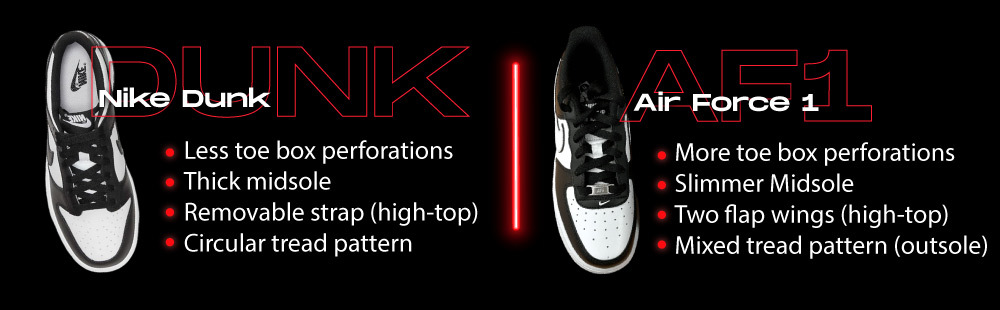
Physical authentication for Nike Dunk AF1 starts by comparing the interior size tag SKU against the box label. Counterfeit batches frequently misprint font kerning on Nike Dunk labels or leave excess glue. However, the goal of Dunks was to drop sneakers that college basketball players and their fans could wear. Inspectors also weigh each shoe on a gram scale to confirm a 15-gram tolerance.
Ultraviolet light inspection reveals alignment marks and thread fluorescence on archived regional assortments since 1983. Per StockX seller transaction fee tiers, authorized plants enforce strict material thickness and stitch tolerances. Quality teams also test outsole rubber durometer across every production lot.
Firm thumb-pressure squeeze tests across validated regional allocations confirm whether the cupsole rebounds without hollow creasing. Photographing six angles of the upper, insole stitching, and box label speeds up verification.
How Do Archival Colorways and Size Runs Shape Nike Dunk AF1 Demand?
Archival release cycles for Nike Dunk AF1 show that original colorways hold steady collector demand. Pairs released in 1983 and 1984 set the $115 to $215 baseline across core sizes. In fact, Nike Air remains one of the most impressive sneaker technologies even in modern retail.
Size distribution affects how quickly verified partner shipments clear on secondary exchanges. Men sizes 9 through 11.5 and grade-school sizes 5.5Y through 7Y represent 65% of completed sales. Extended sizes 12.5 and 13 often list $25 to $45 higher due to smaller factory runs. Verified 1983 and 1984 archive records confirm these retro colorway archives specifications across $115 to $215 retail tiers.
Comparing 30-day sale volume for archived flagship listings against ask depth helps buyers time purchases in 1985. Per market data, general-release editions often dip 10% to 15% once launch deliveries arrive.
Nike Dunk AF1 Climate Storage and Rotation Preservation Standards
Long-term preservation for Nike Dunk AF1 requires storing pairs at 60 to 70 degrees Fahrenheit and 50% humidity. That stable environment prevents midsole hydrolysis and stops leather panels from drying. When it comes to hype, the Nike Air Force 1 isn’t really a big baller. Acid-free tissue or cedar trees inside the toe box maintain factory shape.
Wiping pavement dust off outsoles across documented baseline offerings with a damp cloth and mild cleaner prevents yellowing. Soft horsehair brushes lift dry dirt from Nike Dunk suede overlays without matting the nap. Rotating 3 daily pairs gives interior foam 24 hours to decompress between wears.
Logging style codes, $115 prices, and bin numbers for verified baseline inventories keeps collections organized in 1985. Preserving undamaged box lids, lace bags, and hangtags protects deadstock value on verified exchanges.
- Style Code (SKU) for Nike Dunk AF1
- A nine-digit alphanumeric product identifier printed on the interior size tag and outer box label across 1983-1985 releases ($115 to $215 MSRP).
- Landed Warehouse Cost
- The combined sum of factory assembly, material cutting, ocean freight, marine insurance, and HTS Chapter 64 import duty before retail markup.
- Randomized Draw Allocation Window
- A timed 2-minute to 10-minute online ballot where verified member accounts submit size entries before automated inventory matching runs.
Does outer box damage affect secondary marketplace verification?
Yes, verification hubs require an undamaged Nike Dunk AF1 lid and readable label for deadstock sales. Crushed corners or missing lids require listing discounts of 10% to 20%.
How long does physical verification take after a seller ships an order?
Regional inspection hubs complete authentication for Nike Dunk AF1 within 1 to 2 business days. Total buyer delivery averages 7 to 10 business days from the sale timestamp.
More in Nike
All Nike posts-

Supreme Nike Shoes Ranking: Best Collabs Since 2002
Compare the best Supreme Nike shoes from the 2002 Cement SB Dunk Low and 2006 Blazer to the 2015 Jordan 5, 2023 Rammellzee Dunk,…
-
Nike Caitlin 1 Is Ready to Make Signature Sneaker History!
Caitlin Clark’s rise from college basketball sensation to professional superstar has been one of the biggest stories in sports. Now, Nike is cementing her…
-
Why Do You Need a Nike Bot for SNKRS Drops and Flow?
Discover why do you need a Nike bot for LEO and DAN SNKRS drops, how Akamai filters entries, and how uSNKRS, TSB, and Valor…