GS Sizes in Sneakers: Conversion Chart, Fit & Resale Guide

GS sizes (Grade School or Big Kids sizing) span US youth sizes 3.5Y through 7Y and fit older children and adult women. Here is why shoppers should compare youth sneakers against adult pairs: retail prices sit $40 to $70 lower than men’s tags. Historical releases from 2010 to 2020 trade between $585 and $840 on resale platforms. Below we break down size conversions, construction differences, and marketplace fee math.
- US youth size range: Covers 3.5Y to 7Y, which converts directly to US women’s sizes 5 through 8.5 by adding 1.5 sizes.
- Lower retail entry point: Priced at $110 to $200 retail across signature Jordan and Kobe drops, saving $40 to $70 per pair over men’s MSRP.
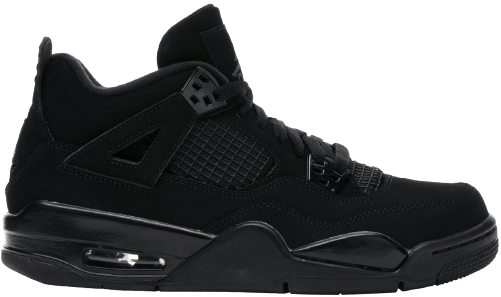
- 2020 Jordan 4 benchmarks: The January 2020 Black Cat GS ($140 retail) averages $840 resale, while the May 2020 Metallic Red GS ($140 retail) averages $585.
- 2010 to 2018 grails: Includes the 2018 Levi’s Jordan 4 GS ($200 retail, $700 resale), 2015 Chicago Jordan 1 GS ($120 retail, $600 resale), and 2010 Kobe 6 GS ($110 retail, $630 resale).
What Are GS Sizes and How Do They Convert to Women’s Footwear?
Grade School sizing runs from 3.5Y to 7Y in half-size increments. Those youth numbers equal standard US men’s numerical sizing.
Across the modern sneaker industry, brands divide youth footwear into three main tiers. Those tiers are Toddler (1C to 10C), Preschool (10.5C to 3Y), and Grade School (3.5Y to 7Y). According to the Zappos US shoe size conversion chart, a youth size 6Y measures 24 centimeters. That length matches a men’s size 6 and a women’s size 7.5.
To convert any Grade School tag to US women’s sizing, shoppers add 1.5 to the youth number. Retail updates covered in our Nike kids size labeling guide replaced the “GS” stamp with “Big Kids.” Even so, the 3.5Y to 7Y foot dimensions remain identical.
How Do Grade School Materials, Eyelets, and Cushioning Differ From Men’s Pairs?
Grade School retro models use scaled-down midsole Air bags and narrower lasts. They also feature fewer lace eyelets to fit smaller feet.
A 7Y pair shares the same 25-centimeter insole length as a men’s size 7. Subtle structural differences still separate the two retail tiers. On the Air Jordan 4, Grade School pairs feature 5 holes on the plastic lace wings. Men’s pairs use 9 holes molded onto those same wings. On the Air Jordan 1 High, youth collars sit 1 centimeter lower.
Youth pairs retail for $120 to $160 instead of $180 to $215 for men’s pairs. Factories occasionally substitute polyurethane insoles for standard EVA foam. Upper leather panels still match the adult release. You can see that parity in our Nike Dunk Low Triple Pink breakdown.
| GS Size (Big Kids) | US Women’s Equivalent | EU Size | Foot Length (cm) |
|---|---|---|---|
| 4.0Y (Grade School) | Women’s 5.5 | EU 36.0 | 23.0 cm |
| 5.0Y (Grade School) | Women’s 6.5 | EU 37.5 | 23.5 cm |
| 6.0Y (Grade School) | Women’s 7.5 | EU 38.5 | 24.0 cm |
| 7.0Y (Grade School) | Women’s 8.5 | EU 40.0 | 25.0 cm |
Why Do 2018 and 2020 Air Jordan 4 Youth Releases Trade Between $585 and $840?
Deadstock scarcity and demand from women’s size 7 to 8.5 wearers pushed 2018 and 2020 Jordan 4 youth pairs up to 600% over retail.
The Air Jordan 4 Black Cat (GS) released on January 22, 2020 for $140 retail. Pairs initially sat on mall shelves during launch week. Because most youth pairs were worn daily, unworn deadstock supply dried up quickly. According to secondary market records, the 2020 Black Cat (GS) averages $840 on resale platforms. That represents a $700 spread over its $140 MSRP.
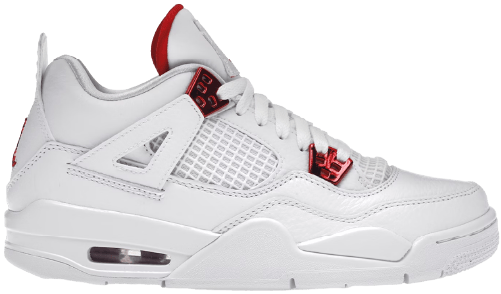
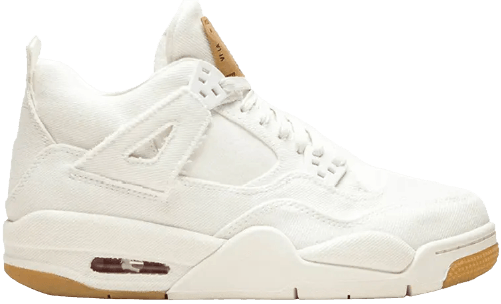
On May 20, 2020, the Air Jordan 4 Metallic Red (GS) launched at $140 retail. It climbed to a $585 average resale price across secondary platforms. Earlier collaborations followed the same path. The white denim Air Jordan 4 Levi’s (GS) released on June 30, 2018 for $200 retail. It trades at a $700 average resale price.
How Did 2010 to 2017 Jordan 1 and Kobe 6 Grade School Drops Perform?
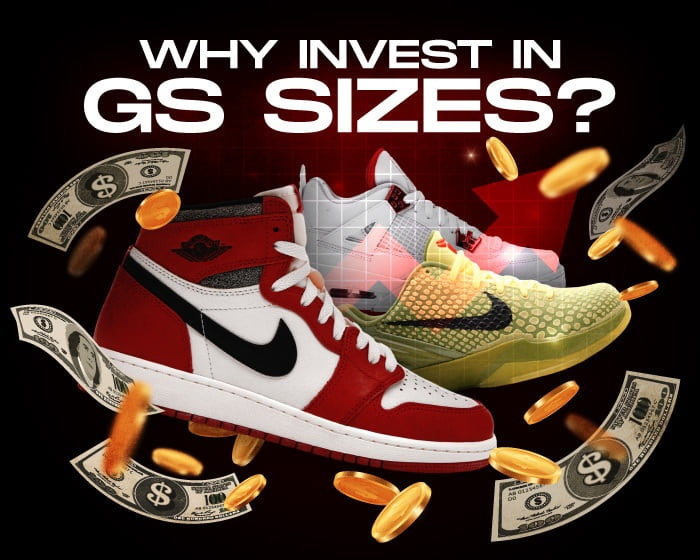
Archive Grade School editions of the 2010 Kobe 6 and 2015 to 2017 Jordan 1 High trade at $600 to $630. Those pairs originally launched at $110 to $120 retail tags.
On December 25, 2010, the original Nike Zoom Kobe 6 Grinch (GS) debuted at a $110 retail price. Over a decade later, deadstock 2010 youth pairs command an average resale price of $630. Classic colorways of the Air Jordan 1 Retro High OG in youth sizing achieved comparable fivefold multiples.
Released on May 30, 2015 for $120 retail, the Air Jordan 1 Retro Chicago (GS) averages $600 on the secondary market. Stylist Aleali May’s corduroy Air Jordan 1 Shadow (GS) dropped on October 28, 2017 for $120 retail. That 2017 collaboration also trades at an average resale price of $600 in upper youth sizes.
How Do eBay, StockX, and GOAT Seller Fees Affect Net Payouts on Youth Pairs?
Platform commissions deduct between 8% on eBay and 12% to 13% on StockX and GOAT when selling $585 to $840 youth grails.
Per the eBay sneaker selling fee schedule, athletic shoes sold for $150 or more incur an 8% fee. By comparison, the StockX seller fee structure deducts a 9% base fee plus a 3% processing fee (12% total). Meanwhile, the official GOAT fee schedule charges a 10% base commission plus $5 and a 3% cash-out fee.
Within any Grade School size run, sizes 6Y to 7Y clear 20% to 35% higher resale prices than sizes 3.5Y to 4.5Y.
Selling a 2020 Jordan 4 Black Cat (GS) at its $840 average resale price on eBay deducts $67 in fees. That leaves a $773 net payout. Selling that same $840 pair on StockX deducts $101 in fees and leaves $739 net.
| GS Sneaker Release (Launch Date) | Original Retail | Average Resale | eBay Net Payout (After 8% Fee) |
|---|---|---|---|
| Jordan 4 Black Cat GS (1/22/2020) | $140 retail | $840 resale | $772.80 net payout |
| Jordan 4 Levi’s White GS (6/30/2018) | $200 retail | $700 resale | $644.00 net payout |
| Kobe 6 Grinch GS (12/25/2010) | $110 retail | $630 resale | $579.60 net payout |
| Jordan 1 Chicago GS (5/30/2015) | $120 retail | $600 resale | $552.00 net payout |
How Can Collectors Secure Limited Grade School Releases at Retail Price?
Securing 6Y to 7Y pairs at $120 to $160 retail requires targeting separate youth SKUs across Footsites, SNKRS, and boutiques.
Retailers list Big Kids sizing under a distinct style code from men’s pairs. Shoppers who study how to buy sneakers for retail monitor both SKUs simultaneously. On release morning, sizes 6Y, 6.5Y, and 7Y sell out rapidly. Adult women and youth buyers compete for that same inventory.
- Monitor separate GS style codes: Enter the specific youth SKU into release monitors 48 hours before launch day.
- Prioritize sizes 5.5Y to 7Y: Focus checkout tasks on the upper half of the youth size curve where adult crossover demand concentrates.
- Deploy multi-site checkout software: Leading bots such as Valor AIO, Cybersole, and NikeShoeBot allow users to run parallel tasks across Foot Locker, Champs, JD Sports, and Shopify stores.
- Verify deadstock accessories: Keep original youth-specific hangtags, stickers, and extra lace bags inside the box to pass authentication.
How do you convert a Big Kids (Y) sneaker size to a US women’s size?
Add 1.5 to the Youth size number to find the US women’s equivalent. A size 6Y equals a women’s size 7.5, and a 7Y equals a women’s 8.5.
Why do sizes 6Y to 7Y sell for more than 3.5Y to 4.5Y on resale platforms?
Sizes 6Y through 7Y fit women’s sizes 7.5 to 8.5, creating much higher adult buyer demand than smaller children’s sizes.