Clone X by RTFKT – An NFT Collection Worth Looking Into!

Clone X by RTFKT is an Ethereum NFT collection of 20,000 3D avatars worth looking into for its Takashi Murakami artwork and physical sneaker forging. Launched in November 2021 just two weeks before Nike acquired RTFKT, the project split 10,000 presale and 10,000 public mints. Per July 2022 market data, the floor traded at 9.67 ETH ($14,700) with a record 450 ETH ($683,964) sale.
- Collection Supply: Comprises 20,000 3D avatars (10,000 two-day presale tokens for RTFKT holders and 10,000 public Dutch-auction tokens).
- Creative Collaboration: Co-designed with Japanese contemporary artist Takashi Murakami across 8 distinct DNA avatar classes.
- Historical Trading Peak: Logged 221,600 ETH in cumulative volume across 9,500 unique holders, a 9.67 ETH ($14,700) floor in July 2022, and a 450 ETH ($683,964) top sale.
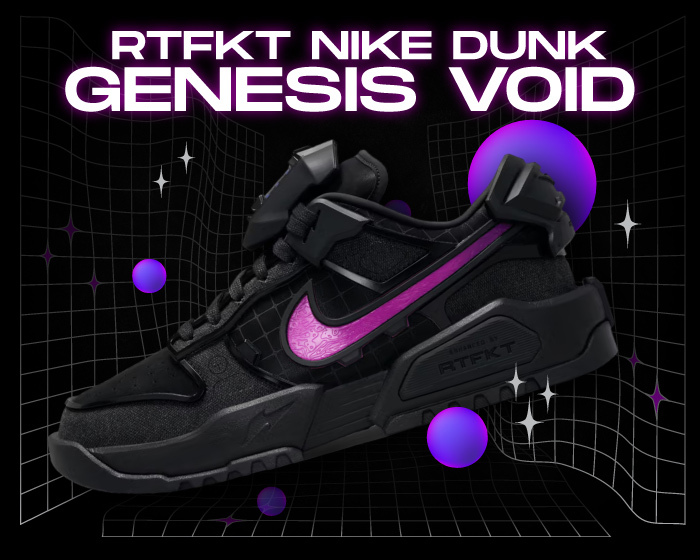
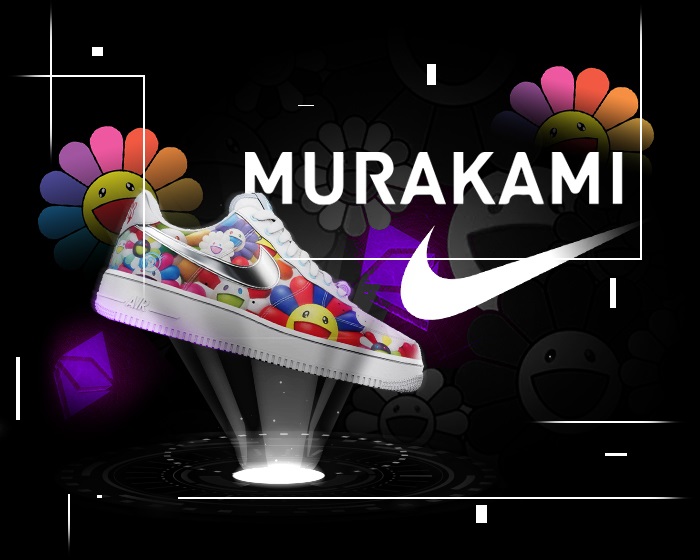
- Physical Utility: Unlocked physical Dunk Genesis and Air Force 1 sneaker forging events after Nike acquired RTFKT in December 2021.
How Did RTFKT Studios Bridge Virtual Sneakers and Collectibles?
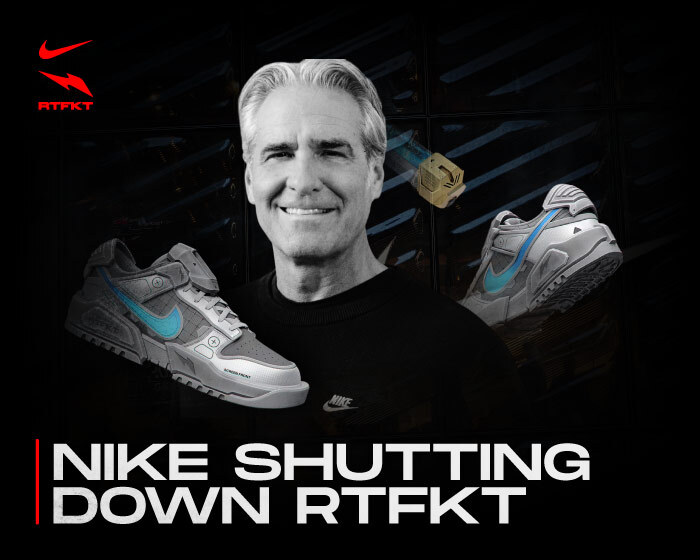
Benoit Pagotto, Chris Le, and Steven Vasilev founded RTFKT Studios in January 2020. Their digital fashion lab merged gaming engines, augmented-reality filters, and physical footwear manufacturing. Readers who followed the December 2021 RTFKT acquisition saw how the studio built early momentum through viral virtual sneaker drops. Before launching Clone X in late November 2021, the team collaborated with Jeff Staple on the Meta-Pigeon and with artist FEWOCiOUS.
Each early drop paired an Ethereum digital token with a physical sneaker forging window. That physical-to-digital pipeline caught the attention of Beaverton executives during 2021. Just two weeks after the 20,000-avatar mint concluded in late November 2021, the footwear giant officially acquired RTFKT Studios on December 13, 2021. That acquisition connected Web3 collectibles with global footwear manufacturing.
How Did Takashi Murakami Shape the 20,000 3D Avatars?
The November 2021 mint distributed 20,000 algorithmically generated 3D avatars across two distinct phases. First, 10,000 Mintvials were reserved in a 48-hour presale at 0.05 ETH for existing RTFKT NFT holders. Two days later, the remaining 10,000 vials launched to the public via a Dutch auction starting at 3 ETH. Collectors who held their vials revealed rigged 3D characters built for virtual metaverse environments.
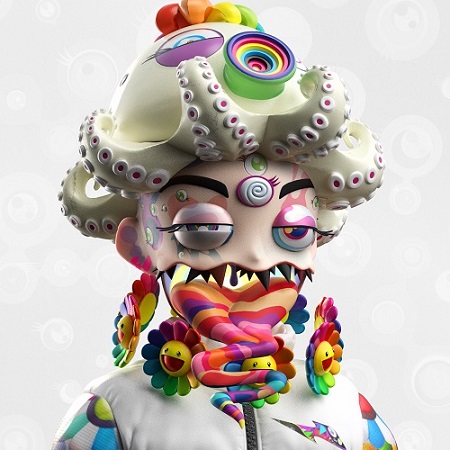
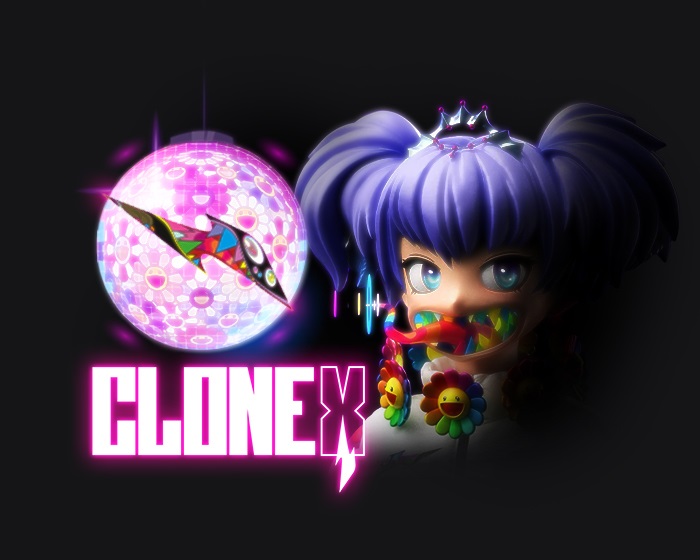
Japanese contemporary artist Takashi Murakami co-designed the visual traits using his signature Superflat aesthetic. Murakami hand-illustrated vibrant anime eyes, smiling flower motifs, cybernetic helmets, and custom streetwear jackets. Every holder also received access to downloadable 3D Unreal Engine and Blender files for digital content creation.
Combining Takashi Murakami’s Superflat visual language with downloadable 3D character rigs turned static profile pictures into customizable virtual identities.
How Do the Eight DNA Classes and Murakami Drip Traits Rank?
Every avatar in the 20,000-piece supply belongs to one of eight foundational DNA species that determine its base rarity. Per the collection table, Human clones represent the most common tier at 50% of the supply (10,000 avatars). Robot clones follow at 30% of the supply (6,000 avatars) per collection data. Angel and Demon classes each account for 8.75% per official rarity data. Meanwhile, Reptile (1.25%), Undead (0.6%), Murakami DNA (0.5%), and Alien (0.15%, 30 units) form the rarest tiers.
Beyond base DNA, roughly 15% of the collection (~3,000 avatars) carries the coveted “Murakami Drip” property. That tag indicates that the avatar wears artwork created by Murakami. Collectors analyzing trait distributions on NFT rarity ranking tools track combinations of rare DNA species and Murakami Drip attributes. Avatars with both pure Murakami DNA and Drip traits cannot be altered.
| DNA Species Class | Collection Share | Approximate Supply | Rarity Tier Classification |
|---|---|---|---|
| Human DNA | 50.00% | 10,000 avatars | Core Standard Tier |
| Robot DNA | 30.00% | 6,000 avatars | Cybernetic Mid Tier |
| Angel & Demon DNA | 17.50% combined | 3,500 avatars | Rare Dual Faction Tier |
| Reptile, Undead, Murakami, Alien | 2.50% combined | 500 avatars (30 Alien) | Ultra-Rare Apex Tier |
What Do Historical ETH Volumes and Record Sales Reveal?
During the July 2022 market snapshot, 19,500 revealed avatars were held by 9,500 unique wallet addresses. Cumulative secondary trading volume stood at 221,600 ETH across OpenSea and LooksRare at that July 2022 benchmark. The collection floor price in July 2022 traded at 9.67 ETH. That floor equaled roughly $14,700 per avatar according to exchange data. Rare traits traded far above that baseline.
Individual grail traits commanded six-figure premiums during peak 2022 trading. Most famously, the OpenSea listing for Clone #4594 (token ID 8368) recorded a historical sale of 450 ETH. That trade equaled $683,964 according to on-chain data. When forged sneakers trade on footwear platforms, sellers pay a 9% Level 1 fee plus 3% processing per StockX seller fee schedules.
| Collection Metric (July 2022) | Recorded Figure | USD / Supply Context | Verification Source |
|---|---|---|---|
| Active Circulating Supply | 19,500 items | 9,500 unique wallet owners | On-chain contract registry |
| Cumulative Trading Volume | 221,600 ETH | Multi-exchange secondary trades | July 2022 OpenSea ledger |
| July 2022 Floor Benchmark | 9.67 ETH | ~$14,700 at July 2022 ETH rate | Historical collection snapshot |
| Record Sale (Clone #4594) | 450.00 ETH | $683,964 at sale timestamp | OpenSea token 8368 history |
How Does Physical Sneaker and Collectible Forging Work?
Ownership of an avatar grants access to periodic forging events. During these windows, holders redeem digital wearables for made-to-order physical sneakers. In 2022 and 2023, RTFKT hosted forging events for ten DNA-specific colorways of the Air Force 1 Low. Holders also claimed the customizable Dunk Genesis Cryptokicks. Each physical sneaker embeds an NFC chip behind the heel badge that links to a digital token. Scanning the heel chip verifies ownership.
When forging portals or Shopify merch drops open, storefronts apply per-IP queue controls documented in Shopify API rate-limit guides. Physical vinyl figures redeemed through studio drops must also satisfy batch-tracking rules under U.S. CPSC ASTM F963 safety standards. Forged Air Force 1 pairs later traded between $350 and $1,800 on StockX according to resale data.
How Does Clone X Compare to BAYC and CryptoPunks?
Evaluating blue-chip digital collectibles requires comparing artistic format, intellectual property rights, and corporate backing. Earlier projects like 2017 CryptoPunks established the 10,000-piece 2D pixel-art standard. Similarly, Bored Ape Yacht Club popularized 2D illustrated club memberships in spring 2021. By contrast, RTFKT focused on rigged 3D avatars. Holders import those 3D files directly into spatial video calls and game engines.
Commercial IP terms also differ across the collection’s traits. Standard Human, Robot, Angel, and Demon holders received up to $1,000,000 in commercial merchandising rights per license terms. However, avatars carrying Takashi Murakami’s “Murakami Drip” traits restrict commercial licensing. That rule protects the artist’s fine-art studio trademarks. Collectors still value both tiers for their physical footwear forging access and 3D utility.
Why do Murakami Drip avatars have different commercial rights than standard clones?
Avatars bearing the Murakami Drip property contain fine-art elements hand-designed by Takashi Murakami, so those specific tokens are licensed for personal and virtual use rather than commercial merchandise production.
How many total DNA types exist across the 20,000 avatars?
Per the rarity schedule, eight DNA classes exist: Human (50%), Robot (30%), Angel (8.75%), Demon (8.75%), Reptile (1.25%), Undead (0.6%), Murakami (0.5%), and Alien (0.15%).