Who Owns Air Jordan? Nike Ownership, 1984 Contract & Manufacturing Guide

Answering your curious questions about who owns Air Jordan starts with a clear corporate fact: Nike, Inc. owns 100% of the Jumpman subsidiary per corporate filings. Originally launched as a signature basketball line in 1984 under a five-year, $2.5 million deal per contract data, the division spun out on September 9, 1997. While Nike holds corporate equity, Michael receives a 5% wholesale licensing share per filings. Below is the complete ownership breakdown.
- Corporate Owner (100% Nike, Inc.): The Jumpman division operates as a wholly owned subsidiary of Nike, Inc. in Beaverton, Oregon, generating $7.0 billion in annual wholesale revenue per corporate filings.
- 1984 Contract & 5% Licensing: Signed in 1984 for $500,000 per year ($2.5 million over 5 years), the rookie deal included a 5% wholesale licensing fee on every signature pair sold.
- 1997 Subsidiary Spin-Out: Nike officially established the Jumpman division as its own autonomous sub-brand on September 9, 1997 alongside the debut of the thirteenth signature model.
- Factory Locations & Tariffs: Contract factories in China and Vietnam assemble most retro releases under Nike’s 500-factory global network, subject to up to 20% US HTS Chapter 64 import duties.
Does Nike or Michael Jordan Own the Air Jordan Brand Subsidiary?
Legally and structurally, Nike, Inc. holds 100% corporate ownership of the Jumpman subsidiary per SEC filings. The division operates out of Nike’s World Headquarters in Beaverton, Oregon. It reports all financial results directly inside Nike, Inc.’s annual Form 10-K disclosures. Nike owns the registered Jumpman logo trademark, the brand wordmarks, and all patented footwear tooling.
For the first 12 signature models from 1985 through 1996, every pair released under the mainline Nike Basketball banner. On September 9, 1997, Nike formally launched the Jumpman division as an autonomous sub-brand. That 1997 restructuring removed the exterior Swoosh from the thirteenth signature model. It also allowed the sub-brand to sign its own roster of NBA athletes.
The six-time NBA champion does not hold corporate equity shares in the subsidiary itself. However, he retains advisory input over signature design direction. Per corporate licensing disclosures, his agreement pays a 5% contractual share on global wholesale revenue.
How Did the 1984 Chicago Bulls Rookie Deal Create Jordan Brand?
The entire multi-billion-dollar division traces back to a pivotal 1984 negotiation that reshaped modern sneaker industry history. Drafted third overall by the Chicago Bulls in 1984, the North Carolina rookie wanted to sign with Adidas. At the time, Converse paid top NBA stars $100,000 per year per contract data. Adidas executives declined to offer the rookie a signature model.
His mother, Deloris, insisted that he fly to Oregon to hear Nike’s presentation. Marketing executive Sonny Vaccaro, designer Peter Moore, and agent David Falk structured a landmark 1984 offer. That deal paid $2.5 million over five years ($500,000 annually) per archival contract data. Falk also negotiated a 5% licensing share on every signature shoe sold.
Nike hoped to sell $3 million worth of the $65 retail signature basketball line over four years. Instead, first-year 1985 sales topped $126 million per company data. Four decades later, the division celebrated that 1985 rebellion in its 40th-anniversary Unbannable campaign for the 1985 Banned colorway.
Where Are Air Jordan Sneakers Manufactured Across China and Vietnam?
Like mainline Swoosh products, Jumpman basketball sneakers are built by third-party contract manufacturers rather than company-owned plants. According to the official Nike Global Manufacturing Map, over 500 independent contract factories operate across 41 countries. Readers can explore the broader supply chain in our breakdown of where Nike shoes are made.
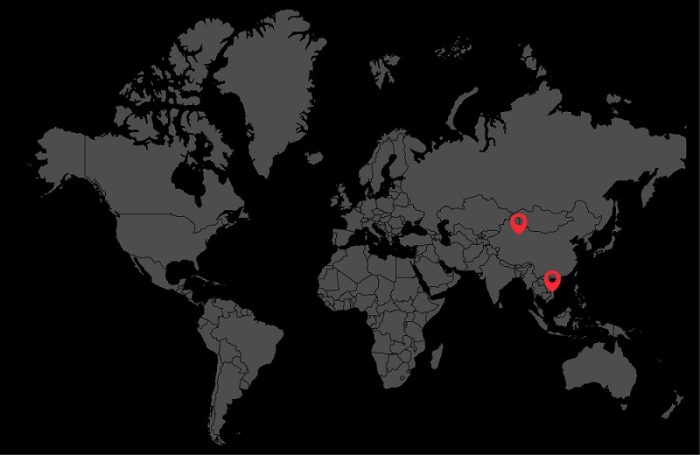
General running footwear production spans Vietnam, Indonesia, and China. By contrast, retro basketball production concentrates heavily in China and Vietnam. A persistent collector myth claims that any pair lacking a “Made in Vietnam” size tag is counterfeit.
In reality, Tier-1 contract factories in Guangdong and Fujian, China (codes LN3, LN4, and SZ) assemble millions of authentic pairs. Those facilities build High OG, fourth, and eleventh retro models alongside Vietnamese plants. Collectors should follow our high-top legit check guide rather than relying solely on country tags.
How Do Import Tariffs and Recycled Materials Affect Air Jordan Retros?
Manufacturing basketball footwear in Asian contract facilities directly shapes US retail pricing through federal customs duties. According to US Harmonized Tariff Schedule footwear duty data, imported athletic shoes with rubber outer soles carry up to a 20% customs tariff. Those HTS Chapter 64 landed duty costs factor into the $180 to $230 retail price of modern retro drops.
From a $65 retail debut in March 1985 to a $7.0 billion annual division of Nike, Inc., the Jumpman subsidiary remains the most successful athlete-licensed brand in sports history.
The parent company also integrates reclaimed factory scrap across select outsoles and midsoles. According to official Nike Grind recycling documentation, the program has transformed manufacturing scrap into recycled rubber compounds since 1992. The table below outlines the sub-brand’s corporate and manufacturing structure.
| Corporate / Supply Dimension | Key Year | Verified Entity / Location | Official Historical Figure |
|---|---|---|---|
| Rookie Endorsement Contract | 1984 | Nike, Inc. & Chicago Guard | $2.5M over 5 years + 5% licensing |
| First Signature Retail Launch | 1985 | Nike Basketball Division | $65 retail / $126M Year-1 sales |
| Autonomous Subsidiary Spin-Out | 1997 | 100% Owned by Nike, Inc. | $7.0B annual wholesale division |
| Contract Factory Network | 1992-Present | China & Vietnam (41 countries) | 500+ factories / up to 20% HTS duty |
How Have Air Jordan Retail and Resale Prices Grown Since 1985?
Across four decades of corporate ownership, signature basketball pricing has climbed from $65 in 1985 to $180-$250 for modern retros. When the thirteenth signature model inaugurated the standalone subsidiary in November 1997, it retailed at $150 per archival catalog data. Modern Reimagined and ’85-cut releases now command strong secondary premiums.
For example, the 1985 high-top originally priced at $65 now retails at $180 for standard High OG drops. The 2025 High ’85 “Bred” (HV6674-067) lists at $250 per official release data. Limited production numbers on ’85-spec releases push aftermarket asks above $500 on StockX, GOAT, and eBay.
Similarly, classic Holiday patent-leather retros priced at $230 retail routinely trade between $280 and $360 on the secondary market. The table below compares 1985-1997 original retail prices against modern retro baselines and aftermarket valuations.
| Signature Silhouette | Debut Year & OG Retail | Modern Retro Retail | Aftermarket Valuation Range |
|---|---|---|---|
| High ’85 Bred (HV6674-067) | 1985 ($65 OG retail) | $180 OG / $250 (’85 cut) | $450-$650 resale range |
| Retro 4 Bred / Military Blue | 1989 ($110 OG retail) | $215 modern retail | $260-$340 resale range |
| Retro 11 Patent Holiday | 1995 ($125 OG retail) | $230 modern retail | $275-$360 resale range |
| Retro 13 (1st Sub-Brand Model) | 1997 ($150 OG retail) | $200-$210 modern retail | $210-$280 resale range |
Where Can Collectors Buy Air Jordan Retros at Retail on Drop Day?
Because the Jumpman division operates as a Nike, Inc. subsidiary, first-party online launches take place on the SNKRS app. Most flagship retro releases open at 10:00 AM EST on Saturday mornings. Readers checking our guide on where to buy retros for retail also target authorized wholesale chains. Those stores include Foot Locker, Champs Sports, JD Sports, Finish Line, and Hibbett. Limited collaborations and ’85-cut releases drop exclusively through Tier-0 Neighborhood boutiques.
During simultaneous Saturday morning drops across Shopify boutiques and Footsites, manual buyers face instant virtual queues and per-IP rate limits. Automated checkout software submits parallel tasks across multiple storefronts within milliseconds of inventory loading.
Collectors comparing multi-site platforms evaluate established options including Valor AIO, Cybersole, Stellar AIO, and NikeShoeBot. Pairing clean residential proxies with unique billing profiles gives buyers the strongest setup for securing flagship retro drops at MSRP.
When did the Jumpman division officially become a separate subsidiary of Nike?
Nike officially established the Jumpman division as an autonomous corporate sub-brand on September 9, 1997, debuting the thirteenth signature silhouette and signing its first class of endorsed NBA athletes including Ray Allen, Derek Anderson, Michael Finley, Eddie Jones, and Vin Baker.
Are retro basketball sneakers with a “Made in China” tag authentic?
Yes. Over 500 independent contract factories across 41 countries manufacture Nike and Jumpman products, and authentic retro models are produced in both China (factory codes such as LN3, LN4, and SZ) and Vietnam.