Stadium Goods Closes NYC Store: 47 Howard St and 2025 Pivot

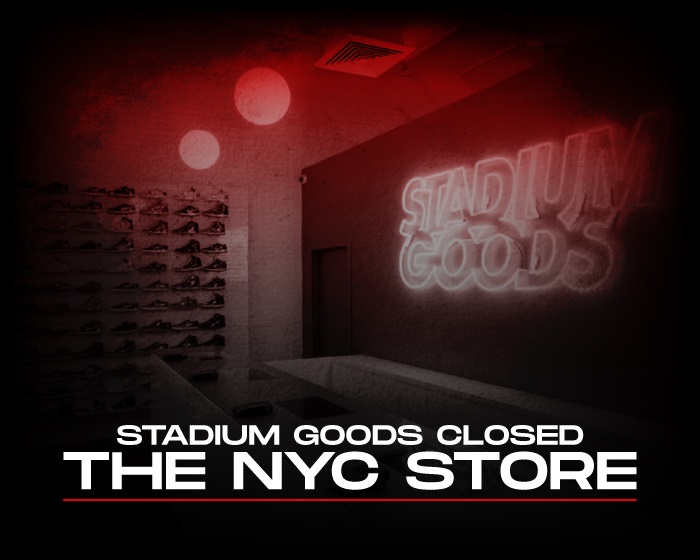
News that Stadium Goods closes NYC store operations at 47 Howard Street marks a major shift after 10 years in SoHo. First opened in October 2015 and acquired by Farfetch for $250 million in 2018 per filings, the flagship closed on January 19, 2025. Manhattan intake and shopping now consolidate into the 412 Broadway market center alongside digital channels.
- Flagship Closure Date: The original 47 Howard Street SoHo storefront closed on January 19, 2025 after operating since October 2015.
- Corporate Ownership Shifts: Acquired by Farfetch at a $250 million valuation in December 2018 per filings before Coupang bought Farfetch in December 2023.
- 2023 Restructuring Precedent: Followed 2023 corporate layoffs and the closure of the Stadium Goods Chicago brick-and-mortar store.
- 412 Broadway Consolidation: New York consignors and shoppers transitioned to the nearby 412 Broadway market center while e-commerce drives primary revenue.
Why Did Stadium Goods Close Its 47 Howard Street NYC Store in January 2025?
Every chapter of sneaker industry history reflects how collectors discover, authenticate, and trade rare footwear. In October 2015, co-founders John McPheters and Jed Stiller opened the original Stadium Goods flagship at 47 Howard Street in SoHo. For nearly a decade, its shrink-wrapped sneaker walls hosted celebrity shopping episodes and international tourists. Rare Jordan, Yeezy, and Nike SB grails lined the trophy cases daily.
In January 2025, management notified consignors by email that the 47 Howard Street store would close on Sunday, January 19, 2025. Leadership explained that online orders already generated the vast majority of company revenue. Concentrating resources into e-commerce and a single Manhattan hub eliminated duplicate SoHo retail rent. Seller inventory payouts continued without interruption during the move.
How Did the $250 Million Farfetch Deal and 2023 Coupang Buyout Impact Retail?
Understanding the January 2025 flagship exit requires looking back at the company’s parent ownership timeline. In December 2018, luxury fashion marketplace Farfetch acquired Stadium Goods for $250 million per corporate filings. That deal aimed to capture booming global streetwear demand. Backed by that capital, the consignment retailer expanded its warehouse footprint and opened a Chicago storefront.
By 2023, however, Farfetch faced severe post-pandemic luxury headwinds and neared bankruptcy. South Korean e-commerce leader Coupang stepped in during December 2023 and acquired Farfetch. During that 2023 restructuring cycle, Stadium Goods conducted corporate layoffs and shuttered its Chicago store. Closing the 47 Howard Street lease in January 2025 completed that multi-year transition toward lean digital operations. Global online fulfillment remained the top corporate priority.
| Milestone Date | Corporate / Retail Event | Location or Valuation | Strategic Industry Impact |
|---|---|---|---|
| October 2015 | Original Flagship Launch | 47 Howard St, SoHo NYC | Established premier NYC consignment hub |
| December 2018 | Farfetch Acquisition | $250 Million Enterprise Value | Funded global e-commerce & warehouse scale |
| December 2023 | Coupang Acquires Farfetch | Chicago Store Closed & Layoffs | Triggered brick-and-mortar cost cuts |
| January 19, 2025 | Howard St Flagship Closes | Consolidated to 412 Broadway | Shifted primary focus to online marketplace |
How Does the 412 Broadway Market Center Serve Buyers and Consignors?
Shutting down 47 Howard Street on January 19, 2025 did not mean abandoning lower Manhattan entirely. Instead, the company upgraded its existing intake facility at 412 Broadway. That building sits just two blocks south of Howard Street in SoHo. Previously used as a consignor drop-off and authentication center, 412 Broadway now serves as both a seller hub and a retail space.
In the email sent to consignment partners in January 2025, management reassured sellers about their stock. Active seller inventory and payout schedules remained completely unaffected by the move. Consignors continue dropping off deadstock pairs at 412 Broadway or shipping inventory by mail. Combining authentication, seller intake, and walk-in shopping under one roof streamlines daily New York operations. Walk-in buyers can still inspect authenticated pairs in person.
What Does the SoHo Closure Signal for Physical Sneaker Consignment Stores?
Across New York, Los Angeles, and Chicago, high-rent consignment boutiques face tougher unit economics than they did in 2015. In-store shoppers frequently browse shrink-wrapped display walls in person first. Many then pull out their phones to compare lowest asks on StockX, GOAT, or eBay. When digital platforms undercut brick-and-mortar prices by 20% to 35% per market data, maintaining multiple flagship leases becomes difficult.
Even so, physical sneaker hubs are evolving rather than vanishing completely. By merging intake and retail at 412 Broadway, the brand retained a community touchpoint in SoHo. It no longer carries two separate Manhattan leases two blocks apart. Hybrid locations that blend online fulfillment, VIP client appointments, and local drop-offs represent the sustainable model for physical sneaker retail.
Consolidating 47 Howard Street into the 412 Broadway market center on January 19, 2025 streamlined Manhattan operations. It allowed the company to prioritize high-volume online sales.
How Do Consignment Store Commissions Compare to eBay, StockX, and GOAT Fees?
Sellers researching how secondary marketplace fees compare weigh traditional 80/20 consignment splits against online exchange commissions. Physical consignment stores typically deduct roughly 20% to cover prime retail rent and staff. By contrast, per the eBay athletic shoe fee schedule, sneakers sold for $150 or more incur an 8% final value fee. Physical authentication is included at zero cash-out charge.
Meanwhile, the StockX seller fee schedule charges Level 1 sellers 9% plus 3% payment processing and $5 shipping. Standard GOAT seller commissions start at 9.5% plus $5 and a 2.9% cash-out fee. On a $350 sneaker sale, eBay leaves $322 net compared to $280 net at a 20% consignment rate. The table below compares net seller payouts across all four channels.
| Secondary Selling Channel | Standard Commission & Fee Rate | Gross Sale Example | Net Seller Payout |
|---|---|---|---|
| eBay Authenticity Guarantee | 8% Flat Fee ($150+ Athletic Shoes) | $350 | $322 Net ($28 Deducted) |
| GOAT Standard Consignment | 9.5% Base + $5 + 2.9% Cash-Out | $350 | $303 Net ($47 Deducted) |
| StockX Level 1 Marketplace | 9% Base + 3% Processing + $5 Ship | $350 | $303 Net ($47 Deducted) |
| Traditional 80/20 Brick-and-Mortar | 20% In-Store Consignment Split | $350 | $280 Net ($70 Deducted) |
How Do Modern Collectors Source Limited Sneakers at Retail Prices?
As secondary shopping concentrates online, buyers who want to avoid consignment markups focus on securing pairs at original retail MSRP. Learning what sneaker botting is helps collectors understand how online queues process high-demand releases at 10:00 AM EST. Entering Nike SNKRS draws and boutique raffles 48 hours early gives manual buyers their baseline tickets.
Simultaneous first-come, first-served inventory also drops across Shopify boutiques and Footsites on release morning. During those windows, collectors rely on an all-in-one sneaker bot to automate checkout tasks. Multi-site platforms including Valor AIO, Cybersole, Stellar AIO, and NikeShoeBot pair task groups with residential proxies. Checking out limited releases at retail avoids paying secondary consignment markups altogether.
Did Stadium Goods shut down all of its New York City operations in January 2025?
No, the 47 Howard Street flagship closed on January 19, 2025. However, the brand converted its nearby 412 Broadway market center into a combined consignor drop-off and retail shopping space.
What happened to consignor inventory stored at 47 Howard Street when it closed?
Management notified sellers by email that existing consigned inventory remained active on its global online marketplace. All pairs transitioned seamlessly to the 412 Broadway hub without interruption.